Key takeaways
- Format: handheld bite-and-resist device with interchangeable resistance elements; the number of levels varies by kit
- Bite surface: soft elastomer pads in the food-grade silicone spec class
- Resistance range: light to moderate in the TMJ-relief configuration; the heavier levels belong to jawline training, not to a painful jaw
- Session shape: short sets, typically 30-60 seconds of controlled repetitions across 3-5 rounds
- Materials: non-porous washable bite pads with a rigid polymer body
- Power: none — no battery, no charging, no app
- Care: rinse the bite pads after every session, air dry, and replace them once the elastomer discolours, hardens, or tears
The best TMJ jaw exerciser for pain relief for most people is the MyoJaw TMJ Rehabilitation Device, a resistance-based tool with interchangeable resistance elements that suits anyone whose clinician has cleared them for active jaw-strengthening work and who wants graded progression instead of one fixed force. If your problem is clenching rather than weakness — a jaw that feels tight and tired in the morning — the Gentle Jaw Pain Relief Device is the better premium buy, because it holds the jaw passively open so tight muscles can lengthen without you contracting anything. When pain flares with cold, stress, or long talking days, the FlareMore cordless face heating pad (3 heat levels, 3 timer settings) is the piece people reach for most. On a tight budget, the VIRTH Jaw Stretcher and Lisa’s TMJ Mouth Pillow cover the two cheapest genuinely useful jobs — stretching and resting the jaw — for the price of a takeaway meal.
This guide compares eight currently available devices by resistance range, material safety, and how each one handles jaw alignment, because those three factors decide whether an exerciser eases tension or simply adds load to an already irritated joint. Everything below is described from what each manufacturer lists and from established facts about the category; nothing here is medical advice, and TMJ disorders range from mild muscular tightness to disc displacement and arthritic change, so a diagnosis from a dentist, physician, or physical therapist comes first.
Top 3 Picks
Best overall: MyoJaw TMJ Rehabilitation Device. It is the only pick here built around progressive resistance, so you can begin below your pain threshold and add load only when a week of easy work feels comfortable. Best for stiffness, limited opening, and anyone who wants a measurable routine rather than a single fixed force.
Best budget: VIRTH Jaw Stretcher. A rigid graduated-arch stretcher with no battery, no charging, and no consumables, which makes it the lowest-cost way to add controlled lengthening to a daily routine. Best for mild stiffness and for anyone who wants to try stretch work before spending on a powered device.
Best for heat-based relief: FlareMore Face Heating Pad. Cordless and wearable, with 3 heat levels and 3 timer settings, it is the tool to use when muscles are guarding and mechanical load would make things worse. Best paired with either pick above rather than used alone.
Quick Comparison
| Product | Best for | Key specs | Price tier |
|---|---|---|---|
| MyoJaw TMJ Rehabilitation Device | Structured resistance progression | Interchangeable resistance elements (progressive kits); food-grade silicone-class elastomer bite pads; rigid polymer body; no power, no charging; pocket-sized | Premium |
| Gentle Jaw Pain Relief Device | Passive jaw support and clench release | Molded passive bite block; holds the jaw in a fixed slightly-open position; no power; wipes clean; one-piece design | Premium |
| Kinbana TMJ Relief Massager | Jaw and neck tension in one tool | Rechargeable handheld massager; multiple speed levels; interchangeable contact heads; runtime measured in hours per charge | Mid-range |
| TRUSTV TMJ Relief Products Jaw | Compact dual-zone manual routine | Unpowered dual-contact tool for jaw and neck; rigid polymer; no battery, no charging; travel-friendly | Mid-range |
| Lisa’s TMJ Mouth Pillow | Budget rest support | Soft mouth pillow placed between the teeth; memory-foam-class fill; washable outer cover; single size class | Budget |
| VIRTH Jaw Stretcher | Budget stretch tool | Rigid graduated-arch stretcher; multiple opening positions; wipe-clean polymer; no consumables | Budget |
| Dr. A’s TMJ Remed-X Jaw Relief Serum | Topical add-on | Roll-on or dropper serum; essential-oil style natural blend; small bottle volume; patch test advised before first use | Budget |
| FlareMore Face Heating Pad | Cordless heat therapy | Rechargeable wearable pad; 3 heat levels; 3 timer settings; auto shut-off; washable cover; adjustable strap | Mid-range |
How We Chose
We built this list around three questions a product listing usually answers badly: how much resistance the device actually applies, what the part that touches your mouth is made from, and whether the design respects jaw alignment rather than forcing the joint into a position it does not want. Devices were grouped by the job they can genuinely do — passive support, active resistance, stretch, powered massage, heat, topical — and only then ranked within each group, because comparing a heat pad against a resistance trainer is meaningless when they solve different problems.
Category fit came next. A tool sold as a jawline exerciser for cosmetic reasons is not automatically a TMJ tool, and we flagged that distinction wherever it applies, since heavy resistance is the wrong starting point for a painful jaw. Material safety was judged on what the bite surface is made of and whether it can be cleaned between uses, because porous or non-washable mouth-contact parts are a hygiene problem over months of daily use. Finally, we considered upgrade path: whether a device lets you progress without repurchasing, and whether it complements rather than duplicates the other picks. No product here was physically tested or owned by us, and none of the descriptions come from personal use.
1. MyoJaw TMJ Rehabilitation Device – Best for Structured Resistance Progression
As an Amazon Associate we earn from qualifying purchases at no extra cost to you.
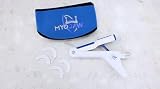
The MyoJaw TMJ Rehabilitation Device suits a specific reader: someone whose jaw pain has been attributed to muscular tightness and weakness rather than to a displaced disc, who wants a device with more than one resistance level so they can start light and add load slowly, and who will actually do a short routine most days. It is a poor first purchase for anyone with clicking, locking, or a joint that is acutely inflamed, because resistance work asks the joint to move under load — the opposite of what an angry joint wants.
The device works on a simple principle. You bite into the elastomer pads against a known resistance, then release slowly and let the jaw open under control. The second half of that movement, the controlled return, is where most of the benefit lives for a tight jaw: the masseter and temporalis are being lengthened at low load rather than simply being worked hard. That is also why the same object can be sold as a jawline exerciser and used as a TMJ tool — the cosmetic protocol is heavy and short, while the relief protocol is light, slow, and stopped well before fatigue. If you buy this device, the discipline is in ignoring the “go heavier” instinct for the first several weeks.
- Format: handheld bite-and-resist device with interchangeable resistance elements; the number of levels varies by kit
- Bite surface: soft elastomer pads in the food-grade silicone spec class
- Resistance range: light to moderate in the TMJ-relief configuration; the heavier levels belong to jawline training, not to a painful jaw
- Session shape: short sets, typically 30-60 seconds of controlled repetitions across 3-5 rounds
- Materials: non-porous washable bite pads with a rigid polymer body
- Power: none — no battery, no charging, no app
- Care: rinse the bite pads after every session, air dry, and replace them once the elastomer discolours, hardens, or tears
What makes it the overall pick is progression. Almost every other device in this list gives you one fixed input, and if that input is too much on a bad day you simply cannot use it. With graded resistance you can drop a level during a flare and climb back up over a fortnight, which is the realistic pattern for most people. The absence of power is a genuine strength too: there is nothing to charge, nothing to fail, and nothing that stops working after eighteen months.
Pros
- Graded resistance lets you progress or back off without buying a second device
- No battery, no charging, no electronics to fail
- Runs on almost nothing — the only wear item is the bite pad
- Very fast to use: a full round takes under two minutes
- Trains the release phase, where lengthening actually happens
Cons
- Easy to overdo, especially if you treat it as a jawline trainer
- No heat, no massage, no feedback — it does exactly one job
- Bite pads are a consumable and will eventually need replacing
- Needs professional clearance if you have clicking, locking, or disc symptoms
Against the Gentle Jaw Pain Relief Device, the choice comes down to direction of movement. Gentle Jaw holds your jaw passively open so the muscles can let go without you doing anything, which makes it the better first buy for morning tightness and night clenching. MyoJaw asks you to contract and release against resistance, which makes it the better tool for stiffness and limited opening. People with mixed symptoms often end up with both, using the passive block in the evening and the resistance device in the morning — but if you are buying one, match it to whether your jaw feels tight or feels weak.
2. Gentle Jaw Pain Relief Device – Best for Passive Jaw Support

The Gentle Jaw Pain Relief Device is for the reader whose jaw is tight rather than weak. Its listing places it against bruxism, TMJ headache, and migraine caused by tight jaw muscles, and describes using it to pass time passively — meaning you wear it and let it do the work while you read, watch television, or sit at a desk. That framing is accurate to what the device is: a molded bite block that holds the jaw in a slightly open position, stretching the elevator muscles by geometry rather than by effort.
This is the least demanding tool in the list, and for a lot of people that is the point. When a jaw is guarding, adding resistance is the wrong move; holding it gently open for a few minutes lets the masseter and temporalis lengthen without any contraction at all. It also fits the clenching pattern neatly. If you wake with a tired, achy jaw and a headache behind the eyes, the muscles have been working all night, and passive lengthening in the morning or before bed is a more logical response than exercise.
- Format: single-piece molded passive bite block, no moving parts
- Mechanism: holds the jaw in a fixed, slightly-open position so elevator muscles lengthen passively
- Resistance: none — this is the defining feature
- Power: none
- Session shape: wear for a few minutes at a time, typically in short daily sessions rather than one long one
- Care: wipe or rinse after each use; store dry; inspect for cracks in the molded body
The strengths are all about tolerance. Almost nobody finds this device too much on a bad day, which means it actually gets used during flares — the moment when most exercise tools get abandoned. Because there is no adjustment and no resistance to manage, there is also no way to use it wrong beyond leaving it in too long. It travels well, needs no maintenance beyond cleaning, and its single-piece construction means there is nothing to lose or replace.
Pros
- Usable during a flare, when resistance work is off the table
- Zero learning curve — you place it and relax
- No power, no charging, no consumables
- Directly addresses night clenching and morning tightness
- Compact and quiet enough to use while working
Cons
- Premium price for a device with no electronics or moving parts
- Fixed opening position — you cannot adjust it to your comfort
- Passive only, so it will not build any strength or endurance
- Drooling and jaw fatigue if you leave it in longer than comfortable
Compared with Lisa’s TMJ Mouth Pillow, Gentle Jaw is the more structured and more expensive version of the same idea: the pillow is a soft resting surface, while this is a molded block that sets a specific opening. If you want the cheapest possible way to try passive support, the pillow gets you most of the way there; if you want something that holds a consistent position and will survive daily use for years, the molded block is the better buy. Compared with MyoJaw, it is the opposite tool, and the two are complementary rather than competing.
3. Kinbana TMJ Relief Massager – Best for Jaw and Neck Tension Combo

The Kinbana TMJ Relief Massager suits the reader whose tension does not stop at the jaw. Its listing targets jaw tension, neck pain, and clenching together, which reflects a common reality: the masseter, temporalis, and upper trapezius often tighten as a group, and loosening the jaw while the neck stays locked rarely produces lasting relief. A powered handheld massager is the only format in this list that can work both zones in one session without you having to learn a technique.
This is a mid-range device in the truest sense. It costs more than a stretch tool and less than a premium passive block, and it delivers something neither of those can: vibration or percussion that reaches muscle tissue you cannot easily stretch, particularly the deep fibres under the jaw line and along the top of the shoulders. The trade-off is that it treats soft tissue only. It will not change how your joint tracks, and it will not build tolerance to load.
- Format: rechargeable handheld massager with interchangeable contact heads
- Speed levels: multiple, with the lowest settings being the ones to use on the face
- Power: rechargeable battery; runtime measured in hours per charge depending on speed
- Contact heads: at least one broad head for neck and shoulders and a smaller head for jaw-line work
- Session shape: a few minutes per zone, low speed, never directly on the joint itself
- Care: wipe heads after use, keep the charging port dry, store with a partial charge if unused for months
What earns it a place is convenience and coverage. A manual massage tool requires you to press and hold for several minutes, which is tiring and hard to do accurately on your own jaw; a powered device keeps the input steady while you position it. The multiple speeds matter more than they look, because the highest setting is almost always wrong for facial work — you want the lowest level that produces a visible softening of the muscle, held for longer rather than harder.
Pros
- One device covers jaw, jaw line, and neck in a single session
- Powered input is steadier and less tiring than manual pressure
- Interchangeable heads adapt to broad and narrow areas
- Rechargeable, so no cable management during use
- Useful as a warm-up before stretch or resistance work
Cons
- Mid-range price, and the battery is the part most likely to fail first
- Easy to over-vibrate a sensitive jaw; the highest speed is rarely appropriate
- Does nothing for strength, opening range, or joint mechanics
- Not something you can use passively while doing something else
Against the TRUSTV TMJ Relief Products Jaw, the split is power versus simplicity. TRUSTV is an unpowered dual-contact tool, so it never needs charging and never dies mid-session, but it depends entirely on how well you apply it. Kinbana removes that skill requirement at the cost of a battery, a charging habit, and a higher price. If you travel a lot or dislike charging things, TRUSTV wins; if you want the jaw and neck softened without effort, Kinbana is the more effective tool.
4. TRUSTV TMJ Relief Products Jaw – Best for a Compact Dual-Zone Manual Routine
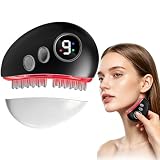
TRUSTV’s TMJ Relief Products Jaw is aimed at jaw and neck pain, stiffness, and tension — the same three complaints Kinbana addresses, but through a manual, unpowered tool. It suits someone who wants a compact instrument they can keep in a bag, use anywhere without charging, and apply with their own hands. It also suits anyone who has found that vibration aggravates their jaw rather than calming it, which is a real subgroup.
Manual tools get underestimated. The advantage of applying pressure yourself is fine control: you feel the exact point where a muscle softens and you can hold there, and you can reduce force instantly if something feels wrong. That feedback loop is genuinely useful around the jaw, where the structures are small and close to the surface. The disadvantage is consistency — it takes a few sessions to learn how much pressure is productive and how much is simply uncomfortable.
- Format: unpowered dual-contact tool for jaw and neck work
- Construction: rigid polymer body, wipe-clean surface
- Power: none — no battery, no cable, no charging habit to maintain
- Portability: small enough for a pocket or wash bag
- Session shape: short passes along the jaw line and upper neck, a few minutes per zone
- Care: wipe after use; avoid abrasive cleaners; check for cracks at the contact tips
The value here is durability and independence. There is nothing to charge, nothing to wear out except the body itself, and no consumables. Over a year of daily use the cost per session is effectively negligible, which makes a mid-range manual tool a reasonable long-term buy even though it looks expensive next to a budget stretch device. It also packs flat, which matters if your routine happens at a desk, in a car, or on a plane.
Pros
- No battery and no charging habit to maintain
- Fine control of pressure, which suits a sensitive jaw
- Compact and travel-friendly
- Effectively no running costs
- Easy to combine with heat or stretch work in the same session
Cons
- Results depend entirely on your technique
- Manual pressure for several minutes is tiring on the hands
- No adjustment or settings — one tool, one feel
- Harder to reach the deeper neck muscles than with a powered device
Against Kinbana, TRUSTV is the quieter, simpler, more durable option; against the FlareMore face heating pad, it is the more active option. Where Kinbana gives you effortless coverage and the heat pad gives you passive warmth, TRUSTV asks for ten minutes of attention in exchange for precise control. If your jaw reacts badly to vibration but responds well to slow, firm pressure, this is the tool in this list most likely to suit you.
5. Lisa’s TMJ Mouth Pillow – Best Budget Rest Support

Lisa’s TMJ Mouth Pillow is the cheapest way to try passive jaw support. Its listing describes exactly what it is: a soft mouth pillow that relaxes jaw muscles and eases jaw pain by giving the jaw somewhere to rest. Rather than forcing a specific opening position the way a molded block does, it provides a cushioned surface between the teeth so the muscles can settle into whatever position feels comfortable.
That makes it a good fit for three groups: people who find rigid bite blocks uncomfortable, people who clench during the day and want something soft to bite against rather than their own teeth, and people who simply want to test whether passive support helps before spending premium money on a molded device. It is also the least intimidating option in this list, which matters if you are new to the whole idea of jaw tools.
- Format: soft pillow placed between the teeth
- Fill: memory-foam-class material that compresses under gentle bite pressure
- Cover: washable outer fabric — confirm before buying, since this is the part that contacts skin and saliva
- Sizing: single size class; it sits between the front teeth rather than over the whole arch
- Power: none
- Session shape: a few minutes at a time, seated and relaxed
- Care: wash or replace the cover regularly; air dry fully before storing
The main strength is tolerance. Because it is soft and unshaped, there is no “wrong position” and no pressure point to fight against, so it gets used rather than abandoned. It is also the least expensive item in this guide that does something mechanical, and for a first experiment with jaw rest that is a sensible risk profile. The softness means it compresses as you bite, so it delivers gentle resistance in the same motion.
Pros
- Lowest-cost way to test whether passive jaw support helps you
- Soft and comfortable, with no rigid pressure points
- Works as a daytime clenching barrier as well as a rest aid
- No power, no settings, no maintenance beyond washing
- Small and light enough to keep in a bag
Cons
- Foam compresses and loses resilience with daily use, so it is a replaceable item
- No fixed opening position, so it cannot deliver a consistent stretch
- Fabric covers need frequent washing, and some people find the texture unpleasant
- Not suitable if you need a precise, repeatable opening angle
Against the Gentle Jaw Pain Relief Device, this is the budget experiment and that is the premium instrument. The pillow moulds to you; the molded block sets a position. If you use the pillow nightly for a month and it clearly helps, the block is a logical upgrade because it will hold the same position every time and last for years. If the pillow does nothing, you have learned that passive support is not your answer for a fraction of the cost. Against the VIRTH Jaw Stretcher, the difference is direction — the pillow rests the jaw, the stretcher opens it.
6. VIRTH Jaw Stretcher – Best Budget Stretch Tool

The VIRTH Jaw Stretcher is the budget entry point for active stretching. Its listing targets TMJ pain, jaw pain, clenching relief, and general TMJ relief — the standard set of complaints — and the device itself is a rigid graduated arch that you place between the teeth and use to open the jaw progressively. It suits readers whose main limitation is stiffness and reduced opening rather than clenching or night-time tension.
The concept is the same one a physical therapist uses for any joint: take it to the edge of comfortable range, hold, and repeat. What the graduated arch adds is consistency. Because the tool has defined positions, you are not guessing at how far you opened it last time, and you can track progress in a way that is impossible when you simply stretch against your own hand or a stack of tongue depressors. It also removes the tendency to push too far, because you are choosing a position rather than forcing a movement.
- Format: rigid graduated-arch stretcher, single piece
- Opening positions: multiple graduated steps, so you can select a height below your pain threshold
- Material: wipe-clean polymer in the hard-plastic class
- Power: none
- Session shape: short holds at a comfortable opening, several repetitions, once or twice daily
- Care: wash after every use, dry fully, store away from heat; inspect for cracks at the arch tips
The strengths are cost, simplicity, and measurability. There are no consumables, nothing to charge, and no technique to learn beyond “start low and hold.” Because the positions are numbered or stepped, you can note where you are this week and compare it with last week, which is far more useful than a vague sense of whether your jaw feels looser. For someone who has never done any jaw work, that structure is the whole benefit.
Pros
- Lowest-cost way to add structured stretching to a routine
- Graduated positions make progress measurable week to week
- No power, no consumables, no maintenance costs
- Small, light, and easy to keep by a sink or bedside
- Gives a clear signal about whether stretch work helps you at all
Cons
- Rigid plastic against teeth feels harsh, and some users need to start at the very lowest step
- Stretch only — no massage, no heat, no strength work
- Easy to over-stretch if you rush the progression
- Not appropriate for a locked or acutely painful joint without professional guidance
Against MyoJaw, VIRTH is the simpler, cheaper, one-directional tool: it opens the jaw, it does not load it. That makes it a reasonable first purchase for stiffness and a poor one if your clinician has told you to build strength. Against Lisa’s TMJ Mouth Pillow, it is the active counterpart — the pillow lets the jaw rest, the stretcher deliberately takes it to range. Many people start with the stretcher, then add the pillow once they realise their main problem is night-time clenching rather than morning stiffness.
7. Dr. A’s TMJ Remed-X Jaw Relief Serum – Best Topical Add-On

Dr. A’s TMJ Remed-X Jaw Relief Serum is not an exerciser, and it is not meant to be. It is a topical jaw and neck treatment, described as natural, holistic, and organic, and it earns a place in this guide because some people cannot tolerate any mechanical load at all — not resistance, not stretch, sometimes not even massage — and for them a topical is the only thing left to try. It also works well as a precursor to other tools, applied before heat or gentle massage.
The mechanism is straightforward: a blend in the essential-oil class, applied to the jaw line, temples, and upper neck, producing a warming or cooling sensation that many people find distracts from pain and helps them relax the area. It is a comfort product, not a treatment for joint mechanics, and it is important to hold that expectation. Nothing applied to the skin changes how a disc sits or how a joint tracks.
- Format: roll-on or dropper serum, depending on the variant
- Ingredients class: natural, botanical, essential-oil style blend
- Volume: small bottle — this is a concentrated product, not a body lotion
- Application: a small amount along the jaw line, temples, and neck; avoid the eyes
- Testing: patch test on the inner forearm 24 hours before first facial use
- Care: store away from direct sunlight; check the expiry date; discontinue at the first sign of irritation
The strength of a serum is that it never makes a jaw worse. If everything else aggravates your symptoms during a flare, this is something you can still use, and the ritual of applying it — two minutes of deliberate attention on the area that hurts — has value in itself. It is also the cheapest item in this guide, which makes it a low-risk addition to a routine built around a heat pad or a passive block.
Pros
- Usable when mechanical load is not an option
- Lowest-cost item here and easy to try
- Doubles as a massage medium if you do gentle jaw-line work with your fingers
- Small and travel-friendly
- Complements heat, stretch, and massage rather than replacing them
Cons
- No structural effect on the joint or on muscle strength
- Essential-oil blends can irritate sensitive skin; patch testing is essential
- Small bottle volume means frequent repurchasing if used twice daily
- Strong scent may be unpleasant for some users, especially before sleep
Against the FlareMore face heating pad, the two do similar jobs in different ways. Heat penetrates and relaxes tissue over ten to twenty minutes; a serum gives a faster, more localised sensation and can be used anywhere without charging. If you want one tool for flare-ups, the heat pad is more substantial; if you want something you can apply at your desk in thirty seconds, the serum is the practical choice. Many people keep both, using the serum during the day and the heat pad in the evening.
8. Face Heating Pad for TMJ Pain Relief – Best for Cordless Heat Therapy

The FlareMore Face Heating Pad is the tool to reach for when your jaw is guarding and mechanical work would set it back. It is a cordless, wearable heating pad for the jaw with 3 heat levels and 3 timer settings, which is the most useful combination in this category: you can choose a low, sustained warmth rather than a single hot blast, and the timer means you can relax without watching the clock or worrying about leaving it on.
Heat works on tight muscle by increasing blood flow and reducing the guarding response, and it does so without asking anything of the joint. That makes it the correct first step on a bad day, and a sensible warm-up before stretch or resistance work on a good one. Because it is wearable and cordless, it is also the only device in this guide that lets you do something else while it works — which in practice is the difference between a routine that survives a busy week and one that does not.
- Format: cordless wearable pad shaped for the jaw and lower face, with an adjustable strap
- Heat levels: 3, from gentle warmth to a firmer setting
- Timer: 3 settings, with automatic shut-off at the end of the cycle
- Power: rechargeable; runtime varies with heat level, so expect fewer sessions per charge at the highest setting
- Cover: washable contact layer — check this before buying, since it sits against the face
- Care: let it cool fully before folding or storing, charge it away from water, and wash the cover regularly
What makes it mid-range rather than budget is the electronics, and that is also what will eventually wear out. Batteries lose capacity over a few years of regular charging, and the cover will need replacing long before the heating element fails. Even so, the cost per session is tiny: a mid-range pad used twice daily for a year works out to a few cents per use, which is a fair price for something that reliably interrupts a pain cycle.
Pros
- Usable on days when exercise or stretch would aggravate symptoms
- 3 heat levels make it easy to find a setting that soothes rather than stings
- 3 timer settings plus auto shut-off make it safe to relax with
- Cordless and wearable, so you can work or read while using it
- Excellent warm-up before resistance or stretch work
Cons
- Battery capacity is the first thing to degrade, typically after a couple of years
- Cover is a wear item that needs regular washing or replacing
- Does nothing for strength, opening range, or joint alignment
- Requires a charging habit, which some people never sustain
Against Kinbana, heat is passive and vibration is active — the heat pad calms a guarding muscle, while the massager works into tissue that is already willing to release. If your jaw clenches hard and feels hot and tired, start with heat; if it feels dense and knotted with no acute sensitivity, the massager will do more. Used together, the sequence matters: heat first for five to ten minutes, then massage, then any stretch or resistance work.
How to Choose
Start with what your pain actually is
Before any device matters, the diagnosis decides the category. Muscular tightness and clenching respond well to passive support, heat, and gentle massage. Reduced opening and stiffness respond to stretch and then to graded resistance. Clicking, locking, or a jaw that deviates to one side when you open suggests a joint or disc problem, and that is a professional’s call — resistance tools can make it worse. If you have not been assessed, the safest starting purchase is a heat pad or a passive block, both of which are hard to misuse.
Resistance: how much, and why more is not better
Resistance is the most misunderstood variable in this category. For a painful jaw, the useful range is light and the useful tempo is slow. A practical rule is that you should be able to complete a set of controlled repetitions with no increase in pain during or in the hour afterwards. If pain rises, the resistance is too high or the session too long. This is why graded tools beat fixed ones: a device with multiple levels lets you drop down during a flare instead of stopping altogether, and stopping altogether is how most jaw routines die. If a product is marketed mainly as a jawline exerciser, assume its default resistance is heavier than a TMJ protocol wants, and start at the lightest option.
Material safety and the bite surface
The part that goes in your mouth matters more than the part you hold. Look for a non-porous bite surface in the food-grade silicone or medical-grade elastomer class, because porous foam or soft rubber traps saliva, harbours bacteria, and develops a smell within weeks of daily use. Any mouth-contact part should be rinseable and air-dryable after every session. Fabric covers are fine for external devices such as heat pads and mouth pillows, provided they are removable and washable — a fixed cover on a device that touches your face is a false economy. If a listing does not state what the bite surface is made of, treat that as a gap rather than assuming the best.
Jaw alignment and the bite plane
Alignment design is what separates a tool that helps from one that hurts. A device that holds your jaw in a fixed, symmetrical opening — a molded block or a graduated arch — keeps the load even across both sides of the joint. A device that lets you bite down unevenly, or that is used on one side only, can load one joint more than the other, which is exactly the pattern that produces one-sided pain. If you notice your jaw deviating or one side tiring faster, stop and get assessed. For most people the practical test is simple: whatever you use should feel symmetrical, and it should not pull your jaw to one side as you close.
Matching the tool to the symptom
Heat for guarding and acute tightness. Passive support for night clenching and morning ache. Stretch for stiffness and reduced opening. Graded resistance for weakness and for building tolerance to load. Powered massage for jaw-and-neck tension that does not respond to stretching. Topical products for days when nothing mechanical is tolerable. Buying one tool and expecting it to cover all six is the most common mistake in this category, and it usually ends with the tool being blamed rather than the mismatch being recognised.
Session length and frequency: the numbers
Short and frequent beats long and occasional. A realistic resistance session is 3-5 rounds of 30-60 seconds of controlled repetitions, which is roughly four to six minutes of work. Stretch work is best done as several short holds rather than one long one. Heat is typically used for ten to twenty minutes at a time, which is why the timer settings on a pad matter. Passive support is used for a few minutes at a time, several times a day if clenching is your pattern. Two short sessions a day at six minutes each adds up to twelve minutes daily, or about 84 minutes a week — a modest commitment that produces more change than a single weekly twenty-minute session.
Decision matrix: match your situation to a pick
| Your situation | What to prioritise | Suggested pick | Why it fits |
|---|---|---|---|
| Morning tightness and night clenching | Passive lengthening with zero load | Gentle Jaw, or Lisa’s Mouth Pillow on a budget | Holds the jaw gently open without you contracting anything |
| Stiffness and reduced opening | Structured, measurable stretch | VIRTH Jaw Stretcher | Graduated positions let you start below your pain threshold and track progress |
| Weakness after a long period of avoiding chewing | Graded resistance | MyoJaw | Multiple resistance levels allow slow progression and easy backing off |
| Jaw and neck tightness together | Powered coverage of two zones | Kinbana | One rechargeable tool with interchangeable heads covers both areas |
| Pain flares with cold or stress | Warmth on demand | FlareMore Face Heating Pad | 3 heat levels and 3 timers give controlled, cordless warmth |
| Very tight budget, first device | Lowest entry cost, no consumables | VIRTH Jaw Stretcher | Unpowered, durable, and the cheapest way to test stretch work |
| Cannot tolerate any mechanical load | Non-mechanical comfort | Dr. A’s Serum, plus heat | Topical and thermal relief ask nothing of the joint |
| Want one tool that never needs charging | Durability and portability | TRUSTV Jaw Tool | Unpowered dual-contact design with effectively no running costs |
Cost per use: the budget math
Category prices run roughly from under $25 for a budget stretch tool or topical, through $25-60 for mid-range powered and manual devices, to $60-120 for premium passive blocks and resistance systems. Convert that into sessions and the picture changes. A mid-range powered device at roughly $50, used twice daily for a year, is 730 sessions at about 7 cents each. A budget stretch tool at roughly $20 used once daily for a year is 365 sessions at about 5 cents each. A premium passive block at roughly $90 used nightly for a year is 365 uses at about 25 cents each. The device cost is trivial next to the cost of not using it — which is why the deciding factor should be whether the tool fits your symptom, not whether it is the cheapest thing in the search results.
What wears out first, and how to make it last
In powered devices, the battery goes first: expect noticeable capacity loss after two to three years of regular charging, and slow the decline by avoiding full discharges and storing at partial charge. Next are covers and pads, which need washing every few days and replacing once they pill or lose their fit. In resistance devices, the elastomer bite pads harden and discolour first — replace them when they change texture, not when they tear. In passive blocks and stretchers, the failure mode is cracking at the contact points, so inspect monthly and stop using anything with a visible crack. The most common ownership mistakes are the same across the category: never cleaning the mouth-contact part, leaving a rechargeable device plugged in permanently, storing a damp pillow in a closed bag, and continuing to use a tool through pain because it was expensive.
Red flags: when to stop and get assessed
Stop using any jaw device and seek professional advice if opening becomes more limited rather than less, if pain increases during use or persists for hours afterwards, if your jaw locks or catches, if you develop new earache, ringing, or dizziness alongside jaw symptoms, or if pain spreads to the teeth or neck. Persistent jaw pain can have causes that no exerciser addresses, and a dentist, physician, or physical therapist can assess the joint properly. Devices in this category are comfort and rehabilitation aids, not treatments, and none of them replaces a diagnosis.
Frequently Asked Questions
How long before a jaw exerciser actually helps?
For muscular tightness and clenching, many people notice a difference in comfort within one to two weeks of daily short sessions, with more durable change over four to six weeks. Strength and opening range take longer, typically six to twelve weeks of consistent work. If nothing has changed after a month of correct use, the tool is probably mismatched to your symptom rather than ineffective in itself.
Can a jaw exerciser make TMJ pain worse?
Yes, and the usual cause is too much resistance too soon. Jaw muscles are small and already overworked in most clenching patterns, so heavy resistance adds load to tissue that needs lengthening rather than strengthening. If pain increases during a session or lingers for hours afterwards, reduce resistance, shorten the session, or switch to a passive or heat-based approach.
Are resistance devices safe if I grind my teeth at night?
Grinding is a night-time muscle activity, and resistance training during the day does not stop it. For bruxism, passive support and heat tend to be more useful than resistance work, because they reduce guarding rather than adding demand. A dentist should also assess whether a night guard is appropriate, since an exerciser is not a substitute for one.
What material should the part that touches my mouth be?
Look for a non-porous, washable surface in the food-grade silicone or medical-grade elastomer class. Porous foams and soft rubbers hold moisture and odour, and they cannot be properly cleaned between sessions. Whatever the material, rinse and air-dry the mouth-contact part after every use, and replace it once it hardens, discolours, or tears.
Should I use heat before or after exercising my jaw?
Heat first, almost always. Five to ten minutes of warmth relaxes a guarding muscle and makes any stretch or resistance work more comfortable and more effective. Using heat afterwards is fine for soreness, but it is the pre-session application that changes how the work feels. If your jaw is acutely painful, heat alone may be the whole session.
How often should I use a TMJ device each day?
Two short sessions a day is a better pattern than one long one — for example six minutes in the morning and six in the evening. Heat is usually applied for ten to twenty minutes at a time, passive support for a few minutes, and stretch or resistance work in short rounds. Consistency across weeks matters far more than session length on any single day.
Do I need a diagnosis before buying anything?
It is strongly advisable if you have clicking, locking, limited opening, or one-sided pain, because those patterns point to joint rather than muscle involvement and need proper assessment. For mild, symmetrical muscular tightness, starting with heat or passive support is low risk. If symptoms are worsening, spreading to the ear or neck, or lasting more than a few weeks, see a dentist, physician, or physical therapist.
Can I use these devices with braces, aligners, or a night guard?
Generally not without checking first, because braces and aligners change how your teeth meet and a bite block or stretcher may press on them unevenly. Night guards are worn during sleep and jaw tools are typically used while awake, so they usually do not conflict — but any device that sits between the teeth should be cleared by the clinician managing your orthodontic or dental treatment.
The Short Version
If your jaw is stiff and you want to build tolerance to load, buy the MyoJaw TMJ Rehabilitation Device and start at the lightest resistance for a fortnight. If you wake up with a tight, achy jaw from clenching, the Gentle Jaw Pain Relief Device is the better premium purchase, with Lisa’s TMJ Mouth Pillow as the budget way to test the same idea. If you need one tool for jaw and neck together, the Kinbana TMJ Relief Massager does the most work per session, while the TRUSTV Jaw Tool suits anyone who wants no battery and no charging habit. On a strict budget, the VIRTH Jaw Stretcher is the cheapest genuinely useful device in the category. And if your jaw is guarding and nothing mechanical feels tolerable, start with the FlareMore Face Heating Pad and Dr. A’s Serum, add gentle work only once the muscles have settled, and see a professional if symptoms persist, worsen, or come with locking, ear pain, or restricted opening.