Key takeaways
- Amplification: S-Master HX, Sony’s own full-digital amplifier stage rather than an off-the-shelf converter chip
- File support: native DSD up to 11.2 MHz, PCM up to 384 kHz/32-bit, plus the usual MP3, AAC, WMA, FLAC, ALAC and WAV families
- Storage: 128 GB internal, expandable via microSD (cards in the 1 TB class are widely available)
- Outputs: 3.5 mm single-ended and 4.4 mm balanced (Pentaconn), both on the bottom edge
- Platform: Android 11 with Wi-Fi and app-store access, so streaming services and offline downloads work
- Connectivity: USB-C for charging and data, Bluetooth for wireless headphones
- Chassis: machined aluminium frame, roughly 299 g — substantial but pocketable in a jacket
- Battery: manufacturer-rated up to about 40 hours on MP3 over the single-ended output; expect meaningfully less with DSD, high-res PCM or balanced output
- Bundle: includes a 3-year enhanced protection pack in addition to the standard warranty
The best Sony Walkman premium digital audio player for most buyers in 2026 is the Sony NW-WM1AM2 — the current Signature Series model, and the one sold here as a bundle with a 3-year enhanced protection pack. It is the pick because it is the only player in this roundup that combines a true 4.4 mm balanced headphone output, native DSD and 384 kHz/32-bit PCM file support, 128 GB of internal storage with microSD expansion, and an Android 11 platform that runs streaming apps. It suits listeners who own balanced-wired headphones or in-ear monitors and keep a large local library. If you want the identical hardware without the added coverage, the standalone NW-WM1AM2 is the alternative. If your budget is smaller, the NW-ZX707 delivers the same balanced jack and Android streaming for less; the NW-E394 is the cheapest sensible dedicated player; and if your music lives on discs or in a car, the CD Walkman and car-stereo entries below cover that ground. The rest of this guide breaks the decision down by amplifier class, storage, battery life and headphone output.
Top 3 Picks
Best overall: Sony NW-WM1AM2 Walkman (with 3 YR CPS Enhanced Protection Pack). Sony’s flagship portable, with an S-Master HX digital amplifier, native DSD up to 11.2 MHz, PCM up to 384 kHz/32-bit, 128 GB internal plus a microSD slot, both 3.5 mm single-ended and 4.4 mm balanced outputs, and Android 11 for streaming apps. The bundle simply adds three years of extended coverage on top of the standard warranty. It is the right answer for anyone who has already invested in balanced cables or a hard-to-drive pair of headphones.
Best budget: Sony NWE394/B 8GB Walkman MP3 Player. A small, light, screen-and-buttons player with 8 GB of built-in storage, no Android, no Wi-Fi and no card slot — which is exactly why it lasts so long on a charge and costs so little. It suits commuters, gym-goers and anyone who wants music without notifications. If 8 GB is too tight, the 4 GB NWE393/B is the cheaper sibling and the same machine in every other respect.
Best for streaming and balanced output on a tighter budget: Sony NW-ZX707. The mid-range model that keeps the flagship’s 4.4 mm balanced jack and Android platform but steps down to 64 GB of internal storage and a lighter, more pocketable chassis. It is the pick for someone who subscribes to a streaming service, downloads a subset of albums offline, and does not want to pay flagship money for the privilege.
Quick Comparison
Every product covered in this guide appears below. Battery figures are manufacturer-rated maximums under the most favourable playback conditions — expect less with hi-res files, balanced output, higher volume or a bright screen. Price tiers are relative bands within the Walkman range, not fixed prices.
| Product | Best for | Amp / file support | Internal storage | Headphone output | Battery (rated) | Tier |
|---|---|---|---|---|---|---|
| Sony NW-WM1AM2 Walkman + 3 YR CPS Enhanced Protection Pack | No-compromise balanced listening with extended cover | S-Master HX; native DSD to 11.2 MHz, PCM to 384 kHz/32-bit | 128 GB + microSD | 3.5 mm single-ended + 4.4 mm balanced | Up to ~40 hrs (MP3, single-ended) | Premium |
| Sony NW-WM1AM2 128GB Walkman | The same flagship without the protection bundle | S-Master HX; native DSD to 11.2 MHz, PCM to 384 kHz/32-bit | 128 GB + microSD | 3.5 mm single-ended + 4.4 mm balanced | Up to ~40 hrs (MP3, single-ended) | Mid-range |
| Sony NW-ZX707 Walkman 64GB | Android streaming plus a balanced jack in a lighter body | S-Master HX; DSD to 11.2 MHz, PCM to 384 kHz/32-bit | 64 GB + microSD | 3.5 mm single-ended + 4.4 mm balanced | Up to ~25 hrs (MP3, single-ended) | Mid-range |
| Sony NW-WM1A 128GB Premium Walkman | Offline flagship listening with no Android overhead | S-Master HX; native DSD to 11.2 MHz, PCM to 384 kHz/32-bit | 128 GB + microSD | 3.5 mm single-ended + 4.4 mm balanced | Up to ~33 hrs (MP3, single-ended) | Premium |
| Sony NW-A105 16GB Walkman | Entry into Android Walkman streaming | S-Master HX; Hi-Res PCM and DSD class support | 16 GB + microSD | 3.5 mm single-ended only | Up to ~26 hrs (MP3) | Mid-range |
| Sony DEJ017CK Walkman Portable CD Player with car accessories | Playing a physical CD collection, including in the car | CD-DA and CD-R playback; G-Protection skip buffering | None (discs) | 3.5 mm headphone out | Tens of hours on AA cells | Mid-range |
| Sony NWE394/B 8GB Walkman MP3 Player | Cheap, distraction-free everyday listening | Fixed-function MP3/AAC/WMA and lossless-class playback | 8 GB, no card slot | 3.5 mm single-ended only | Up to ~35 hrs (MP3) | Budget |
| Sony NW-ZX507/S Walkman 64GB | Compact balanced-output Android player | S-Master HX; DSD to 11.2 MHz, PCM to 384 kHz/32-bit | 64 GB + microSD | 3.5 mm single-ended + 4.4 mm balanced | Up to ~20 hrs (MP3, single-ended) | Premium |
| Sony Walkman NWZX2 128GB | A legacy flagship with a big internal library | S-Master HX; DSD to 5.6 MHz, PCM to 192 kHz/24-bit | 128 GB + microSD | 3.5 mm single-ended only | Up to ~33 hrs (MP3) | Premium |
| Sony D-NF340 CD Walkman & MP3 Player with FM Tuner | CD and radio in one portable | CD-DA, CD-R and MP3-CD playback; FM tuner | None (discs) | 3.5 mm headphone out | Tens of hours on AA cells | Budget |
| Sony DSX-A410BT Single DIN Car Stereo | Adding Bluetooth and USB to an older car dash | Digital media receiver; no disc mechanism | USB flash drive dependent | Speaker-level and line outputs | Runs on vehicle power | Budget |
| Sony NWE393/B 4GB Walkman MP3 Player | The smallest possible outlay on a dedicated player | Fixed-function MP3/AAC/WMA and lossless-class playback | 4 GB, no card slot | 3.5 mm single-ended only | Up to ~35 hrs (MP3) | Budget |
How We Chose
This roundup is built from published manufacturer specifications, the file-format and output-stage classes each model belongs to, and the practical ownership questions a buyer actually faces: what headphones will this drive, what files will it play, how many albums fit, how long it runs, and whether it can stream. We did not benchmark, measure or handle these players. Instead, we compared them on four axes that decide most purchases. First, the amplifier and conversion stage — whether the player uses Sony’s S-Master HX full-digital amplification, what DSD and PCM ceilings it supports, and whether it has a balanced output, because a 4.4 mm balanced jack roughly doubles the voltage swing available to the headphones and is the single biggest hardware differentiator in this list. Second, storage — internal capacity plus whether a microSD slot exists, since a fixed 4 GB or 8 GB player fills up fast with lossless files. Third, battery life and chassis weight, which trade off against each other. Fourth, platform — Android with Wi-Fi and app support for streaming, or a fixed-function operating system for pure offline listening. We also weighted the upgrade path, favouring models whose output stage will still make sense if the reader buys better headphones later.
1. Sony NW-WM1AM2 Walkman Bundle – Best for No-Compromise Balanced Listening
As an Amazon Associate we earn from qualifying purchases at no extra cost to you.
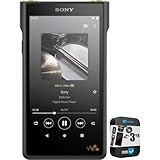
This is the flagship of the current Walkman range and the version sold with a 3-year CPS enhanced protection pack added to the standard warranty. It suits the listener who has already built a system around wired headphones — particularly balanced-cabled in-ear monitors or full-size headphones that benefit from more voltage — and who wants one device that plays every file format they own without conversion, while still being able to stream. It is not a casual purchase, and it is not the right player for someone whose library is 8 GB of MP3s and whose headphones came in a phone box.
Key specs
- Amplification: S-Master HX, Sony’s own full-digital amplifier stage rather than an off-the-shelf converter chip
- File support: native DSD up to 11.2 MHz, PCM up to 384 kHz/32-bit, plus the usual MP3, AAC, WMA, FLAC, ALAC and WAV families
- Storage: 128 GB internal, expandable via microSD (cards in the 1 TB class are widely available)
- Outputs: 3.5 mm single-ended and 4.4 mm balanced (Pentaconn), both on the bottom edge
- Platform: Android 11 with Wi-Fi and app-store access, so streaming services and offline downloads work
- Connectivity: USB-C for charging and data, Bluetooth for wireless headphones
- Chassis: machined aluminium frame, roughly 299 g — substantial but pocketable in a jacket
- Battery: manufacturer-rated up to about 40 hours on MP3 over the single-ended output; expect meaningfully less with DSD, high-res PCM or balanced output
- Bundle: includes a 3-year enhanced protection pack in addition to the standard warranty
Strengths
The combination of a balanced output and a 128 GB internal library is the reason this model sits at the top. Balanced output is not a marketing label: it gives the amplifier roughly double the voltage swing into the same load, which matters most with higher-impedance or lower-sensitivity headphones that a 3.5 mm jack struggles to drive cleanly. The internal storage means you can carry a serious lossless collection without depending on a memory card, and the microSD slot means you are not stuck when it fills. Android 11 is new enough that the major streaming apps still install and run, and old enough that it has been widely documented — a practical middle ground. The aluminium body resists the flex and pocket wear that plastic players show after a couple of years.
Pros
- 4.4 mm balanced output and native DSD support at the top of the range
- 128 GB internal storage plus microSD expansion
- Android 11 with Wi-Fi, so streaming and offline downloads both work
- Rugged machined aluminium chassis with a genuinely long rated battery life
- The bundle adds three years of extended protection on top of the standard warranty
Cons
- Premium tier — the most expensive route in this guide
- At roughly 299 g it is heavy for a pocket and noticeable in a shirt pocket
- Balanced cables are sold separately and add cost to an already expensive system
- Battery life drops sharply with DSD and balanced playback
- Android adds boot time and background processes that a fixed-function player avoids
How it compares
The nearest alternative in this list is the standalone NW-WM1AM2, which is the same player without the added protection pack — choose that one if you already have cover through a home-insurance or credit-card policy, and choose the bundle if you want the longer term handled in the box. The other credible comparison is the older NW-WM1A: it also offers 128 GB and a 4.4 mm balanced jack, but it runs Sony’s fixed-function Walkman operating system with no Wi-Fi and no streaming, and it is heavier. If streaming matters to you, the WM1AM2 is the only flagship here that does it. If it does not, the WM1A remains a capable offline machine. Against the NW-ZX707, the flagship buys you double the internal storage, a heavier and more inert chassis, and a longer rated battery.
2. Sony NW-WM1AM2 128GB Walkman – Best for the Flagship Without the Bundle

This is the same NW-WM1AM2 hardware without the extended protection pack. It suits the buyer who has decided on the flagship on specification alone and does not want to pay for additional coverage — for example, someone whose credit card already extends manufacturer warranties on electronics, or who simply prefers to self-insure a device they will treat carefully. It is also the right listing for anyone who wants the standalone unit for a gift, where a warranty bundle adds paperwork without adding value to the recipient.
Key specs
- Amplification: S-Master HX full-digital amplifier
- File support: native DSD up to 11.2 MHz, PCM up to 384 kHz/32-bit, plus MP3, AAC, WMA, FLAC, ALAC and WAV
- Storage: 128 GB internal, microSD expandable
- Outputs: 3.5 mm single-ended and 4.4 mm balanced
- Platform: Android 11 with Wi-Fi and app-store access for streaming
- Connectivity: USB-C, Bluetooth
- Chassis: machined aluminium, roughly 299 g
- Battery: rated up to about 40 hours on MP3, single-ended
Strengths
Everything that makes the bundle version the top pick applies here: the balanced output, the file-format ceiling, the large internal library and the Android platform. Buying this version instead simply shifts the value calculation. If you never claim on warranties, the money saved is real, and the underlying device is identical in every measurable respect — same amplifier, same storage, same outputs, same battery rating. For readers who are comparing the two listings side by side, the honest summary is that the difference is commercial rather than technical.
Pros
- Identical hardware and performance to the bundled flagship
- Balanced 4.4 mm output with native DSD to 11.2 MHz
- 128 GB internal plus microSD expansion
- Android 11 streaming support with offline downloads
- Lower outlay than the protection-pack bundle
Cons
- No extended coverage included, so a repair after the standard warranty period is on you
- Same weight and size drawbacks as the flagship
- Still premium-tier spending
- Balanced cables remain a separate purchase
- Battery life still falls with hi-res and balanced listening
How it compares
Against the bundle, this is a coverage decision, not a sound decision. Against the NW-ZX707, the flagship buys double the internal storage, a heavier and more resonance-resistant chassis, and a longer rated battery — but the ZX707 keeps the same balanced output and the same Android generation, which makes it the smarter buy for anyone whose headphone collection does not need the flagship’s extra headroom. Against the NW-WM1A, this model trades the older player’s fixed-function simplicity for streaming capability and a lighter body. If you are undecided between the two WM1AM2 listings, ask one question: would you ever file a warranty claim? If yes, take the bundle; if no, take this one.
3. Sony NW-ZX707 Walkman 64GB – Best for Streaming With a Balanced Jack

The ZX707 is the sweet spot for most people who want a modern Walkman without flagship spending. It suits the listener who subscribes to a streaming service, downloads a rotating selection of albums for offline listening, and owns one pair of balanced-cabled headphones they intend to keep. It is also the right pick for someone who found the flagship too heavy for daily carry — the ZX707 is noticeably lighter and slimmer while keeping the same output configuration.
Key specs
- Amplification: S-Master HX full-digital amplifier
- File support: DSD up to 11.2 MHz, PCM up to 384 kHz/32-bit, plus standard compressed and lossless formats
- Storage: 64 GB internal, microSD expandable
- Outputs: 3.5 mm single-ended and 4.4 mm balanced
- Platform: Android 11 with Wi-Fi and app-store access
- Connectivity: USB-C, Bluetooth
- Chassis: roughly 230 g — lighter than the flagship by about 70 g
- Battery: rated up to about 25 hours on MP3, single-ended; less with balanced or hi-res
Strengths
The ZX707 exists to answer a specific question: how much of the flagship experience can be preserved at a lower price? The answer is most of it. The balanced jack is there, the DSD and PCM ceilings are there, and the Android generation matches the flagship, which means the same streaming apps install and the same offline-download workflow applies. What you give up is internal capacity and battery endurance. For a lot of listeners that is a fair trade: 64 GB holds a large lossless library, and a microSD card closes the gap entirely for the price of one album. The lighter chassis is a genuine daily-carry advantage that spec sheets understate.
Pros
- 4.4 mm balanced output at a mid-range tier
- Same Android 11 platform and streaming support as the flagship
- About 70 g lighter than the WM1AM2, so it carries better
- microSD expansion removes the 64 GB ceiling cheaply
- Full hi-res file support including native DSD
Cons
- Half the internal storage of the flagship models
- Rated battery life of roughly 25 hours is the shortest among the Android players here except the ZX507
- Lighter build means less chassis mass to damp vibration
- Still requires a separate balanced cable to use the better output
- Android maintenance — updates, app churn — is part of ownership
How it compares
Against the NW-WM1AM2, this is the value play: same balanced output, same file-format ceiling, same Android generation, roughly 15 fewer rated hours and half the internal storage for a lower outlay. Against the NW-ZX507, the ZX707 is the newer machine with a newer Android base and a longer rated battery, which makes the ZX507 the harder sell of the two unless you specifically want the silver finish or find it at a better price. Against the NW-A105, the ZX707 is the clear step up because the A105 has no balanced output at all — if you plan to buy balanced headphones at any point, skip the A105 and start here.
4. Sony NW-WM1A 128GB Premium Walkman – Best for Pure Offline Listening

The NW-WM1A is the previous-generation Signature Series player, and it remains the best choice for one specific buyer: someone who wants a flagship-grade amplifier and a large internal library, does not stream, and would rather not have a general-purpose operating system in their music player. It suits the listener who rips and stores their own files, treats the player as an appliance, and values a device that boots straight into music rather than into an app drawer.
Key specs
- Amplification: S-Master HX full-digital amplifier
- File support: native DSD up to 11.2 MHz, PCM up to 384 kHz/32-bit, plus FLAC, ALAC, WAV, MP3, AAC and WMA
- Storage: 128 GB internal, microSD expandable
- Outputs: 3.5 mm single-ended and 4.4 mm balanced
- Platform: Sony’s fixed-function Walkman operating system — no Wi-Fi, no app store, no streaming
- Connectivity: USB and Bluetooth for wireless headphones
- Chassis: machined aluminium and copper, roughly 455 g — the heaviest player here
- Battery: rated up to about 33 hours on MP3, single-ended
Strengths
Two things stand out. First, the fixed-function operating system: it turns on quickly, does nothing except play music, and cannot be distracted by notifications or background app updates. For a device you carry specifically to listen, that is a feature, not a limitation. Second, the chassis: at roughly 455 g it is a dense, heavy object built from aluminium and copper, and that mass is deliberate — it resists the micro-vibration that a lighter body transmits. The file-format support is essentially unchanged from the current flagship, so a DSD or 384 kHz library plays without conversion. Battery life of about 33 hours sits comfortably between the flagship and the ZX707.
Pros
- Flagship-class amplifier and file support at a previous-generation price
- No Android means fast startup and no app maintenance
- 128 GB internal plus microSD expansion
- 4.4 mm balanced output
- Dense aluminium-and-copper chassis with strong build quality
Cons
- No Wi-Fi and no streaming — a hard stop if you subscribe to a service
- Roughly 455 g is genuinely heavy for pocket carry
- Older model, so battery age is a real risk on second-hand units
- Bluetooth codec support reflects its generation, not the current one
- No extended protection bundle option
How it compares
Against the NW-WM1AM2, the trade is streaming and weight for chassis mass and simplicity. If you subscribe to a streaming service, the WM1AM2 wins outright because the WM1A simply cannot do it. If you do not, the WM1A gives you the same output stage and the same file support in a heavier body, and the fixed-function system is arguably the better long-term ownership experience: fewer moving parts, fewer update cycles, less to go wrong. Against the NW-ZX507, the WM1A offers more internal storage and a longer rated battery but no Android and no streaming. Against the ZX707, it is the offline purist’s pick.
5. Sony NW-A105 16GB Walkman – Best for Entry Into Android Streaming

The NW-A105 is the cheapest way into an Android Walkman. It suits the listener who wants a small touchscreen player that runs streaming apps and also plays local hi-res files, and who is not yet ready to commit to a balanced headphone system. It is a good fit for someone upgrading from a phone with a dongle, or for a younger listener who wants a dedicated music device that still supports the apps they already pay for.
Key specs
- Amplification: S-Master HX digital amplifier
- File support: Hi-Res PCM and DSD-class playback alongside standard compressed formats
- Storage: 16 GB internal, microSD expandable
- Output: 3.5 mm single-ended only — no balanced jack
- Platform: Android 9.0 with a 3.6-inch touchscreen, Wi-Fi and app-store access
- Connectivity: USB-C, Bluetooth
- Chassis: compact and light, around 103 g
- Battery: rated up to about 26 hours on MP3
Strengths
The A105’s value is the platform, not the storage. Android 9.0 with Wi-Fi means streaming apps install and offline downloads work, which is what most buyers actually want from a modern player. The 3.6-inch touchscreen makes navigation straightforward, and the S-Master HX amplifier keeps the audio path in Sony’s own digital domain. At around 103 g it is by far the most pocketable of the Android models here — you can forget it is in a jacket. The microSD slot is essential rather than optional at this capacity, and it is present.
Pros
- The lowest-cost route to an Android Walkman with streaming
- Very light and compact at roughly 103 g
- Touchscreen interface that behaves like a phone
- microSD slot rescues the small internal capacity
- Bluetooth and USB-C, so it fits modern accessories
Cons
- 16 GB internal storage is small for hi-res files without a card
- No balanced output — a ceiling if you upgrade headphones later
- Android 9.0 is several generations old, and streaming apps will eventually stop supporting it
- Single-ended output limits how much headroom you get with demanding headphones
- Shortest upgrade path of the Android players in this guide
How it compares
Against the NW-ZX707, the A105 loses on every hardware axis that matters: no balanced jack, less internal storage, an older Android base and a smaller amplifier stage. The reason to choose it anyway is cost and size. If you are certain you will stay with 3.5 mm headphones, the A105 does the job at a lower outlay and in a lighter body. If there is any chance you will buy balanced headphones, the ZX707 is the better long-term buy and the difference in price is smaller than the cost of replacing a player you have outgrown. Against the budget NWE394, the A105 is a large step up in platform and screen, but both share the single-ended-only limitation — so the decision between them is really streaming versus simplicity.
6. Sony DEJ017CK Walkman Portable CD Player – Best for Physical Discs and In-Car Use

This is a portable CD Walkman supplied with car accessories, and it suits a specific, still-real buyer: someone with a shelf of CDs who wants to keep playing them, particularly in a vehicle that has no working disc mechanism. It is not a hi-res player and it is not trying to be. If your library is physical and you want a straightforward way to hear it on the move, this covers the ground that no file-based player can.
Key specs
- Media: standard audio CDs, with support for recordable discs in the CD-R family
- Skip protection: G-Protection buffering, Sony’s long-running anti-skip system for portable and in-car use
- Power: AA battery operation, with an optional mains adapter class for home use
- Output: 3.5 mm headphone jack, plus a line-level output class for connecting to car or home systems
- Car accessories: bundled in-vehicle connection kit for powering and playing through a car audio system
- Format ceiling: CD-quality 16-bit/44.1 kHz — no hi-res file playback
Strengths
The point of a CD Walkman in 2026 is that it needs no computer, no file conversion and no storage management. You put a disc in and it plays. For a car without a working CD head unit, the bundled accessories turn a disc collection back into something usable without rewiring the dashboard. G-Protection buffering exists specifically to keep playback steady when the player is bumped, which is the failure mode that killed early portable CD players. AA batteries are also an advantage in an emergency: they are available anywhere, unlike a built-in lithium cell that needs a cable and a wall socket.
Pros
- Plays an existing CD collection with no ripping or conversion
- Bundled car accessories for in-vehicle power and audio
- G-Protection buffering reduces skipping on the move
- AA battery power is universally replaceable
- Simple, single-purpose operation with nothing to configure
Cons
- CD-quality only — no hi-res file support at all
- Discs scratch, and a scratched disc is unrecoverable
- Bulky and mechanical compared with a flash-based player
- The laser lens is a wear item and will eventually need cleaning or service
- No streaming, no Bluetooth on this class of device
How it compares
Against the D-NF340, the DEJ017CK is the more car-focused package: the accessories are included rather than assumed. The D-NF340 counters with an FM tuner and MP3-CD playback, which matters if your collection includes burned data discs. Against any of the flash-memory players here, a CD Walkman is a different category entirely — it cannot hold a library, cannot stream and cannot play a hi-res file. The honest comparison is that it does one thing the others cannot: play a physical disc, immediately, with no preparation. If that matters to you, none of the file-based models is a substitute.
7. Sony NWE394/B 8GB Walkman MP3 Player – Best Budget Dedicated Player

The NWE394 is the value pick of this roundup and the right answer for a large group of listeners: commuters, gym-goers, runners and anyone who wants music on a device that cannot interrupt them with notifications. It suits people with modest libraries — a few hundred albums at most — who listen through ordinary 3.5 mm earphones and do not need streaming, Bluetooth or a touchscreen.
Key specs
- Type: fixed-function flash player with a small colour LCD and physical controls
- Storage: 8 GB internal, no microSD slot
- File support: MP3, AAC and WMA, plus lossless-class playback for FLAC-family files
- Output: 3.5 mm single-ended headphone jack
- Platform: none — no Wi-Fi, no app store, no streaming
- Connectivity: USB for charging and file transfer; no Bluetooth
- Chassis: very light, roughly 39 g, with a clip-friendly footprint
- Battery: rated up to about 35 hours on MP3 — among the longest here
Strengths
The NWE394’s advantage is what it leaves out. No Android means no background processes, no boot delay and no battery drain from a screen you are not looking at — which is why a device this small is rated for roughly 35 hours. No Wi-Fi means no notifications and no temptation. Drag-and-drop file transfer means you do not need any software: the player appears as a removable drive and you copy folders onto it. At around 39 g it disappears in a pocket, and the physical buttons can be operated by feel without looking.
Pros
- Budget tier with one of the longest rated battery lives in this guide
- Extremely light and pocketable at roughly 39 g
- Physical controls that work without looking at a screen
- No Android means fast startup and no app maintenance
- Drag-and-drop transfer with no software required
Cons
- 8 GB fixed storage with no card slot — a hard ceiling
- No Bluetooth, so wired earphones only
- No streaming and no Wi-Fi
- 3.5 mm single-ended output only, with limited headroom for demanding headphones
- Small screen and basic navigation for large libraries
How it compares
Against the 4 GB NWE393, this is the better buy for almost everyone: the storage doubles for a small difference in outlay, and 8 GB is a much more comfortable amount of space once you add a few lossless albums. The NWE393 only makes sense if the difference in price is decisive or if the library is genuinely tiny. Against the NW-A105, the NWE394 trades streaming and a touchscreen for battery life, weight and simplicity — and for a listener who does not use a streaming service, it is arguably the better device. Against any of the premium players, it is a different class of machine: no balanced output, no hi-res DSD, no large library. It is the right first dedicated player, not the last one.
8. Sony NW-ZX507/S Walkman 64GB – Best for a Compact Balanced-Output Android Player

The ZX507 is the compact, silver-finished mid-flagship from the generation before the ZX707. It suits a listener who wants a balanced output and Android streaming in a body small enough to carry every day, and who does not need the flagship’s internal capacity. It is also a sensible pick for someone who prefers the lighter, slimmer chassis that the ZX series is known for over the heavier Signature Series machines.
Key specs
- Amplification: S-Master HX full-digital amplifier
- File support: DSD up to 11.2 MHz, PCM up to 384 kHz/32-bit, plus standard compressed and lossless formats
- Storage: 64 GB internal, microSD expandable
- Outputs: 3.5 mm single-ended and 4.4 mm balanced
- Platform: Android 9.0 with a 3.6-inch touchscreen, Wi-Fi and app-store access
- Connectivity: USB-C, Bluetooth
- Chassis: compact and comparatively light, around 164 g
- Battery: rated up to about 20 hours on MP3, single-ended — the shortest in this guide
Strengths
The ZX507’s case rests on three things: a balanced jack, a genuinely compact aluminium body at around 164 g, and full hi-res file support including native DSD. For a listener who walks or commutes with in-ear monitors, that combination is more useful than a heavier flagship, because a player you carry every day beats a better player left at home. The microSD slot means the 64 GB internal figure is a starting point rather than a limit.
Pros
- 4.4 mm balanced output in a compact, light chassis
- Native DSD and 384 kHz/32-bit PCM support
- Roughly 164 g — noticeably lighter than the ZX707 and far lighter than the WM1A
- microSD expansion and Android streaming support
- Silver finish that distinguishes it from the black range
Cons
- Rated battery life of about 20 hours is the weakest here
- Android 9.0 is old, and app compatibility will degrade over time
- 64 GB internal storage fills quickly with DSD files
- Superseded by the ZX707, which has a newer platform and better endurance
- Balanced cables sold separately
How it compares
Against the NW-ZX707, the ZX507 loses on platform generation and battery endurance, and matches it on storage, outputs and file support. Unless you specifically want the silver finish or find the ZX507 at a clear price advantage, the newer model is the more sensible long-term buy — a five-hour rated battery difference and a two-generation Android gap are not trivial. Against the NW-WM1AM2, the ZX507 gives up internal storage and endurance but saves meaningful weight, which is the whole point of the ZX line. Against the NW-A105, the ZX507 is a clear upgrade because of the balanced output alone.
9. Sony Walkman NWZX2 128GB – Best for a Legacy Flagship With a Large Library
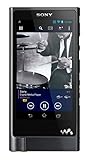
The NW-ZX2 is an older flagship with 128 GB of internal storage, and it suits a particular reader: someone who wants a large built-in library, does not need a balanced output, and is comfortable buying a device from an earlier generation. It is a reasonable choice for a listener who mostly plays CD-quality and 24-bit/192 kHz files through 3.5 mm headphones, and who values internal capacity over the newest platform.
Key specs
- Amplification: S-Master HX full-digital amplifier
- File support: DSD up to 5.6 MHz, PCM up to 192 kHz/24-bit, plus standard compressed and lossless formats
- Storage: 128 GB internal, microSD expandable
- Output: 3.5 mm single-ended only — no balanced jack
- Platform: Android-based with Wi-Fi, though the operating system generation is old and app support is limited
- Connectivity: USB and Bluetooth
- Chassis: substantial, around 235 g
- Battery: rated up to about 33 hours on MP3
Strengths
The ZX2’s strongest card is storage. 128 GB internal was exceptional when it launched and remains generous now, and it means a large library of CD-quality and 24/192 files fits without a memory card. Battery life of about 33 hours is also competitive with much newer hardware, because the amplification and display demands are lower than a current Android player’s. File support up to DSD 5.6 MHz and PCM 192 kHz/24-bit covers the overwhelming majority of real-world hi-res catalogues — most downloads and streaming hi-res tiers sit at or below 24-bit/192 kHz.
Pros
- 128 GB internal storage with microSD expansion
- Long rated battery life of about 33 hours
- Hi-res file support to DSD 5.6 MHz and PCM 192 kHz/24-bit
- Solid, substantial chassis
- Covers CD-quality and most hi-res catalogues without conversion
Cons
- No balanced output — a hard ceiling for headphone upgrades
- Older Android base, so streaming app support is unreliable and declining
- DSD and PCM ceilings are below the current generation
- Battery age is a real concern on any surviving unit
- Heavier than the modern ZX-series players
How it compares
Against the NW-WM1A, the ZX2 offers similar storage and battery life but a lower file-format ceiling and no balanced output, so the WM1A is the stronger offline machine if you have balanced headphones. Against the NW-ZX507, the ZX2 wins on internal capacity