Key takeaways
- Alpha 3: Corner ballistic nylon will fuzz slightly where it rubs overhead bins. Leather trim on handles darkens with hand oils – condition it twice a year. Zipper tape is durable, but overstuffing the expansion will strain the expansion zipper first. Cleaning is simple: vacuum, wipe with mild soap and water, avoid machine washing.
- 19 Degree Polycarbonate: Hairline surface scratches are inevitable; they do not affect structure but are cosmetic. Avoid stacking heavy bags on top – the contoured shell can flex. Clean with a soft cloth and non-abrasive cleaner; abrasive pads will haze the finish.
- 19 Degree Aluminum: Will dent and show scuffs. Dents rarely compromise function, but deep creases near the frame can affect the seal. Aluminum also shows every fingerprint.
- Common mistakes: Forcing an overpacked hardside closed warps the zipper frame; dragging a spinner on two wheels like a roller bag wears one set of bearings unevenly; checking a carry-on without a luggage tag on the handle loop increases loss risk despite the Tracer tag being inside.
What's inside
- Alpha vs 19 Degree: Which Tumi Carry-On Are You Actually Buying?
- Spec Comparison: Tumi vs Key Premium Competitors
- What Justifies the Price: Handle, Wheels, and Construction
- Durability and Ownership Realities: What Wears First
- Repair Program vs Competitors: The Real Value Calculation
- Decision Matrix: Pick by Your Situation
- Bottom Line: Should You Buy Tumi?
- Frequently Asked Questions
Tumi carry-on luggage is worth the premium price if you fly frequently and value long-term durability and serviceability over lowest weight, but it is not justified for occasional travelers who can get similar capacity and protection for less.
- Alpha vs 19 Degree: Which Tumi Carry-On Are You Actually Buying?
- Spec Comparison: Tumi vs Key Premium Competitors
- What Justifies the Price: Handle, Wheels, and Construction
- Durability and Ownership Realities: What Wears First
- Repair Program vs Competitors: The Real Value Calculation
- Decision Matrix: Pick by Your Situation
- Bottom Line: Should You Buy Tumi?
- Frequently Asked Questions
As an Amazon Associate we earn from qualifying purchases at no extra cost to you.



Alpha vs 19 Degree: Which Tumi Carry-On Are You Actually Buying?
Tumi’s two flagship carry-on families solve different problems, and choosing the wrong one is the most common buyer regret. Both sit in the premium tier, both use Tumi’s aircraft-grade aluminum telescoping handle system, but their shell materials, weight, and personality are completely different.
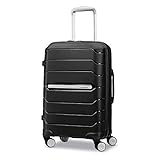
Tumi Alpha 3 (Soft-Side)
Built around Ballistic nylon (FAR fabric – Fused, Anti-abrasion, Resistant) with a proprietary coating, the Alpha 3 International Expandable 4-Wheel Carry-On is the workhorse. The soft shell flexes, the exterior is highly abrasion and water resistant, and the expansion zipper adds 2 inches of depth for overpacking on the return leg. It includes exterior pockets – a rarity in hardsides – for laptops, jackets, or documents you need at the gate. The trade-off is that it will not protect fragile contents as rigidly as a hardshell and the fabric will show scuffs over time, though it cleans easily.
Tumi 19 Degree (Hard-Side)
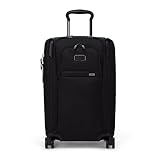
Made from aerospace-grade polycarbonate (standard 19 Degree) or aluminum (19 Degree Aluminum), it uses a distinctive contoured exterior that adds structural rigidity and deflects impacts. The polycarbonate version balances weight and impact resistance, while the aluminum version is the most dent-resistant and premium-feeling but also the heaviest and most prone to showing cosmetic dents and scratches. There are no exterior pockets – everything is inside the clamshell with compression straps and a zip divider. If you want maximum protection for suits, electronics, or bottles, this is the pick.
Spec Comparison: Tumi vs Key Premium Competitors
Numbers matter more than marketing names for carry-ons, especially when airlines enforce 22 x 14 x 9 inch limits. All dimensions below are the manufacturer’s listed case dimensions without expanded sections.
| Model | Material | Dimensions (in) | Weight | Capacity | Wheel Type | Warranty |
|---|---|---|---|---|---|---|
| Tumi Alpha 3 International Expandable 4-Wheel | Ballistic Nylon + Leather Trim | 21.0 x 14.0 x 9.0 | 9.8 lbs / 4.4 kg | 35L (42L expanded) | Dual recessed spinner, sealed bearings | Limited 5-Year + Tumi Tracer |
| Tumi 19 Degree International Expandable 4-Wheel | Polycarbonate Shell | 21.8 x 14.0 x 9.0 | 10.1 lbs / 4.6 kg | 33L (36L expanded) | Dual recessed spinner | Limited 5-Year + Tumi Tracer |
| Tumi 19 Degree Aluminum International Carry-On | Aluminum-Magnesium Alloy | 22.0 x 14.0 x 9.0 | 11.2 lbs / 5.1 kg | 31L | Dual recessed spinner | Limited 5-Year |
| Rimowa Essential Cabin | Polycarbonate | 21.7 x 15.7 x 9.1 | 7.1 lbs / 3.2 kg | 36L | Multiwheel, ball-bearing | Limited Lifetime |
| Briggs & Riley Baseline Essential Carry-On Spinner | Ballistic Nylon (1680D) | 22.0 x 14.0 x 9.0 | 9.9 lbs / 4.5 kg | 40L (expands to 48L) | Double spinner, Outsiders handle | Unconditional Lifetime (covers airline damage) |
| Away Aluminum Edition Carry-On | Aluminum Alloy | 21.7 x 14.4 x 9.0 | 10.4 lbs / 4.7 kg | 32.8L | 360deg Hinomoto spinner | Limited Lifetime |
Takeaway: Tumi is consistently 2 to 3 pounds heavier than the lightest polycarbonate competitors like Rimowa Essential. You are paying for structure and hardware density, not for ultralight packing.
What Justifies the Price: Handle, Wheels, and Construction
Telescoping Handle Build
Tumi’s handle system is the most cited reason frequent flyers stay loyal. It uses an aluminum triple-stage telescoping handle with an anti-wobble housing and a die-cast zinc handle grip with a comfortable, wide push-button. Unlike many brands that use two thin tubes that flex under load, Tumi’s tubes are thicker-walled and anchored deeper into the frame. That reduces lateral play when you push a fully loaded 35-40L bag across terminal carpet or over thresholds. The downside is weight – the housing adds nearly a pound compared to minimalist carbon or thin-aluminum systems found on lighter brands.
Wheel Durability
Both Alpha and 19 Degree use recessed dual-spinner wheels with sealed bearings, mounted on reinforced wheel housings. The recessed design protects the wheels from direct side impacts (the most common cause of wheel shear when baggage handlers toss bags). The wheels are also field-replaceable by Tumi repair centers rather than requiring a full shell replacement. Compared to competitors, Tumi wheels are not the quietest or smoothest on polished floors – Rimowa and Away with Hinomoto wheels roll slightly quieter – but they hold up better to cobblestones, elevator gaps, and curb drops because the housing does not protrude as far.
Materials and Hardware Details You Don’t See in Listings
Zippers on Alpha are YKK with self-repairing coils and Tumi’s proprietary zipper pulls that reduce snagging. On 19 Degree polycarbonate, the zipper is integrated into the frame and less exposed to splitting. Lining fabrics are treated for stain resistance, and the Tumi Tracer product recovery program is built into every bag – a metal plate with a unique 20-digit number registered to the owner that has helped return tens of thousands of lost bags. These small durability choices add cost but reduce failure points that cheaper cases cut.
Durability and Ownership Realities: What Wears First
Premium does not mean indestructible. Here is what actually happens after 2-3 years of regular use:
- Alpha 3: Corner ballistic nylon will fuzz slightly where it rubs overhead bins. Leather trim on handles darkens with hand oils – condition it twice a year. Zipper tape is durable, but overstuffing the expansion will strain the expansion zipper first. Cleaning is simple: vacuum, wipe with mild soap and water, avoid machine washing.
- 19 Degree Polycarbonate: Hairline surface scratches are inevitable; they do not affect structure but are cosmetic. Avoid stacking heavy bags on top – the contoured shell can flex. Clean with a soft cloth and non-abrasive cleaner; abrasive pads will haze the finish.
- 19 Degree Aluminum: Will dent and show scuffs. Dents rarely compromise function, but deep creases near the frame can affect the seal. Aluminum also shows every fingerprint.
- Common mistakes: Forcing an overpacked hardside closed warps the zipper frame; dragging a spinner on two wheels like a roller bag wears one set of bearings unevenly; checking a carry-on without a luggage tag on the handle loop increases loss risk despite the Tracer tag being inside.
Consumables to plan for: wheels and telescoping handles are covered under warranty for manufacturing defects, but airline-inflicted damage, scuffs, and normal wear are handled as paid repair. Replacement wheels, handles, and zipper pulls are stocked for years after a model is discontinued, which is a key advantage over fast-fashion luggage brands that have no parts inventory.
Repair Program vs Competitors: The Real Value Calculation
Tumi offers a Limited 5-Year Warranty covering defects in materials and workmanship, plus a repair program for damage outside warranty through Tumi service centers. Repairs are paid after the warranty period, but parts availability is strong and turnaround is typically 2-4 weeks in the US and EU. Tracer recovery support is lifetime.
Briggs & Riley’s Simple as That unconditional lifetime warranty is more generous – it explicitly covers airline damage for the life of the bag, even if the airline caused it. Rimowa and Away offer limited lifetime warranties on functional defects but exclude cosmetic wear and airline handling damage in most cases.
If you check bags or gate-check often, Briggs & Riley’s coverage saves money. If you carry on and want factory-original parts and refurbishment, Tumi’s paid repair network is more extensive globally, with service centers in major travel hubs.
Cost Per Use: Is Premium Cheaper Over Time?
A practical way to assess the price is cost per trip:
Assume a general market range for a Tumi carry-on is in the $750 to $1,100 range, versus a mid-range polycarbonate spinner in the $250 to $400 range. If you fly 25 times per year for 5 years (125 trips) and the Tumi lasts the full period with one $120 paid repair (wheel replacement at year 4), your total ownership cost is about $870 to $1,220 / 125 = $6.96 to $9.76 per trip. A $325 mid-range bag that needs replacement after 2.5 years (62 trips) would require two bags over the same period: $650 / 125 = $5.20 per trip with no repairs, but with the inconvenience of failure mid-travel and no parts support. At 10 trips per year for 5 years (50 trips), the premium cost per trip more than doubles to $17 to $24, making the savings argument much weaker for infrequent flyers.
Decision Matrix: Pick by Your Situation
| Your Situation | Best Choice | Why |
|---|---|---|
| Weekly business traveler, needs suit and laptop access at gate | Tumi Alpha 3 International Expandable | Exterior pockets, expansion, ballistic nylon resists overhead bin abrasion |
| Design-conscious traveler wanting maximum protection, mostly carry-on | Tumi 19 Degree Polycarbonate | Rigid shell, lighter than aluminum, distinctive look, good impact deflection |
| Meticulous traveler who wants heirloom look and does not mind weight/dents | Tumi 19 Degree Aluminum | Most rigid, most premium hardware, ages with patina |
| Travel 3-6 times per year, want lightest weight for overhead lifting | Rimowa Essential Cabin or similar lightweight polycarbonate | Saves 2-3 lbs, easier to lift, lower cost per use at low frequency |
| Check your bag often or want worry-free lifetime coverage | Briggs & Riley Baseline | Unconditional lifetime warranty covers airline damage, expansion is largest |
| Budget under general premium tier, want good wheels and organization | Mid-range polycarbonate (Away, Level8, Samsonite Proxis type) | 80% of function for 30-40% of price, acceptable if you replace every 3-4 years |
Bottom Line: Should You Buy Tumi?
Buy Tumi carry-on luggage if you travel at least twice a month, value a rock-solid telescoping handle, recessed repairable wheels, and a global repair network with parts availability, and you prefer either soft-side flexibility (Alpha) or hard-side structure (19 Degree). Skip it if weight is your top priority, you dislike patina on aluminum, or you fly infrequently enough that cost per trip will never break even – a lighter, less expensive polycarbonate spinner will serve you better and leave budget for other travel gear.
If you do buy Tumi, choose Alpha for practicality and pocket access, 19 Degree Polycarbonate for the best balance of protection and weight, and 19 Degree Aluminum only if you accept the weight penalty for the most durable shell.
Frequently Asked Questions
Is Tumi carry-on size compliant for US and European airlines?
The International models (21 x 14 x 9 inches) are designed to meet most international cabin limits, including stricter EU carriers that enforce 55 x 35 x 25 cm. The Continental or domestic 22-inch versions may be tight on budget airlines that weigh or sizer-check at the gate. Always check your airline’s exact sizer, especially for low-cost carriers.
Can Tumi wheels and handles be replaced after warranty?
Yes. Tumi stocks wheels, handles, zippers, and housing parts for several years after discontinuation and repairs are done through authorized service centers for a fee outside the 5-year warranty. Briggs & Riley and Rimowa also offer repairs, but parts availability varies by model age.
Does 19 Degree Aluminum need a cover to prevent scratches?
A clear protective film or a fabric cover helps preserve cosmetics, but most owners embrace the patina. Avoid adhesive films that trap moisture; if you use one, apply it to a clean, dry case and replace it annually.