Key takeaways
- RFID blocking: Look for wallets that specify 13.56 MHz blocking for credit cards and passports. Effective blocking uses a Faraday lining of copper or nickel-copper fabric inside the entire wallet body, not just one pocket. If only one slot is lined, the rest of your cards remain exposed when the wallet is closed.
- Material durability: Nylon and polyester with water-resistant coating handle rain and spills best. Full-grain leather lasts longest but requires conditioning. Top-grain or genuine leather splits and peels within 1-2 years of frequent travel. Vegan leather (PU) cracks faster in heat and dry cabin air.
- Capacity vs. bulk: A wallet that holds 4 passports but does not fit in a jacket pocket defeats its purpose. Measure against your typical carry: solo with one passport and 6 cards needs a different form than a family carrying 4 passports, vaccination cards, and cash in multiple currencies.
What's inside
The best travel wallets in 2026 are the Bellroy Travel Wallet for most solo travelers who want RFID protection in a slim leather package, the Zoppen Multi-Purpose RFID Travel Wallet for families needing passport and document capacity for four to five people, and the Saddleback Leather Passport Wallet for travelers prioritizing full-grain leather durability over minimal weight.
As an Amazon Associate we earn from qualifying purchases at no extra cost to you.


What Makes a Travel Wallet Worth Packing in 2026
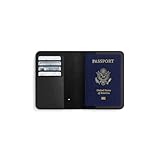
A good travel wallet solves three problems that a regular wallet cannot: keeping passports, boarding passes, and cards together through security and boarding, protecting contactless cards from unauthorized scanning, and surviving being shoved into seat pockets and overhead bins for years. If you only need card storage, a slim cardholder is better. If you are flying internationally, crossing borders, or managing documents for others, a dedicated travel wallet saves time and prevents loss.
Three decision criteria separate the best travel wallets from generic organizers:
- RFID blocking: Look for wallets that specify 13.56 MHz blocking for credit cards and passports. Effective blocking uses a Faraday lining of copper or nickel-copper fabric inside the entire wallet body, not just one pocket. If only one slot is lined, the rest of your cards remain exposed when the wallet is closed.
- Material durability: Nylon and polyester with water-resistant coating handle rain and spills best. Full-grain leather lasts longest but requires conditioning. Top-grain or genuine leather splits and peels within 1-2 years of frequent travel. Vegan leather (PU) cracks faster in heat and dry cabin air.
- Capacity vs. bulk: A wallet that holds 4 passports but does not fit in a jacket pocket defeats its purpose. Measure against your typical carry: solo with one passport and 6 cards needs a different form than a family carrying 4 passports, vaccination cards, and cash in multiple currencies.
Best Travel Wallets Compared: Specs and Capacity
Dimensions and weight matter more than marketing claims about number of pockets. The table below compares common 2026 models on verifiable specs to help you judge pocketability and real capacity.
| Model | Material | Dimensions (Closed) | Weight | Passport Slots | Card Slots | RFID Blocking |
|---|---|---|---|---|---|---|
| Bellroy Travel Wallet | Vegetable-tanned leather, microfiber lining | 8.6 x 4.3 x 0.8 in (218 x 110 x 20 mm) | 3.5 oz (100g) | 1-2 | 4 + 2 slip pockets | Yes, fully lined |
| Zoppen Multi-Purpose Family Wallet | Nylon canvas with PU trim | 8.1 x 4.7 x 1.1 in (205 x 120 x 28 mm) | 5.1 oz (145g) | 4 | 10 + zip pocket | Yes, fully lined |
| Zero Grid Passport Wallet | Nylon with RFID fabric | 8.0 x 4.5 x 0.9 in (203 x 114 x 23 mm) | 3.9 oz (110g) | 2 | 6 + mesh pouch | Yes, fully lined |
| Saddleback Leather Passport Wallet | Full-grain leather, pigskin lining | 8.5 x 5.0 x 0.9 in (216 x 127 x 23 mm) | 7.2 oz (204g) | 1-2 | 6 + large cash sleeve | No (leather only model) |
| Lewis N. Clark RFID Tri-Fold | Polyester with RFID shield | 7.5 x 4.3 x 0.7 in (190 x 109 x 18 mm) | 3.2 oz (91g) | 1 | 6 + ID window | Yes, fully lined |
| Travelon Anti-Theft Classic | Polyester with locking zip | 7.9 x 4.4 x 1.0 in (200 x 112 x 25 mm) | 4.2 oz (119g) | 2 | 8 + boarding pass slip | Yes, fully lined |
Key takeaway: Leather travel wallets weigh roughly 40-80% more than nylon equivalents with the same capacity. If you prioritize slipping the wallet into a trouser or blazer pocket, stay under 4.0 oz and 0.9 inches thick. If you carry it in a crossbody bag or backpack, the extra weight of a family organizer is less noticeable.
Decision Matrix: Which Wallet Fits Your Trip Type
Use your traveler profile to narrow the field before comparing features:
| If You Are… | Prioritize | Best Type | Why |
|---|---|---|---|
| Solo traveler, 1 passport, carry-on only | Slim profile, quick-access boarding pass slot | Bi-fold leather or tri-fold polyester | Fits jacket pocket, forces you to carry less |
| Couple traveling together | 2 passports + shared cash/cards | Zip-around continental wallet | Keeps both documents together without bulk of 4-passport book |
| Family of 3-5 | 4+ passport sleeves, wrist strap, pen loop | Large nylon family organizer | One adult can manage all documents at immigration |
| Business traveler | RFID, SIM pocket, sleek leather appearance | Leather travel wallet with pen holder | Professional look for meetings, still functional in transit |
| Budget-conscious or infrequent flyer | Low cost, water resistance | Nylon/polyester with RFID lining | General market range $15-$35, easy to replace if lost |
| Long-term / frequent flyer (20+ flights/year) | Longevity, repairability | Full-grain leather with warranty | Leather can be conditioned and restitched; nylon frays at seams after 3-4 years of heavy use |
Top Picks by Situation
Best Overall Slim Pick: Bellroy Travel Wallet
Bellroy remains the reference for a slim leather travel wallet because it holds a passport, 4 embossed cards, folded bills, and a boarding pass without a zipper. The wallet uses an RFID-blocking lining that covers all card and passport slots, while the external leather protects against abrasion. The included micro SIM slot and integrated pen are small but useful for customs forms. Limitations: With two passports it becomes tight, and the leather needs a light conditioner every 4-6 months to prevent drying at the spine. General market range for this category is $90-$130.
Best for Families: Zoppen Multi-Purpose and Travelon Family Styles
Family organizers from Zoppen, Travelon, and Zero Grid share the same formula: a zip-around closure, 4 passport pockets, 8-10 card slots, a transparent ID window, and a detachable wrist strap. Zoppen’s nylon version is the most common example and the lightest way to carry documents for four people plus boarding passes and cash. The water-resistant nylon wipes clean and the zipper keeps contents secure if a child drops the wallet. Trade-offs: RFID lining adds stiffness, and the PU trim on budget models can peel after prolonged sun exposure. If you travel as a family once or twice a year, this format in the $20-$45 range is more practical than buying multiple individual wallets.
Best Leather Investment: Saddleback Leather Passport Wallet
For travelers who want one wallet for a decade, Saddleback’s full-grain leather passport wallet is built with a single sheet of leather, marine-grade stitching, and a pigskin interior. It does not include RFID blocking in its standard leather version, so you will need RFID sleeves if that is a priority. The wallet develops a patina and can be resoled or restitched under warranty. At 7.2 oz it is the heaviest option here and does not zip fully shut, so it is best for bag carry rather than a front pocket. General market range for full-grain leather travel wallets is $90-$160.
Best Lightweight and Low-Profile: Lewis N. Clark Tri-Fold and Zero Grid
If you want the smallest footprint, a tri-fold polyester wallet like the Lewis N. Clark RFID Tri-Fold folds to 7.5 inches long and 3.2 oz. It sacrifices some cash capacity but disappears in a pocket. Zero Grid splits the difference with a nylon book-style wallet that holds two passports at under 4 oz. Both are fully RFID lined and include a small key or coin pouch that doubles for a folded baggage claim sticker.
Durability and Ownership Realities
What wears first depends on material:
- Nylon/polyester wallets: The zipper pull and the stitching at the spine fail before the fabric. Check for YKK or SBS zippers and double-stitched edges. The RFID lining itself can crack if you machine wash the wallet or leave it in a hot car above 140°F (60°C). Spot clean with damp cloth and mild soap only.
- Leather wallets: Edge paint and card slot corners show wear first. Vegetable-tanned leather without a plastic coating ages better than corrected-grain leather with heavy pigment. Condition twice a year with a neutral leather balm, avoid prolonged sun, and store flat with passports removed to prevent stretching.
- Common mistakes: Overstuffing card slots with loyalty cards stretches the pockets permanently. Storing a pen directly against a passport photo page can leave ink transfer in heat. Leaving boarding passes inside for months yellows the lining.
Cleaning: For nylon, wipe interior with isopropyl alcohol on a cloth to remove oils from hands that degrade RFID fabric. For leather, never use alcohol or baby wipes; use a dedicated leather cleaner and allow 24 hours to dry away from direct heat.
Cost Per Use: Should You Spend More?
A travel wallet is not a daily wallet for most people, so calculate value by trips, not days. Example calculation:
A $25 nylon family wallet used for 2 trips per year for 3 years equals 6 uses, or about $4.17 per use. A $120 full-grain leather wallet used for 8 trips per year for 8 years equals 64 uses, or about $1.88 per use, plus conditioning balm at roughly $10 every two years. The leather option costs more upfront but becomes cheaper per use if you fly frequently and maintain it. If you fly once a year or tend to misplace items while traveling, the lower upfront cost minimizes loss.
RFID blocking does not require a premium price. Effective blocking fabric adds only a few dollars to manufacturing cost. You are paying for leather quality, stitching, warranty, and brand design rather than stronger RFID protection.
What About RFID Blocking: Do You Need It?
Contactless credit cards and modern biometric passports transmit at very short range, typically under 2 inches. Documented cases of covert scanning in public are rare, and most card issuers offer zero-liability fraud protection. RFID blocking provides peace of mind and prevents accidental tap-to-pay when you brush against a reader, but it is not a substitute for monitoring statements and using bank alerts. If you carry contactless cards in a front pocket daily, blocking matters more. If you only use the wallet at airports and keep it in a zipped bag, the practical benefit is smaller.
If you choose a non-RFID leather wallet, individual RFID sleeves for each card and passport cost a few dollars and add protection without replacing the wallet.
FAQ
Can a travel wallet fit a US passport and a passport card together?
Yes. Most bi-fold travel wallets have a passport sleeve that fits a US book (5.0 x 3.5 inches) plus a card in the adjacent slip pocket. Family zip-around wallets fit the book and card in the same sleeve, but the extra thickness makes the zipper harder to close. Avoid forcing both into one tight sleeve to prevent bending the passport cover.
Will a travel wallet hold my phone?
Standard travel wallets do not safely hold modern phones. Even large family organizers at 8.1 inches long cannot securely close with a 6.1-inch phone inside. Use a separate crossbody or pouch for your phone to avoid stressing the wallet zipper and exposing the screen.
How many cards should I actually carry abroad?
Carry two: one primary and one backup from a different network, plus a small amount of local cash. Leave store loyalty and infrequent cards at home. Fewer cards means a slimmer wallet, less to lose, and faster reissuing if the wallet is stolen.