Key takeaways
- Extend the telescoping handle and measure from the bottom of the wheels to the top of the handle housing, not just the case shell. Wheels add 2 to 3 inches.
- Measure width at the widest point, including side bumpers or pockets. For soft-sided bags, zip it fully packed and measure while compressed, as expandable pockets bulge.
- Measure depth front-to-back including front pockets. A bag that is 9 inches empty can be 10.5 inches with a packed front compartment.
- Check linear inches: Add L + W + H. Example: 22 + 14 + 9 = 45. If your bag measures 22.5 + 14 + 9 = 45.5, it is technically oversized for American/Delta/United.
- Test in a sizer box if possible. Airport sizers have zero tolerance. If you have to force the bag in, agents can require you to check it. Pack, then try to slide the bag into a taped box at home that matches the strictest airline on your ticket.
What's inside
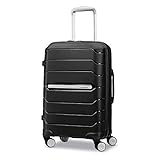
The standard carry on luggage size for most US airlines is 22 x 14 x 9 inches (56 x 36 x 23 cm) including handles and wheels, but the true safe-fit size that avoids fees on almost every airline is 21.5 x 13.5 x 8.5 inches (55 x 34 x 22 cm).
As an Amazon Associate we earn from qualifying purchases at no extra cost to you.


Why There Is No Single Universal Standard
Airlines publish maximum dimensions, not recommended dimensions. That maximum includes everything that sticks out – telescoping handle, top carry handle, and wheels. A bag marketed as “22-inch” often measures 22 inches for the case body alone and 23 to 24 inches overall, which is why it gets flagged at the gate. International carriers, low-cost airlines, and regional jets enforce smaller limits than the big US domestic carriers, so your bag needs to meet the strictest airline on your itinerary, not just your outbound flight.
The other number to watch is linear inches (length + width + height). Most US airlines cap carry-ons at 45 linear inches. If you are within that total but one side is too long, you will still be charged a gate-check fee.
US and International Airline Carry-On Dimensions Compared
These are the published maximums for cabin bags in 2026. Budget carriers are stricter on weight and on enforcement, even when the dimensions look similar.
| Airline | Max Size (inches) | Max Size (cm) | Max Weight (if enforced) | Notes |
|---|---|---|---|---|
| American Airlines | 22 x 14 x 9 | 56 x 36 x 23 | Not weighed | Includes handles/wheels, 45 linear inches |
| Delta Air Lines | 22 x 14 x 9 | 56 x 36 x 23 | Not weighed | Must fit in overhead bin sizer |
| United Airlines | 22 x 14 x 9 | 56 x 36 x 23 | Not weighed | Basic Economy strictly enforced |
| Southwest Airlines | 24 x 16 x 10 | 61 x 41 x 25 | Not weighed | Largest US allowance, 50 linear inches |
| Alaska Airlines | 22 x 14 x 9 | 56 x 36 x 23 | Not weighed | Regional flights may require smaller |
| JetBlue | 22 x 14 x 9 | 56 x 36 x 23 | Not weighed | Personal item must fit under seat |
| Spirit Airlines | 22 x 18 x 10 | 56 x 46 x 25 | Included only with higher fares | Fee if bag exceeds sizer at gate |
| Frontier Airlines | 24 x 16 x 10 | 61 x 41 x 25 | Included only with bundle | Personal item is 14 x 18 x 8 in |
| Ryanair | 21.6 x 15.7 x 7.9 | 55 x 40 x 20 | 22 lbs / 10 kg | Cabin bag only with Priority; otherwise small bag only |
| easyJet | 22 x 17.7 x 9.8 | 56 x 45 x 25 | 33 lbs / 15 kg | Large cabin bag requires overhead bin add-on |
| British Airways | 22 x 17.7 x 9.8 | 56 x 45 x 25 | 51 lbs / 23 kg | Also limits to 51 lbs, strictly weighed on some routes |
| Lufthansa | 21.6 x 15.7 x 9 | 55 x 40 x 23 | 17.6 lbs / 8 kg | 8kg total for carry-on + personal item |
| Emirates | 21.6 x 14.9 x 7.8 | 55 x 38 x 20 | 15.4 lbs / 7 kg | Economy limit 7kg, business 2 bags |
| Air France / KLM | 21.6 x 13.7 x 9.8 | 55 x 35 x 25 | 26 lbs / 12 kg | + personal item 15.7 x 11.8 x 5.9 in |
| Qatar Airways | 19.6 x 14 x 7.8 | 50 x 37 x 20 | 15.4 lbs / 7 kg | Smallest height allowance of major Gulf carriers |
| Singapore Airlines | 45 linear inches total | 115 cm total | 15.4 lbs / 7 kg | Sum of dimensions must not exceed 115cm |
If you fly only American, Delta, and United, a true 22 x 14 x 9-inch bag is fine. If you fly Ryanair, Emirates, Qatar, or Lufthansa even once, you need a bag closer to 21.5 x 15 x 8 inches or you will pay a gate fee of typically $50 to $100 on US domestic and 50 to 75 EUR/GBP on European low-cost carriers.
How to Measure Your Bag to Avoid Gate Fees
Do not trust the listed size on the product tag. Measure it yourself after purchase with a tape measure on a flat floor.
Step-by-step measuring method
- Extend the telescoping handle and measure from the bottom of the wheels to the top of the handle housing, not just the case shell. Wheels add 2 to 3 inches.
- Measure width at the widest point, including side bumpers or pockets. For soft-sided bags, zip it fully packed and measure while compressed, as expandable pockets bulge.
- Measure depth front-to-back including front pockets. A bag that is 9 inches empty can be 10.5 inches with a packed front compartment.
- Check linear inches: Add L + W + H. Example: 22 + 14 + 9 = 45. If your bag measures 22.5 + 14 + 9 = 45.5, it is technically oversized for American/Delta/United.
- Test in a sizer box if possible. Airport sizers have zero tolerance. If you have to force the bag in, agents can require you to check it. Pack, then try to slide the bag into a taped box at home that matches the strictest airline on your ticket.
Common mistakes that trigger fees
- Buying a “22-inch” hardside spinner where the body is 22 inches and overall height is 23.5 inches with wheels.
- Using the expander zipper for the outbound flight. An expanded bag typically grows from 9 to 10.5-11 inches deep and fails the sizer on return flights when overhead bins are tighter.
- Forgetting the personal item rule. Your carry-on size is separate from your personal item (usually 18 x 14 x 8 inches / 45 x 35 x 20 cm). Overpacking the underseat bag so it no longer fits under the seat also leads to a forced check.
Which Carry-On Size Should You Buy?
Buy for the smallest airline you will realistically fly in the next two years, not the largest. The trade-off is packing capacity versus universal compliance.
| Your Travel Situation | Best Bag Size to Buy | Why It Works | Example Bag Types (No Testing Claim) |
|---|---|---|---|
| Only US major carriers (American, Delta, United, Southwest) | 22 x 14 x 9 in (56 x 36 x 23 cm) | Maximizes packing volume (35-42L), fits all US legacy bins | Travelpro Maxlite 5 21″ spinner, Samsonite Freeform 21″ |
| Mix of US + Europe on legacy carriers (British Airways, Lufthansa) | 21.5 x 15 x 8.5 in (55 x 38 x 22 cm) | Stays under 23cm depth for Lufthansa/Emirates, wider cut still packs well | Away Carry-On, Level8 Road Runner 20″ |
| Frequent low-cost carriers (Ryanair, Wizz Air, Frontier Basic) | 20 x 14 x 8 in (50 x 35 x 20 cm) or 21.6 x 15.7 x 7.9 in max | Guaranteed free cabin bag without Priority/overhead add-on | Ryanair-compliant underseat rollers, Samsonite Underseater |
| Long-haul to Asia/Middle East (Emirates, Qatar, Singapore) | 19.5-21 x 14 x 8 in (50-55 x 36 x 20 cm) + keep under 15 lbs packed | Meets 7kg weight limits; smaller hardside helps stay light | Lightweight polycarbonate 19″ cabin cases |
| Regional jets & small overhead bins (CRJ-200, E145) | 19-20 x 13 x 7.5 in | Fits wheels-first on 50-seat jets where 22″ bags are gate-checked free but delayed | 19″ compact spinners, soft-sided duffels |
Capacity reference: A standard 22 x 14 x 9 spinner holds about 36 to 44 liters. Dropping to 21 x 14 x 8 reduces volume to 30 to 35 liters, roughly one to two days less packing if you roll clothes tightly. If that loss matters, choose a hybrid: a 21.5-inch hardside for strict airlines and compression packing cubes to recover space, rather than risking a 22-inch bag.
Worked calculation: Will your packed bag stay within limits?
Take a typical 21.5-inch carry-on with an empty weight of 7 lbs (3.2 kg). Packed for 4 days at ~18 lbs (8.1 kg) total, you are fine for US airlines (no weight limit) but over the 15.4 lb (7 kg) limit on Emirates/Qatar. To meet 7 kg, you must either check a bag or reduce load by about 10 lbs: switch to a 5.5 lb polycarbonate shell, wear your heaviest shoes and jacket, and move liquids and electronics to your personal item. On Ryanair, total weight matters less than sizer fit, but if your bag is 22 inches tall overall, you will pay the 46-60 EUR gate fee regardless of weight.
Specs That Affect Fit More Than Advertised Size
Material and wheel design change whether you actually fit. Hardside polycarbonate holds its shape in the sizer but cannot be squeezed; soft-side nylon or polyester can compress half an inch if not overpacked. Four-wheel spinners add height but roll better in terminals; two-wheel rollers are typically 1 to 1.5 inches shorter overall for the same case body. Inline skate wheels also survive curbs better than small spinner casters.
For durability and ownership, expect these realities: Spinner wheels and telescoping handles wear first – grit in the bearing and bent handle tubes from overhead bin shoving are the most common repairs. Zippers on soft bags fail before shells crack; look for YKK or SBS zippers with double stitching. Hardside shells scuff and can crack at corners after repeated gate checks – a sleeve or previous airline sticker residue is cosmetic but indicates impacts. Clean shells with mild soap and water; clean fabric with a vacuum and spot cleaner to avoid coating damage. Store bags unzipped with packing cubes inside to prevent warping.
For market context in 2026, expect general ranges: reliable underseat rollers and budget 20-inch spinners run about $70 to $140, mid-range polycarbonate carry-ons with better wheels and handles run $140 to $280, and premium lightweight or aluminum frames run $280 to $550+. Price does not change airline size rules – an expensive oversized bag is still oversized.
FAQ
Do airlines include wheels and handles in carry-on measurements?
Yes, all major airlines state maximums include handles and wheels. Measure from the floor to the top of the handle housing with wheels touching the ground.
What is the safest one-size-for-all carry-on?
A bag measuring 21.5 x 13.5 x 7.5 inches (55 x 34 x 19 cm) and weighing under 7 kg packed will pass every airline in the table without a fee. You sacrifice about 15% packing volume versus a full 22 x 14 x 9 bag.
Can I get through with a 23-inch bag if it is not fully packed?
No. Gate agents use a rigid sizer, not a weight or fullness check. If the bag is longer than the sizer, compression does not help for hardside bags and rarely helps for soft bags unless you can visibly squish it in.
What about personal items?
Most airlines allow one personal item plus your carry-on, typically 18 x 14 x 8 inches (45 x 35 x 20 cm) that must fit under the seat. Low-cost carriers often include only this personal item in the base fare.