
Key takeaways
- Camera cube: Body, lenses, flash, and a spare battery in a protective sleeve. Batteries should be kept in the cabin with the terminals protected, as airlines require.
- Medium clothing cube: A few days of shirts and trousers.
- Small cube or pouch: Chargers, cables, memory cards, and a lens cloth.
- Toiletry pouch: Liquids in containers within airline limits.
For travelers who carry a camera, the Peak Design Camera Cube is the usual starting point for turning an ordinary backpack into a camera bag, Shacke Pak and Tenba inserts suit people who want fully customizable dividers, and standard clothing packing cubes from Eagle Creek or Peak Design suit everything that is not a lens. The main idea is to separate soft, protective camera storage from clothing, so you can lift the gear out in one piece at security and keep the rest of your luggage organized.
Our top picks
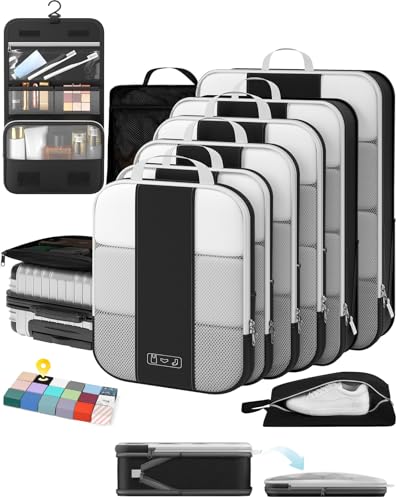


As an Amazon Associate we earn from qualifying purchases at no extra cost to you.
Camera cubes versus ordinary packing cubes
A normal packing cube is a thin fabric box that compresses clothing. It offers almost no impact protection, and it should never hold a lens or camera body by itself. A camera cube, by contrast, has a padded structured shell and removable dividers, so you can build compartments around each item. The two work well together: camera cube for gear, clothing cubes for everything else.
Camera cubes come in two broad styles. Some are rigid-sided boxes with padded walls that hold their shape. Others are softer wraps or pouches that fold around items. Rigid cubes protect better and are easier to pack; soft wraps are lighter and fold flat when empty.
Comparison
| Option | Type | Best for | Key stated traits | Limits |
|---|---|---|---|---|
| Peak Design Camera Cube (several sizes) | Padded rigid-sided cube | Mirrorless or DSLR kit in a travel backpack | Maker describes adjustable dividers, a weather-resistant shell, and a top-opening zipper | Exact fit varies by lens length; larger sizes need a roomy host bag |
| Peak Design packing cubes | Clothing cubes | Matching clothing organization | Maker lists several sizes and a design that pairs with the camera cubes | No impact protection for gear |
| Shacke Pak | Collapsible padded pouch | Small kit, flexible shaping | Maker describes a padded pouch with adjustable internal dividers | Less structure than a rigid cube |
| Tenba Tools or Tenba BYOB inserts | Padded insert | Photographers who prefer a minimalist style | Padded inserts sized to fit common bags, with removable dividers | Limited to the sizes made for the system |
| Lowepro and Vanguard camera inserts | Padded insert | Budget to mid-range kits | Padded dividers and a simple zipper design | Fit with different bags varies |
| Eagle Creek Pack-It cubes | Clothing cubes | Everyday clothing | Lightweight fabric with mesh panels on many models | Not a protective option for camera equipment |
The Peak Design Camera Cube
The Camera Cube is often listed first in photography travel guides because it is a simple idea well executed. The maker describes a padded structure with a folding top that opens flat and removable dividers that attach with hook-and-loop fabric. Several sizes exist, so you can choose a smaller cube for a mirrorless body and one or two lenses, or a larger one for a longer kit. It is designed to slot into the maker’s own backpacks, but reviewers note it fits many other bags too.
Limits are mostly about size. Measure the longest lens you carry, including a hood if you store it attached, and compare it with the cube’s interior dimensions on the maker’s site. A cube that is too small forces you to leave a lens in the bag or stack gear, defeating the point.
Customizable dividers: Shacke and Tenba
If you carry unusual gear, such as a tilt-shift lens, a small gimbal, or a drone, you may prefer an insert with more flexible dividers. Shacke Pak is a padded pouch that can be reshaped by moving its internal dividers. Tenba’s insert line is built to fit its own bags and is also used inside travel backpacks. Both approaches let you build a custom layout without buying a full camera bag.
What goes where
- Camera cube: Body, lenses, flash, and a spare battery in a protective sleeve. Batteries should be kept in the cabin with the terminals protected, as airlines require.
- Medium clothing cube: A few days of shirts and trousers.
- Small cube or pouch: Chargers, cables, memory cards, and a lens cloth.
- Toiletry pouch: Liquids in containers within airline limits.
Keep memory cards separate from the camera. If a bag is lost or stolen, you still have the photos you took earlier in the trip.
Fit and compatibility notes
Camera cubes are sized in a way that assumes a certain backpack. A cube designed for a 30 to 45 liter pack may not fit well in a 20 liter daypack. Read the host bag’s interior measurements before buying, and consider front-loading or clamshell bags, which open wider and make cubes easier to slide in. If your bag has a rigid back panel, ensure the cube does not press into it in a way that is uncomfortable to wear.
Weight is another factor. Camera gear is dense, so a full cube can push a carry-on bag over an airline’s weight limit. Check your airline’s rules and be ready to move heavy items to a jacket pocket or personal item.
Care
Wipe cubes with a damp cloth and let them air dry. Avoid machine washing padded inserts unless the maker says it is safe, because the padding and hook-and-loop dividers can wear out. Remove dust and sand with a soft brush, particularly around zippers.
Budget tiers
- Budget: Basic padded inserts from Vanguard, Lowepro, or generic brands. Fine for light use and mirrorless kits.
- Mid-range: Tenba and Shacke-style inserts, and smaller Peak Design cubes.
- Premium: Larger Peak Design cubes and matched packing systems from the same maker, which cost more but integrate smoothly.
Pick X if…
| If you… | Pick | Why |
|---|---|---|
| Carry a mirrorless body and two lenses | Small Peak Design Camera Cube | Compact and quick to remove for security |
| Own odd-shaped gear | Shacke Pak or Tenba insert | More flexible internal layout |
| Already have a camera backpack | Standard packing cubes only | Clothing organization without duplicating protection |
| Travel light with one bag | One camera cube plus one clothing cube | Minimal gear that stays organized |
| Want the cheapest option | Generic padded insert | Basic protection at the lowest tier |
Alternatives
- Dedicated camera backpack: Built-in protection, but less flexible if you want a regular travel bag.
- Sling bag for daily shooting: Use the cube for transit and a sling for sightseeing.
- Wrap cloths: Inexpensive and light for single lenses, though not a full organizer.
Packing method for a typical trip
A simple routine keeps a camera cube useful rather than cluttered. Start by placing the body in the largest compartment with the lens attached or capped, as the maker’s divider layout suggests. Put the lens you use most in the slot closest to the opening, so you can reach it without removing everything else. Store small items such as filters, lens caps, and cleaning cloths in a separate pouch rather than loose in the cube, because loose parts tend to shift and scratch glass.
Before leaving for the airport, pull the cube out of the host bag once and confirm you can do it quickly. Security staff may ask you to place camera equipment in a separate tray, and a cube that lifts out in one motion saves time. Put the cube back with the heaviest items near your back, which keeps the bag comfortable on your shoulders. If the bag has a laptop compartment, keep the laptop there rather than pressing it against the cube.
Common mistakes to avoid
- Overfilling: A cube packed to the brim stresses the zipper and leaves no room for the padding to work.
- Mixing clothes and glass: Soft clothing against a lens can look harmless, but the shifting during travel may cause scratches or pressure on the barrel.
- Ignoring weather: Many cube shells are weather-resistant rather than waterproof, according to makers, so carry a rain cover or a dry bag in wet climates.
- Buying by capacity label alone: Interior dimensions tell you more than a name like medium or large.
- Forgetting travel adapters and cables: Pack a separate pouch for these so they do not take up protected camera space.
Treat a cube as part of a system. The best results come from matching the cube size to the host bag, the host bag to the airline’s limits, and the contents to the trip’s photography plans rather than carrying every lens you own.
Frequently Asked Questions
Can regular packing cubes hold camera gear?
They are not designed for it. Clothing cubes have little padding, so they should hold clothing, cables, and soft items rather than lenses or bodies.
How do I choose the right camera cube size?
List the items you carry, measure the longest lens, and compare with the interior dimensions listed by the maker. Choose a size with a small margin for movement rather than a tight fit.
Will a camera cube fit in any backpack?
Not always. Check the bag’s interior width and depth, and look for clamshell or wide-opening designs. A cube that is too wide can pinch against the bag’s frame.
Are camera cubes airline carry-on friendly?
The cube is only a part of your bag, so airline rules apply to the whole bag. Weight is the usual issue, because camera equipment is dense.
Can I wash a padded camera cube?
Spot cleaning is generally safer. Machine washing can damage the padding and dividers, so follow the maker’s care instructions.
Should spare batteries go in the cube?
Spare lithium batteries should travel in carry-on luggage and be protected from short circuits. Keep them in cases or with terminals covered, and follow your airline’s rules.




