Key takeaways
- Weight when empty: A lighter bag leaves more of a 7 to 10 kilogram limit for your belongings.
- Wheels: Spinner wheels are easy on smooth floors, but two-wheel designs handle cobblestones and curbs better.
- Locks: If you lock the bag, a TSA-recognized lock helps for US connections, though officers elsewhere may use their own rules.
- Power bank rules: Lithium batteries must travel in the cabin. Some bags have removable battery packs; follow airline and aviation authority rules.
- Handle and zipper quality: The most common failure points; look for strong, smooth zippers and a handle that does not wobble.
- Warranty: Compare the maker’s terms for wheels, handles, and shells.
For international trips, a hard-shell spinner from a brand such as Away, Samsonite, or Rimowa suits travelers who want protection and easy rolling, a soft-sided carry-on from Briggs and Riley or Travelpro suits people who want expandability and a front pocket, and a carry-on backpack suits anyone who faces cobblestones, stairs, or strict budget airline limits. What matters most abroad is not the brand but the size: carry-on limits differ from airline to airline, and many international and low-cost carriers allow smaller and lighter bags than US airlines.
Our top picks


As an Amazon Associate we earn from qualifying purchases at no extra cost to you.
Size and weight: the main international trap
US domestic carriers commonly allow a bag near 22 by 14 by 9 inches. Many European and Asian carriers publish a limit closer to 55 by 40 by 20 centimeters, which is smaller in length and depth, and several set a weight cap between about 7 and 10 kilograms. Budget airlines in particular tend to enforce both. A bag marketed as “carry-on size” in one country may be too large for a flight in another, so measure against your specific airline’s published rules, including wheels and handles.
If you plan several flights, choose a bag that meets the smallest limit on your route. Some makers sell “international carry-on” versions of their bags with slimmer dimensions for exactly this reason.
At a glance
| Bag | Type | Best for | Key stated traits | Limits |
|---|---|---|---|---|
| Away The Carry-On (and smaller variants) | Hard-shell spinner | Style-conscious general travel | Maker describes a polycarbonate shell, four spinner wheels, and an interior compression system; some versions include a battery pocket | Shell can scuff; hard shells do not expand |
| Samsonite hard and soft spinners | Hard or soft spinner | Wide choice at many tiers | Broad range with international-size options listed by the maker | Quality varies by line |
| Rimowa Essential or Original Cabin | Hard-shell spinner | Premium durability and style | Maker lists aluminium or polycarbonate shells and cabin sizing | Premium tier; heavier in some models |
| Briggs and Riley Baseline International Carry-On | Soft-sided | Business and long-term durability | Maker lists an expandable design and a lifetime-style warranty for the bag | Heavier than some competitors |
| Travelpro Maxlite or Platinum Elite | Soft-sided | Frequent flyers and crew-style use | Maker positions the lines for flight crews, with lightweight fabrics and expansion on many models | Soft shell offers less crush protection |
| Osprey Farpoint or Fairview 40, Peak Design Travel Backpack 45L | Carry-on backpack | Rough terrain and tight budget-airline limits | Makers list travel-focused packs sized for cabin use | Weight sits on your back; some cabins still require size checks |
Hard-shell spinners
Hard-shell spinners protect fragile items and roll smoothly through airports. Polycarbonate shells flex under pressure rather than cracking, according to the makers, and spinner wheels let you push the bag beside you. Away’s carry-on is a popular choice because of its interior layout, with a compression board that holds clothes in place. Samsonite offers many shell options, from budget to premium. Rimowa sits at the premium end, with a long record in aluminum and polycarbonate cases.
The trade-offs are that hard shells cannot expand and they show scratches. If you often come home with souvenirs, expansion may be worth more than a hard shell. Hard shells also tend to have less external storage, so you may need a personal item for documents.
Soft-sided carry-ons
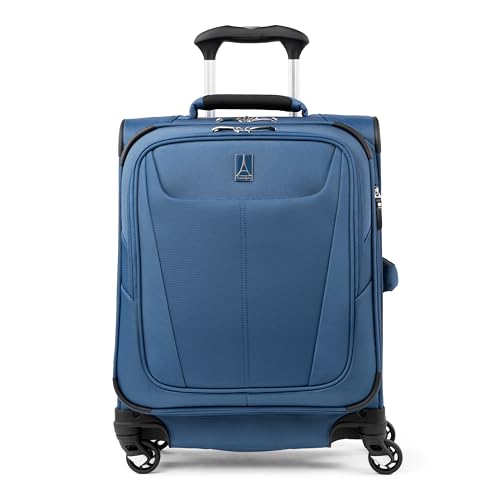
Soft-sided bags from Briggs and Riley and Travelpro are favored by frequent travelers who want pockets, expansion, and a bit of give when squeezing into a bin. Briggs and Riley is known for its warranty and durable materials, and its international carry-on lines are cut to meet smaller cabin limits. Travelpro’s lines are built around lightweight fabrics, and the maker markets them to airline crews.
Soft sides offer less impact protection than a hard shell, but their pockets make it easier to retrieve items without opening the main compartment. Expansion zippers are a mixed blessing: they add capacity, but an expanded bag may exceed airline size limits at the gate, so expand only when the airline allows it.
Carry-on backpacks
For travelers who walk long distances, climb stairs, or deal with uneven ground, a backpack can be more practical than a wheeled bag. Osprey’s Farpoint and Fairview lines and Peak Design’s Travel Backpack 45L are widely discussed in travel-gear roundups. Makers describe clamshell openings, hip belts, and sized-for-cabin dimensions. Note that a backpack’s stated volume can exceed an airline’s size limits if it is overpacked, so avoid cramming a full bag.
Features that matter abroad
- Weight when empty: A lighter bag leaves more of a 7 to 10 kilogram limit for your belongings.
- Wheels: Spinner wheels are easy on smooth floors, but two-wheel designs handle cobblestones and curbs better.
- Locks: If you lock the bag, a TSA-recognized lock helps for US connections, though officers elsewhere may use their own rules.
- Power bank rules: Lithium batteries must travel in the cabin. Some bags have removable battery packs; follow airline and aviation authority rules.
- Handle and zipper quality: The most common failure points; look for strong, smooth zippers and a handle that does not wobble.
- Warranty: Compare the maker’s terms for wheels, handles, and shells.
Budget tiers
- Budget: Entry Samsonite and generic soft-sided carry-ons. Adequate for occasional trips.
- Mid-range: Away, Travelpro, and Osprey backpacks. Good for regular travel and moderate abuse.
- Premium: Rimowa and Briggs and Riley, which stress durability, repair programs, and a polished finish.
Pick X if…
| If you… | Pick | Why |
|---|---|---|
| Fly mostly budget airlines in Europe | Small international carry-on or backpack | Tighter size and weight limits |
| Want style and good organization | Away or Samsonite hard spinner | Smooth rolling and a tidy interior |
| Travel for business with a laptop | Briggs and Riley or Travelpro | Pockets, expansion, and durability |
| Visit old towns with stairs | Carry-on backpack | Avoids dragging wheels over rough ground |
| Want the most durable shell | Rimowa | Premium build and repair support |
Alternatives
- Duffel with wheels: Flexible shape that can squeeze into tight bins.
- Underseat bag only: If you pack light, a large personal item avoids many size checks.
- Convertible bags: Bags with backpack straps and wheels, useful if conditions vary.
Packing for multi-country trips
Trips that cross several countries usually involve several airlines, and the strictest one sets your limit. Before you pack, list every flight and note each carrier’s size and weight rules, including whether a personal item is allowed in addition to the carry-on. Budget carriers often charge for or restrict cabin bags beyond a small personal item, so a hybrid plan can work: a carry-on-size bag for flagship flights and a smaller backpack for budget legs.
Weigh your bag at home with a small luggage scale and leave margin, since souvenirs and bought items add weight on the way back. Pack heavy items such as shoes and chargers in a jacket or personal item if a gate agent asks you to lighten the bag. Use packing cubes to keep clothing compressed and easy to repack after security checks.
Care and longevity
- Wheels and handles: These wear first. Wipe wheels clean of grit and avoid lifting the bag by a loose handle.
- Zippers: Keep tracks clear of dirt, and do not overstuff, which strains the teeth.
- Shells: Clean hard shells with a damp cloth, and follow the maker’s guidance for any coatings or finishes.
- Repairs: Some makers, including Rimowa and Briggs and Riley, state they offer repair services, which can extend the life of a premium bag.
- Storage: Store the bag empty and dry, with the wheels off the ground if possible.
When comparing options, consider the total cost of ownership rather than the initial tier. A mid-range bag with a strong warranty and replaceable parts can cost less over a decade than a budget bag replaced every few trips.
Personal item pairing
Most airlines allow a small personal item in addition to the carry-on, such as a compact backpack or tote that fits under the seat. Pair the main bag with a personal item that holds documents, a charger, medication, and a change of clothes. If a gate agent asks for a bag to be checked, you keep the essentials with you.
Frequently Asked Questions
What size is a carry-on for international flights?
It depends on the airline. Many international airlines use roughly 55 by 40 by 20 centimeters, while some US airlines allow slightly larger bags. Always check the specific carrier’s rules.
Do carry-on weight limits apply?
Many international airlines enforce weight caps, often between 7 and 10 kilograms. US domestic airlines often do not, so international itineraries need closer attention.
Is a hard-shell or soft-sided bag better?
Hard shells protect fragile items and look clean, while soft bags expand and offer external pockets. Pick based on what you pack and how you travel.
Can I bring a power bank in my carry-on?
Yes, and in fact power banks and spare lithium batteries are generally required to be in the cabin. Airlines set limits on watt-hours, so read your carrier’s policy.
Are carry-on backpacks accepted everywhere?
They are generally accepted when they meet the airline’s size and weight limits. An overstuffed backpack can exceed the limits, so avoid packing to the brim.
Should I lock my carry-on?
It is optional. If you lock a bag, use a TSA-recognized lock for US travel, and note that locks do not prevent a determined thief.