
Key takeaways
- A water flosser supplements brushing and does not replace it. Ask your dentist whether it suits you, particularly if you have braces, implants, gum disease, or recent dental work.
- If you notice persistent bleeding, pain, or swelling, see a dentist rather than increasing pressure.
- Use only the liquid the maker allows. Some makers allow diluted mouthwash; others do not, so check the manual.
- Do not use the device while charging unless the manual explicitly says it is allowed.
- Replace tips on the schedule the maker states.
For most travelers, the Waterpik Cordless Advanced is the safest all-round cordless water flosser to pack, the Waterpik Ion suits those who want a slimmer premium model, and the Waterpik Cordless Express suits people who want something small that runs on AA batteries. Compact tanks from brands such as Nicefeel and Bezvoi appeal when luggage space matters more than reservoir size.
Our top picks


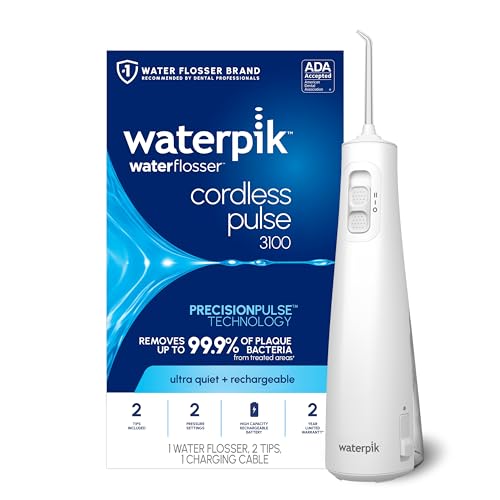

As an Amazon Associate we earn from qualifying purchases at no extra cost to you.
At a Glance: Travel Water Flossers
| Model | Best for | Features reviewers report | Limits |
|---|---|---|---|
| Waterpik Cordless Advanced | Most trips | Review roundups list four tips, three pressure settings, a rotating tip, magnetic charging, a water-resistant body, a travel bag and a roughly 7 oz reservoir | Small reservoir means a refill mid-session; model numbers vary by source |
| Waterpik Ion | Slim premium option | Roundups cite USB-C charging, a slim body and global voltage compatibility | Premium tier |
| Waterpik Cordless Express | Packing light, no charging cable | Runs on AA batteries, per reviewers | Fewer features; battery supply needed |
| Nicefeel | Larger tank, long battery life | Reviewers list a tank of about 300 ml and weeks of use per charge | Less established support network than major brands |
| Bezvoi Mini | Smallest packed size | Reviewers describe a telescopic tank, USB-C and several pressure modes | Smaller tank; lighter pressure for some users |
| GuruNanda | Collapsible tank | Reviewers note a collapsible tank of roughly 180 ml and a timer | Collapsible parts need careful drying |
| Nicwell | Budget tier | Reviewers describe it as a low-cost cordless option | Simpler build; fewer accessories |
Many of the roundup sites that rank water flossers are affiliate publishers, and testing claims differ between them. The comparisons here reflect points that appear repeatedly, but you should read the maker’s own product page for exact specifications.
What Matters for Travel
Tank size
A cordless flosser needs refilling, and tank size decides how often. A tank around 7 oz, as listed for the Waterpik Cordless Advanced, is enough for a typical session but may require a top-up. Larger tanks of around 300 ml give a full session without interruption but take more space in a toiletry bag. Collapsible and telescopic tanks trade capacity for packability.
Charging method
USB-C charging is convenient because it shares a cable with phones and tablets. Magnetic charging, as on the Waterpik Cordless Advanced per reviewers, keeps the connection simple. AA-battery models, such as the Waterpik Cordless Express, avoid cables completely, but you need spare batteries. For international trips, look for a statement from the maker about voltage; a USB-C or battery model avoids the question because you charge through a phone adapter.
Water resistance and cleaning
Use is wet by nature, so choose a model that the maker describes as water-resistant or waterproof. After each trip, empty the reservoir completely and let parts dry, because standing water can lead to odor and buildup. Some tanks, such as the one on the Waterpik Cordless Advanced, are described as dishwasher safe on the top rack; follow the manual before you try it.
Tips and pressure
Multiple tips let two people share a unit. Pressure settings let you start gently; people with sensitive gums often begin at the lowest setting. A rotating tip, like the one reviewers cite on the Waterpik Cordless Advanced, makes it easier to reach along the gumline.
Carry case and leak protection
A travel bag or tip case protects the device from damage and keeps tips clean. Empty the tank before flying or driving over mountain passes so pressure changes do not push water out. Store the unit in a sealed pouch.
Budget Tiers
Budget tier
Models such as the Nicwell are positioned as low-cost cordless options. They work for occasional use, but accessories, warranty, and long-term durability are less proven.
Mid-range tier
The Waterpik Cordless Advanced and the compact Nicefeel, Bezvoi, and GuruNanda models sit here. This is the range where most travelers will find the best balance between features and packed size.
Premium tier
The Waterpik Ion is the premium cordless model in the reviews gathered here. The added cost buys a slimmer body and the global-voltage statement reviewers appreciate on long international trips.
Safety and Dental Notes
- A water flosser supplements brushing and does not replace it. Ask your dentist whether it suits you, particularly if you have braces, implants, gum disease, or recent dental work.
- If you notice persistent bleeding, pain, or swelling, see a dentist rather than increasing pressure.
- Use only the liquid the maker allows. Some makers allow diluted mouthwash; others do not, so check the manual.
- Do not use the device while charging unless the manual explicitly says it is allowed.
- Replace tips on the schedule the maker states.
Pick X If… Decision Table
| Pick this | If you… |
|---|---|
| Waterpik Cordless Advanced | want the most widely reviewed travel pick with a case and several tips |
| Waterpik Ion | want a slim, premium body and USB-C charging |
| Waterpik Cordless Express | prefer AA batteries and no cables |
| Nicefeel | want a bigger tank and long run time between charges |
| Bezvoi Mini | need the smallest packed size |
| GuruNanda | like a collapsible tank |
| Nicwell | want a budget backup for occasional trips |
Alternatives
- Countertop water flossers: Stronger and with a bigger tank, but far too bulky for most luggage. Better as a home unit.
- Floss picks and interdental brushes: Lightweight, cheap, and airport-friendly; they need no charging and no water.
- Traditional floss: The simplest option and fine for short trips if you already use it.
How to Use a Travel Flosser Well
Start gently
Begin on the lowest pressure setting and lean over the sink with your lips slightly closed so water drains out. Move the tip along the gumline and between teeth, pausing briefly at each gap. Increase pressure only if the manual says it is appropriate and it feels comfortable. If you have recent dental work, braces, or gum problems, ask your dentist for guidance first.
Use suitable water
When traveling, use water that is safe to drink where you are. If the local tap water is not suitable for drinking, use bottled water in the reservoir. Some makers permit diluted mouthwash, while others advise against it, so follow the manual.
Plan for the bathroom
Hotel bathrooms can be small and have limited counter space. A flosser with a compact base or a built-in cap is easier to place and keep dry. Wipe the outside after each use, and store it away from the sink edge so it does not fall in.
Packing and Care Checklist
- Charge the unit fully before leaving, or load fresh AA batteries for battery models.
- Pack the charging cable or spare batteries in the same pouch as the device.
- Empty the reservoir completely before transport.
- Keep tips in their case, and replace them on the maker’s schedule.
- Let the device air dry before you pack it back in its bag.
- Carry a small cloth to wipe down the nozzle and body.
When a Water Flosser Is Not the Right Tool
If you only travel for a night or two and your brushing and floss routine works, an extra gadget may not earn its space. Tight packing situations, such as cabin-only trips with a small personal item, may favor floss picks or interdental brushes. If you wear braces, have implants, or are managing gum disease, your dentist can advise which cleaning aids fit your mouth and routine.
Reading Spec Sheets Sensibly
Maker pages list tank size, number of tips, pressure modes, and battery life. Battery life depends on pressure setting and session length, so a figure given in weeks assumes typical, short daily use. Pulses per minute and pressure figures are useful for comparing models from the same maker but are measured differently across brands. Look for plain statements about water resistance, charging type, and voltage, and give those more weight than marketing adjectives.
Frequently Asked Questions
Can I carry a cordless water flosser on a plane?
Generally yes in carry-on or checked bags, but rules on lithium batteries and devices vary by airline and country. Empty the tank before security, and keep the device switched off so it cannot activate in a bag. Check your airline’s battery guidance if unsure.
Do I need a voltage converter?
Not usually if you charge through USB-C or a magnetic charger with a universal phone adapter, but the maker’s specifications decide. Reviewers mention that the Waterpik Ion lists global voltage. AA-battery models avoid the issue.
How long does the battery last on a trip?
Makers and reviewers cite anywhere from a few days to several weeks per charge depending on model and use. A full charge before departure covers most weekend trips. For longer trips, bring the cable or spare batteries.
Is a small tank enough?
A tank near 7 oz is enough for a typical session for many people, with a quick refill if needed. If you dislike refilling, look at larger tanks around 300 ml, accepting a bulkier device.
Can a water flosser replace brushing or floss?
No. Dental professionals treat it as an addition to brushing, not a replacement. Ask your dentist whether it is right for your mouth.
How do I keep it clean while traveling?
Empty the tank after each use, rinse it, and let the parts dry fully before packing. Store tips in the supplied case. Follow the maker’s cleaning instructions in the manual.




