
For most adventure travelers, a pair of lightweight carbon trekking poles that fold or collapse small, such as the Black Diamond Distance Carbon Z or the Leki Makalu Lite, is the best fit because they pack into luggage and handle long days, while budget-minded hikers do well with aluminum poles, and those who want maximum durability on rough multi-day routes should look at adjustable aluminum or carbon poles with robust locks. What you choose depends on weight, pack size, grip comfort and how the poles travel on a plane.
Our top picks


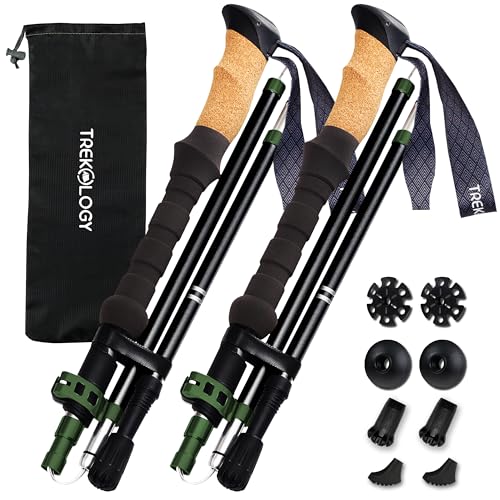

As an Amazon Associate we earn from qualifying purchases at no extra cost to you.
Trekking Poles at a Glance
| Pole | Best for | Stated traits | Limits |
|---|---|---|---|
| Black Diamond Trail Ergo Cork | All-round hiking and long trips | Maker lists an aluminum shaft, cork grip, and a lock system for adjustment | Heavier than carbon poles |
| Black Diamond Distance Carbon Z | Travelers who want a fold-up pole for small bags | Maker lists a carbon fiber folding design | Fixed-length styles reduce adjustability; carbon can be more brittle under side impact |
| Leki Makalu Lite | Trekkers who want comfort and adjustability | Maker lists an aluminum or lightweight shaft with a cork grip and adjustable length | Variants differ; some are heavier than carbon alternatives |
| Gossamer Gear LT5 | Ultralight hikers | Maker lists a carbon fiber, three-section pole with a cork grip | Premium positioning, less forgiving of misuse |
| Cascade Mountain Tech carbon cork | Budget buyers wanting carbon | Maker lists a carbon fiber shaft and cork grip | Less refined locks and finish than established outdoor brands |
Check the maker’s page for current weights, lengths and lock types, as updates change the lineup.
What Matters for Adventure Travel
Packed length and flight rules
Trekking poles are commonly not allowed in carry-on bags on many airlines because of their pointed tips, so most travelers pack them in checked luggage. That makes packed length important. Folding poles with a Z-style design collapse to a short length that fits in a duffel or backpack. Telescoping poles with two or three sections are longer when collapsed. Always check the airline and airport security rules for your route before packing them in the cabin.
Folding versus telescoping
Folding poles are lighter and pack smaller, which is why many travelers favor them. They are usually fixed or have limited length adjustment. Telescoping poles allow fine length changes for uphill and downhill sections, and some travelers prefer their flexibility. A hybrid with adjustable upper and fixed lower sections exists as well.
Shaft material
Aluminum is generally tougher and tends to bend rather than snap, which makes it forgiving on rocky terrain. Carbon fiber is lighter and absorbs vibration, but can fracture under sharp impact. For remote travel where a broken pole is a real problem, many experienced hikers prefer aluminum or carry a spare tip and repair tape.
Grips and straps
Cork grips mold to the hand over time and handle sweat well, foam grips are lighter and soft, and rubber grips suit cold weather. Extended foam below the main grip lets you choke up on slopes. Straps should be padded and adjustable. Reviewers recommend learning to use the strap correctly so that weight transfers through the wrist rather than the grip.
Lock mechanisms
External lever locks are easy to adjust with gloves on and are generally considered more reliable than twist locks, which can slip when worn. Check that the lock can be tightened as it wears.
Picks by Need
Black Diamond Trail Ergo Cork: dependable general use
The maker lists an aluminum shaft with a cork grip, and the pole is covered by outdoor outlets as a durable all-rounder. It is a sensible choice for travelers who want one pair to use on multi-day hikes and day trips. The extra weight compared with carbon models is the main trade-off.
Black Diamond Distance Carbon Z: compact and light
This folding carbon pole is designed for packing small. It is popular among travelers who need poles that fit inside a daypack or checked bag. As a folding model, it has less length adjustment than telescoping poles, and carbon requires gentle handling in rocky terrain.
Leki Makalu Lite: comfort and adjustability
Leki is known for ergonomic grips and strap systems. The Makalu Lite is aimed at trekkers who value comfort over long days. Variants differ in shaft materials and weight, so compare the specific version offered by the maker.
Gossamer Gear LT5: ultralight carbon
This three-section carbon pole is built for hikers who count grams. It is lighter than many aluminum poles but is typically treated with care. Choose it for fast-and-light trips on established trails.
Cascade Mountain Tech carbon cork: budget carbon
For those who want a carbon pole without paying for a premium brand, this model offers lightweight performance at a lower tier. Expect simpler finish and locks, so inspect them before heavy use.
Budget Tiers and Trade-offs
| Tier | What to expect | Trade-off |
|---|---|---|
| Budget | Aluminum telescoping poles or budget carbon with foam or cork grips | Heavier or less refined locks |
| Mid-range | Established-brand aluminum and carbon poles with ergonomic grips | Heavier than ultralight options |
| Premium | Ultralight carbon and folding poles with refined components | Higher cost and more fragile in some conditions |
Fit, Sizing and Care
A common starting rule is to adjust the pole so that your elbow is bent at about 90 degrees with the tip on the ground on level terrain. Shorten the poles slightly for uphill and lengthen for downhill. Taller hikers and those with unusual arm proportions should check the maker’s size chart, since folding poles come in fixed lengths.
After a trip, rinse the poles with fresh water, extend them to dry fully, and clean the locking mechanism, since grit can cause slippage. Replace worn tips and baskets, which are inexpensive and extend pole life. If you hike with a medical condition affecting balance or joints, talk to a physician or physical therapist about whether poles suit you.
Pick X If… Decision Table
| Pick this | If you… |
|---|---|
| Black Diamond Trail Ergo Cork | Want a durable aluminum all-rounder |
| Black Diamond Distance Carbon Z | Need a pole that packs small |
| Leki Makalu Lite | Prioritize grip comfort and adjustability |
| Gossamer Gear LT5 | Count every gram on established trails |
| Cascade Mountain Tech carbon cork | Want carbon on a budget |
Alternatives Worth Considering
- Single hiking staff: A simple walking staff suits easy terrain and travelers who prefer one hand free.
- Trekking pole with camera mount: Some poles double as monopods, which suits travel photographers.
- Trail running poles: Short, folding poles designed for speed, though less suited to heavy packs.
Using Poles Safely on Trips
Trekking poles help most when used with a steady technique. On climbs, plant the poles slightly ahead and push through the straps and grips. On descents, shorten your stride, plant the poles ahead, and let them take some of the load off the knees. On flat sections many hikers fold or stow the poles to avoid tripping. Practice before an overseas trip so the adjustments become second nature.
Watch the terrain. On snow, mud or sand, a larger basket prevents the tip from sinking, and rubber tip covers protect floors and trail surfaces. In some national parks and sensitive areas, rules about tip covers or pole use on certain trails exist, so read local regulations. Take care near other hikers, since poles extend your reach and can catch someone behind you.
If you have joint problems, balance issues or a health condition, speak with a doctor or physical therapist about whether poles are suitable and how to use them. Carry a few spares for long trips: replacement tips, a spare basket and a small piece of repair tape cost little and can save a hike. Before flying home, collapse and dry the poles, and clean off soil, since some countries have rules about bringing in outdoor equipment with dirt or seeds attached.
Frequently Asked Questions
Can I bring trekking poles on a plane?
Many airlines and security agencies do not allow trekking poles in carry-on bags because of their pointed tips. Packing them in checked luggage is the usual approach. Always confirm the rules for your airline and airports.
Are carbon or aluminum poles better for travel?
Carbon is lighter, while aluminum is tougher and tends to bend rather than snap. For remote trips with rough terrain, aluminum may be the safer option. For well-maintained trails, carbon can reduce fatigue.
How long should my trekking poles be?
A common starting point is an elbow bend of about 90 degrees on level ground. Adjust shorter for climbs and longer for descents. Manufacturers publish size charts, especially for fixed-length folding models.
Do I need two poles or one?
Two poles distribute effort more evenly and are commonly preferred on steep or long hikes. One pole can be enough on easy terrain or if you need a free hand for a camera. Try both to see which suits you.
How do I stop poles from slipping?
Keep the locks clean, tighten them as the maker instructs, and replace worn parts. Lever locks usually hold better than twist locks when maintained. Slipping that persists may mean the pole needs repair or replacement.
Are trekking poles worth it for city travel?
For paved city walking, they are usually unnecessary. They shine on hills, uneven trails, and multi-day hikes where they take load off the knees. If your trip includes both, a folding pair is easy to pack and use when needed.




