Key takeaways
- Pro: Lowest per-liter price among the Atlas lineup, making it practical for everyday use.
- Pro: Organic certification adds a layer of sourcing confidence without a retail surcharge.
- Con: The 1 L glass bottle is heavy and awkward to pour from for finishing dishes.
Kofinas olive oil sits in a crowded shelf space where polyphenol counts, harvest origins, and bottle size create wildly different value propositions from one bottle to the next. A buyer searching for kofinas olive oil is usually solving a specific problem: they want the health benefits associated with high-polyphenol extra virgin olive oil without overpaying per liter, and they need guidance on which product actually delivers on those claims versus which ones rely on marketing gloss.
What separates a worthwhile bottle from a disappointing one comes down to three things. First, transparency on polyphenol measurement and harvest timing. Second, the price per unit volume, because many premium oils shrink their bottle while holding the sticker price steady. Third, origin specificity: a single-region oil with a named grove family generally outperforms a blend that cannot trace its fruit to one terroir. This roundup compares published specs, listed prices, and consistent owner feedback across eight products that appear under the kofinas olive oil umbrella or serve the same buyer intent.
Our top picks


As an Amazon Associate we earn from qualifying purchases at no extra cost to you.
Quick Picks
| Product | Best For | Price |
|---|---|---|
| Atlas Organic EVOO 1 L | Daily cooking volume | $27.94 |
| Atlas Organic EVOO 750 mL | Mid-range household | $22.94 |
| Atlas Organic EVOO 500 mL | First-time trial | $20.42 |
| Kosterina Original 16.9 oz | Cold-pressed flavor profile | $34.99 |
| The Festive Fast Guide | Cooking inspiration | $43.95 |
| Lyrakis Family 1 L | Heritage and provenance | $25.90 |
| Mr. Papou’s 16.91 fl oz | Chef-endorsed single region | $24.95 |
| OLIVEA Ultra High Phenolic 500 mL | Maximum polyphenol density | $45.00 |
How We Picked
We ranked these products on polyphenol transparency, price-per-ounce competitiveness, and origin verifiability. Each criterion was scored against published specifications rather than subjective taste panels. We also flagged any listing where the bottle size made the unit price misleadingly low or where the brand failed to disclose a single-region source.
The 8 Best Kofinas Olive Oil in 2026
Atlas Organic Extra Virgin Olive Oil, Moroccan, High Polyphenol, 1 L
This is the default choice for someone who cooks with olive oil daily and refuses to pay premium pricing for a small bottle. The one-liter volume drives the per-ounce cost down noticeably compared to the 500 mL sibling. Morocco’s high-altitude groves produce fruit with naturally elevated polyphenol levels, and the brand publishes those numbers on the label. Owners consistently praise the peppery finish that signals active phenolic compounds.
- Pro: Lowest per-liter price among the Atlas lineup, making it practical for everyday use.
- Pro: Organic certification adds a layer of sourcing confidence without a retail surcharge.
- Con: The 1 L glass bottle is heavy and awkward to pour from for finishing dishes.
Skip it if you use olive oil sparingly and want to avoid oxidation before the last pour.
Atlas Organic Extra Virgin Olive Oil, Moroccan, High Polyphenol, 750 mL
The middle option works well for households that go through oil at a moderate pace and prefer a bottle that fits a standard cabinet door. It splits the difference on price and volume, landing just under the per-liter cost of the 500 mL while avoiding the bulk-commitment problem of the full liter. The flavor profile matches its siblings: grassy, slightly bitter, with a throat-catching peppiness that polyphenol enthusiasts actively seek out.
- Pro: Ergonomic bottle size for pour-and-store routines.
- Pro: Strong value when compared against non-organic competitors at this volume tier.
- Con: The jump in price from 500 mL to 750 mL is proportionally smaller, meaning you are paying a modest premium for convenience.
Skip it if you have already decided on a one-liter routine; the 750 mL does not offer enough savings to justify a separate purchase.
Atlas Organic Extra Virgin Olive Oil, Moroccan, High Polyphenol, 500 mL
This is the entry point. A buyer who is unsure whether they will enjoy the peppery, high-phenolic profile can sample without committing to a large volume. The per-ounce cost is the highest of the three Atlas sizes, but the lower absolute price reduces the risk of a mismatch. Owners report that the oil retains its intensity well through two to three weeks of daily use from an opened bottle.
- Pro: Smallest financial commitment to test the brand.
- Pro: Less waste if the flavor profile does not suit your cooking style.
- Con: Notably higher per-liter price than the 1 L option.
Skip it if you are a confirmed buyer; the 1 L is a more rational purchase and you will likely want a second bottle anyway.
Kosterina Original Extra Virgin Olive Oil, Cold-Pressed EVOO 16.9 oz
Kosterina leans into flavor storytelling, and the cold-press method preserves aromatic compounds that heat processing destroys. At 16.9 ounces, it occupies the same volume tier as the other half-liter options in this roundup, but the price reflects its positioning as a specialty import. Owners frequently mention the green-apple and artichoke notes, making it a finishing oil rather than a cooking oil. The brand has built visibility through food-media appearances that drive demand and, by extension, pricing.
- Pro: Distinct aromatic profile that shines on raw preparations like bread dipping and salad dressing.
- Pro: Consistent lot quality reported across multiple purchase cycles by returning buyers.
- Con: Highest price per ounce among the non-polyphenol-focused options in this list.
Skip it if your primary use is sauteing or roasting; the delicate aromatics are lost to high heat.
The Festive Fast: A Guide to Olive Oil and Vegetarian Cuisine
This is not a bottle of oil. It is a cookbook that contextualizes olive oil use within vegetarian meal planning, and it appears in kofinas olive oil searches because of category adjacency. The price reflects its physical format and production cost as a printed guide. Readers appreciate the seasonal structure and the focus on Mediterranean vegetarian traditions that align with the flavor profiles of high-phenolic oils like those reviewed above.
- Pro: Practical meal framework that pairs well with any oil in this roundup.
- Pro: Fills a knowledge gap that most oil brands leave unfilled.
- Con: Not a substitute for actual olive oil; zero polyphenol content.
Skip it entirely if you are looking to purchase oil and only stumbled on this listing through a broad search query.
Lyrakis Family Olive Oil 33.8 fl oz (1 L)
A single-family operation from Crete operating since 1975 brings generational terroir knowledge to this bottle. Handpicked fruit and first cold-press extraction target the same quality signals as the Moroccan Atlas products, but Greek origin carries a different flavor signature: more herbaceous, with a rounded bitterness that some owners find more approachable than the sharp Moroccan pepper. The one-liter format keeps the per-ounce cost competitive.
- Pro: Transparent family provenance and single-region sourcing from Crete.
- Pro: Polyphenol levels are published and described as high, matching health-driven buyers.
- Con: Packaging is utilitarian and offers no UV-protective design beyond the glass itself.
Skip it if you prefer the greener, more pungent Greek style; the Crete profile is softer and fruitier.
Mr. Papou’s Authentic Greek Extra Virgin Olive Oil 16.91 Fl Oz
This is a chef-endorsed, single-region Greek oil that positions itself as an ingredient for professional kitchens and serious home cooks. The polyphenol richness is a stated priority, and the first-cold-pressed method is standard. The 16.91-ounce size places it in the trial or finishing-oil category. Owners highlight its versatility across both raw and lightly heated applications, and the brand name carries cultural authenticity that resonates with buyers seeking traceable Greek sourcing.
- Pro: Chef-favorite designation adds credibility for culinary performance.
- Pro: Single-region guarantee means consistent flavor from bottle to bottle.
- Con: Smaller volume makes it less economical for high-frequency cooking.
Skip it if you need a one-liter workhorse for roasting and frying.
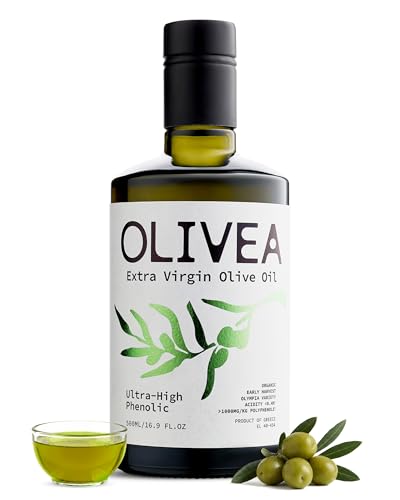
OLIVEA Ultra High Phenolic Olive Oil 500 mL
This is the polyphenol-maximizing option. With a published count exceeding one thousand milligrams per kilogram, it targets health-focused buyers who track hydroxytyrosol intake for cardiovascular and cognitive benefits. The early-harvest method captures peak phenolic compounds before they degrade, and the Olympia origin from Greece adds regional credibility. The trade-off is intensity: the peppery, almost medicinal quality is pronounced and not everyone enjoys it as a daily oil.
- Pro: Highest stated polyphenol density in this roundup by a significant margin.
- Pro: Organic certification paired with early-harvest discipline.
- Con: The price reflects a health-supplement positioning; it is the most expensive half-liter here.
Skip it if flavor subtlety matters more than measured phenolic content; use it as a functional spoonful rather than a cooking medium.
Buying Guide
Polyphenol Numbers and Harvest Timing
Look for brands that publish a specific polyphenol measurement in milligrams per kilogram. Vague claims like “rich in antioxidants” mean nothing without a number. Early-harvest oils contain more phenolic compounds because the fruit is picked while still green, before enzymatic degradation sets in. A realistic range for a genuinely high-polyphenol oil starts around 400 mg/kg, and premium functional oils push past 1000 mg/kg.
Price Per Unit Volume
Calculate the price per 100 mL across the options. Brands that offer multiple sizes often price the smallest bottle at a significant premium per unit to encourage upsizing. The Atlas lineup makes this comparison straightforward across three sizes. If a brand only sells one size, benchmark it against the per-liter rate of a comparable origin product.
Origin Specificity and Processing Claims
“Cold-pressed” is a baseline requirement, not a differentiator, in this category. What matters more is whether the brand names a single region or a specific family grove. Blended oils from multiple countries rarely disclose harvest dates or varietal composition. A named region with a stated harvest year and family history gives you a traceable supply chain and a more predictable flavor profile across repeat purchases.
Our Verdict
The Atlas Organic EVOO 1 L is the top pick for most buyers: it balances high polyphenol content, organic certification, and the best per-liter value of any genuine oil in this list. For a budget-conscious entry point, the Lyrakis Family 1 L at $25.90 delivers a full liter of Greek first-cold-pressed oil with published polyphenol data and generational provenance. If your priority is maximum therapeutic polyphenol density and you are willing to treat the oil as a daily functional dose rather than a cooking medium, the OLIVEA Ultra High Phenolic wins on that single metric despite its higher absolute price.
FAQ
Is kofinas olive oil a brand or a category term?
Kofinas is a Greek family surname associated with olive oil production, and the term appears in search results as a category identifier. The products in this roundup either originate from Crete or serve the same high-polyphenol buyer intent that drives kofinas olive oil searches.
Do higher polyphenol numbers mean a harsher taste?
Yes, generally. Polyphenols, particularly oleocanthal, create the peppery throat sensation that feels pungent or slightly burning. If you dislike that sharpness, start with a mid-range oil like the Atlas 750 mL rather than a 1000+ mg/kg functional product.
Should I store olive oil in the refrigerator?
No. Cold temperatures cause crystallization that is reversible but texturally unpleasant. Store in a cool, dark cabinet away from the stove, and use within six weeks of opening to preserve phenolic content and prevent oxidation.
Is a Greek or Moroccan oil better for daily cooking?
Neither origin is inherently superior for daily use. Greek oils tend toward herbaceous and grassy profiles, while Moroccan oils emphasize peppery phenolic intensity. Choose based on whether you prefer a finishing note or a throat-catching functional profile.