A college tablet is not a smaller laptop, and treating it as one leads to the wrong purchase. The real job is reading, annotating, note-taking, and light multitasking between lectures — tasks where screen size, stylus support, and keyboard availability matter far more than benchmark scores. Owners consistently report frustration when a device looks impressive on a spec sheet but can’t comfortably hold a split-screen PDF beside a note app, or when the bundled stylus lags enough to make handwriting illegible.
What separates a worthwhile college tablet from a money pit in this price range comes down to three things: display resolution and refresh rate for long reading sessions, included accessories that eliminate extra purchases, and software updates that keep the device usable through graduation. This guide compares published specs and aggregated owner feedback across eight widely available options to help you match the right device to your budget and workload.
Our top picks
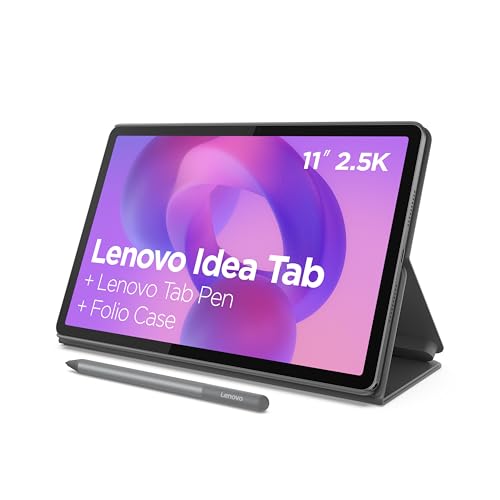
 Lenovo Idea Tab
- POWER YOUR STUDY, FUEL YOUR PLAY
- SMOOTH, POWERFUL, IMMERSIVE
- CIRCLE IT, SEARCH IT




As an Amazon Associate we earn from qualifying purchases at no extra cost to you.
Quick Picks
| Product | Best for | Price |
|---|---|---|
| Lenovo Idea Tab (4 GB) | Light readers on a tight budget | $194.90 |
| Lenovo Idea Tab (8 GB/256 GB) | Balanced daily driver | $248.00 |
| 11-Inch Android 16 Tablet (Gemini AI) | AI-assisted study workflows | $132.99 |
| Samsung Galaxy Tab S10+ | Power users who need desktop-class features | $1299.99 |
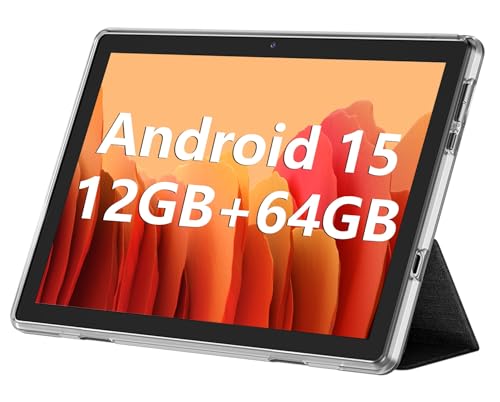
| ECOPAD 10.1-Inch | Emergency backup or kids’ school tablet | $65.99 |
| 11-Inch Android 16 Tablet (Bundle) | Keyboard-and-stylus combo out of the box | $109.99 |
| 10-Inch Android 16 Tablet (20 GB) | Maximum RAM per dollar | $72.99 |
| Lenovo Idea Tab (8 GB/512 GB) | Heavy offline file storage | $328.00 |
How We Picked
We narrowed the field using four criteria that consistently show up in owner complaints and praises for college use: included accessories (a stylus and folio or keyboard case bundled at no extra cost changes the total ownership price dramatically), display quality for reading (resolution and refresh rate above all, since students stare at these screens for hours), memory headroom for multitasking without reload, and software update commitments. Price tier determines what is reasonable to expect at each level, and we flagged products that under-deliver relative to their asking cost.
The 8 Best Tablets For College Students in 2026
1. Lenovo Idea Tab (4 GB / 128 GB)
Best for first-year students who primarily read PDFs and take handwritten notes. The 11-inch 2.5K IPS display at 90Hz makes long reading sessions noticeably easier on the eyes than lower-refresh panels, and the included Tab Pen plus folio case mean zero extra purchases at checkout. Owner feedback highlights the matte feel of the folio and the pen’s low latency on this panel.
- Pro: 90Hz 2.5K display with pen and case included under $200
- Pro: MediaTek Dimensity 6300 handles note apps and web browsing without stutter
- Con: 4 GB of RAM means heavy multitasking or large PDFs can force app reloads
Skip this if you run three or more apps simultaneously or work with large spreadsheet files — the memory ceiling becomes a daily annoyance.
2. Lenovo Idea Tab (8 GB / 256 GB)
The sweet spot of the Idea Tab line for most students. Same 11-inch 2.5K 90Hz panel and Dimensity 6300 as the base model, but doubling memory and storage removes the two most common complaints. Owners report smoother split-screen use and fewer forced reloads between classes. The Mali-G57 MC2 is sufficient for note-taking apps and casual games.
- Pro: 8 GB RAM enables genuine multitasking without reloads
- Pro: 256 GB storage accommodates an entire semester’s course material offline
- Con: The folio case, while protective, adds weight that some owners find tiring during long lectures
Skip if $50 more than the base model feels significant in your budget and you are disciplined about closing background apps.
3. 11-Inch Android 16 Tablet (Gemini AI, 24 GB + 128 GB)
Targets students who want built-in AI assistance for summarizing readings, translating, and drafting. The listed 24 GB combined memory and Android 16 with Gemini AI 3.5 make it the most software-forward option here. At $132.99 it undercuts the Lenovo models while including a keyboard.
- Pro: Native Gemini AI integration reduces reliance on separate productivity subscriptions
- Pro: Keyboard included at a price well below the Lenovo options
- Con: No published display resolution or refresh rate, so reading comfort is uncertain compared to the 2.5K 90Hz panels above
Skip if display quality for hours of PDF reading is your top priority and you want verified specs.
4. Samsung Galaxy Tab S10+ (12.4″, 512 GB)
For graduate students, researchers, or anyone replacing a laptop entirely. The 12.4-inch screen, 512 GB storage, and Samsung’s DeX desktop mode make this the closest a tablet gets to a traditional computer. Owner reviews consistently praise the AMOLED color accuracy and the S Pen experience.
- Pro: 12.4-inch display is large enough for true split-screen and full-page textbook reading
- Pro: Samsung’s long software-update commitment extends usability well past graduation
- Con: The $1299.99 price is more than four times the next-best option on this list
Skip unless you are in a STEM or design program that genuinely requires desktop-class features and color fidelity.
5. ECOPAD 10.1-Inch
A fallback device for students who need a second screen for email and light reading, or a parent buying a school tablet for a younger child. 1280×800 resolution and a 6000 mAh battery are modest but functional. Dual cameras and Bluetooth 5.0 cover basic needs.
- Pro: At $65.99 it is expendable — loss or theft causes minimal financial stress
- Pro: 1 TB SD expansion adds cheap storage for media libraries
- Con: 1280×800 at 10.1 inches produces a visibly coarse image, making small-font PDFs hard to read
Skip if this will be your primary device; the display resolution is a daily readability problem for coursework.
6. 11-Inch Android 16 Tablet (Keyboard, Mouse & Stylus Bundle)
For students who want every peripheral included without paying accessory prices separately. The keyboard, mouse, and stylus bundle at $109.99 delivers a laptop-like setup out of the box. Android 16 brings a modern interface and security patch level.
- Pro: Three accessories in the box eliminate post-purchase spending surprises
- Pro: 11-inch screen size sits at the most comfortable boundary between portability and workspace
- Con: No published display resolution or processor details make performance predictions unreliable
Skip if you need to know exact panel quality or sustained performance before committing to a daily driver.
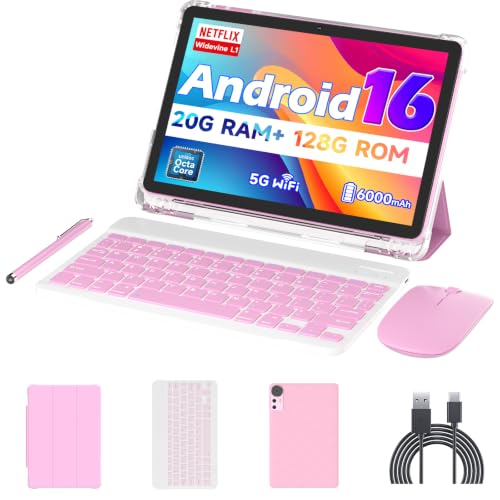
7. 10-Inch Android 16 Tablet (20 GB RAM, 128 GB ROM)
The headline number here — 20 GB of RAM — positions this as the multitasking king at $72.99, and the 2 TB expandable storage plus 5G WiFi 6 and Widevine L1 cover streaming and offline needs. The included keyboard case, stylus, and mouse mirror the previous bundle at an even lower price.
- Pro: 20 GB RAM at this price point provides exceptional headroom for heavy app switching
- Pro: Widevine L1 unlocks HD streaming on services that restrict lower-rated devices
- Con: A 2.0 GHz octa-core processor is modest; the large RAM does not compensate for weaker single-threaded tasks
Skip if your workflow is one heavy app at a time (video editing, large file conversion) where the processor would be the bottleneck regardless of memory.
8. Lenovo Idea Tab (8 GB / 512 GB Expandable)
The storage monster of the Lenovo lineup. By combining 256 GB UFS with a 256 GB SD card for a listed 512 GB total, it handles entire digital libraries offline — valuable for students without reliable campus Wi-Fi or those hoarding lecture recordings. The 2.5K 90Hz panel, Dimensity 6300, and Mali-G57 MC2 remain identical to the mid-tier model.
- Pro: 512 GB total storage with SD expansion removes any capacity concern for four years of coursework
- Pro: Same proven 2.5K 90Hz reading display and bundled pen as lower-priced siblings
- Con: At $328 the cost-per-gigabyte is roughly half that of simply adding an external drive, making the premium questionable
Skip if you already own a cloud storage plan; paying for built-in capacity you will not fill is inefficient.
Buying Guide
Display: Why Resolution and Refresh Rate Matter More Than Size
A college student’s worst-case screen scenario is a 400-page textbook PDF in small font at three in the morning. A 2.5K (2560×1600) panel renders that text sharply enough to read without zooming, while 1280×800 forces constant magnification. The 90Hz refresh rate found on the Lenovo Idea Tab line reduces scroll blur and finger-tracking lag that make reading feel effortful over time. Size matters secondarily: eleven inches is the practical minimum for comfortable split-screen work; ten inches can feel cramped alongside a keyboard.
Included Accessories Change the True Price
A stylus purchased separately often costs fifteen to thirty percent of the tablet’s retail price, and a folio case adds another ten to twenty percent. When comparing a Lenovo Idea Tab with pen and case included against a bare tablet at a lower sticker price, the bundled option frequently wins on total ownership cost. For keyboard cases, verify that the connection is physical (magnetic pins) rather than Bluetooth-only, since paired keyboards add latency that slows typing-heavy work.
RAM: The Number That Determines Longevity
Android aggressively closes background apps when memory runs low. Four gigabytes is the current floor where students reliably report losing their place in note apps between classes. Eight gigabytes is the comfortable target that keeps three or four apps resident simultaneously. The higher figures listed on budget tablets (20 or 24 GB) may combine physical and virtual memory, so confirm the physical-only amount before assuming a performance benefit over an eight-gigabyte device.
Our Verdict
The Lenovo Idea Tab with 8 GB RAM and 256 GB storage at $248 is the top pick for most college students, balancing a proven 2.5K 90Hz reading display, included pen and folio, and sufficient memory for four years of use. The 10-Inch Android 16 Tablet with 20 GB RAM at $72.99 is the budget pick, delivering the most multitasking headroom and a full accessory bundle for less than the cost of a textbook. If your program requires color-accurate large-format display and desktop-mode productivity, the Samsung Galaxy Tab S10+ justifies its premium because no other option on this list approaches its workflow ceiling.
FAQ
Can a tablet fully replace a laptop in college?
For liberal arts, business, and social science programs with reading-heavy workloads, yes — especially models with a keyboard and 8 GB or more of RAM. STEM and design majors who rely on MATLAB, CAD, or video editing software will still need a laptop or the Samsung Tab S10+ in DeX mode.
Is an 8 GB Lenovo Idea Tab worth $50 over the 4 GB model?
Almost certainly, yes. Owner feedback on the 4 GB variant consistently mentions app reloads during normal multitasking. The extra memory eliminates the most common source of daily frustration, and the price gap is less than a single course textbook.
What does “24 GB RAM” actually mean on budget Android tablets?
Manufacturers typically combine physical memory with a virtual swap partition on storage. The 24 GB figure likely includes both. Real-world performance depends on the physical portion, which is often 8 or 12 GB on devices in this price tier.
Should I buy a 2026 model or does a two-year-old flag still make sense?
For tablets, software-update commitments matter more than hardware generation. A Samsung Galaxy Tab from the previous year with guaranteed patch coverage can outlast a 2026 white-label device that receives no updates after eighteen months.