Key takeaways
- Pro: Dual full suspension with both front and rear travel absorbs bumps that would rattle a hardtail rider’s hands and tailbone on rough singletrack or cracked gravel paths.
- Pro: The high-carbon steel frame tolerates heavy loads without the fatigue concerns some riders associate with budget aluminum frames, and the 18-speed range covers moderate climbs effectively.
- Con: Steel means noticeable weight penalty compared to the aluminum-framed options in this list, making longer uphill efforts more taxing.
Buying mountain bikes for men at the entry and mid-range price points means navigating a crowded field where the difference between a solid trail companion and a frustrating assembly project often comes down to a handful of specs that listings bury in bullet points. A rider’s weight, height, intended terrain, and comfort with mechanical maintenance all shape which bike will actually get ridden versus which one will gather dust in a garage after a single weekend.
This roundup compares eight current models that appear frequently in the sub-$300 segment, drawing on published specifications and patterns in owner feedback to separate genuinely capable machines from bikes that look impressive on paper but reveal compromises once riders push them beyond a flat pavement loop. The best options here share a few consistent traits: frame geometry that puts weight over the front wheel for confident steering, a suspension system that stays functional after weeks of use, and a drivetrain that shifts cleanly under load rather than slipping or clunking through mid-range gears. The worst options tend to fail on one or more of those fronts while still earning high star ratings from buyers who never left the parking lot.
Our top picks





As an Amazon Associate we earn from qualifying purchases at no extra cost to you.
Quick Picks
| Product | Best for | Price |
|---|---|---|
| WEIZE Hybrid Full Suspension | Riders wanting suspension travel on mixed surfaces | $199.99 |
| WEIZE 27.5 Trail | Casual trail riders who want a slightly larger wheel | $188.09 |
| AVASTA Thrax 27.5 | Riders who prefer a no-nonsense black aesthetic | $199.99 |
| Max4out 26 Front Suspension | Tight budgets and flat or lightly graded terrain | $149.98 |
| WEIZE 26 Trail | Shorter riders or those preferring a compact frame | $179.99 |
| WEIZE 26 Trail MTB (White) | Same platform as above in a lighter color option | $179.99 |
| WEIZE Hardtail 29 Aluminum | Riders prioritizing weight savings and higher gear range | $299.99 |
| WEIZE 24/26/27.5 MTB (White) | Buyers wanting wheel-size flexibility in one listing | $199.99 |
How We Picked
We evaluated these bikes on four criteria that consistently determine long-term owner satisfaction: frame material and construction quality (steel versus aluminum has a measurable effect on weight, corrosion resistance, and ride feel), suspension type and its real-world durability under repeated compression cycles, drivetrain range and shifter reliability across varied terrain, and wheel-to-frame geometry that influences stability on descents and maneuverability in tight turns. Price-to-spec ratio served as a secondary filter rather than a primary one, because a marginally cheaper bike that requires constant tuning ends up costing more in frustration than one that arrives dialed in.
The 8 Best Mountain Bikes For Men in 2026
WEIZE Hybrid Full Suspension 18-Speed
- Pro: Dual full suspension with both front and rear travel absorbs bumps that would rattle a hardtail rider’s hands and tailbone on rough singletrack or cracked gravel paths.
- Pro: The high-carbon steel frame tolerates heavy loads without the fatigue concerns some riders associate with budget aluminum frames, and the 18-speed range covers moderate climbs effectively.
- Con: Steel means noticeable weight penalty compared to the aluminum-framed options in this list, making longer uphill efforts more taxing.
This suits riders who weigh more, carry a backpack, or ride surfaces where comfort matters more than speed. Skip it if you plan to commute primarily on smooth pavement or need a bike light enough to carry up stairs.
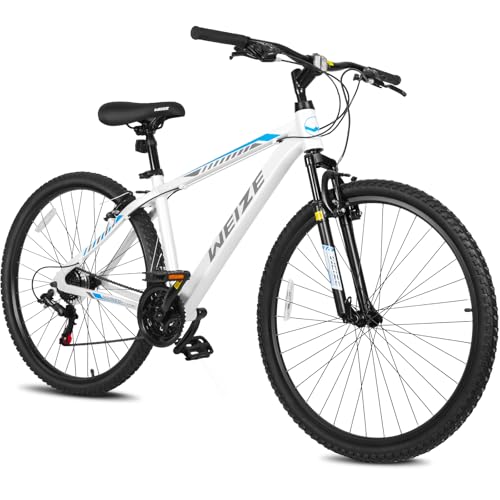
WEIZE 27.5 Trail
- Pro: The 27.5-inch wheel balances rollover ability on roots and rocks with quicker acceleration than a 29er, making it versatile for recreational trail loops.
- Pro: Priced below most competitors with similar wheel size, it offers straightforward value for riders who want a dedicated trail bike without suspension complexity.
- Con: Limited published drivetrain detail makes it harder to assess gear range before purchase, and owners report variability in factory assembly quality.
Choose this for gentle to moderate trail riding where you want confidence without paying for features you will never use. Skip if you need a specific gear configuration for steep mountain terrain.
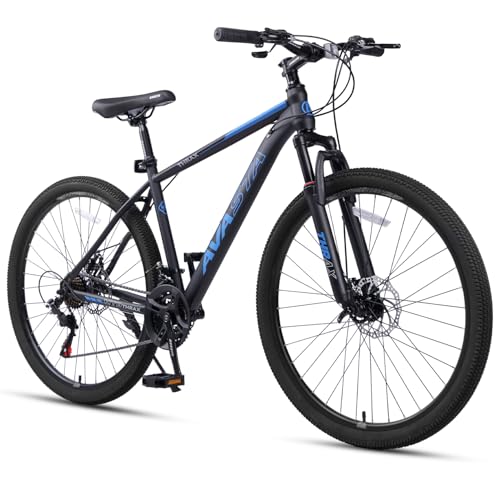
AVASTA Thrax 27.5
- Pro: The all-black finish hides dirt and scuffs well, and the 27.5-inch wheel size provides a comfortable middle ground between agility and stability.
- Pro: Owners frequently note it arrives more properly assembled than many budget competitors, reducing the initial setup friction that leads to early returns.
- Con: The drivetrain is not a standout component, and some riders report needing a cable adjustment within the first month of regular use.
Best for riders who want a clean appearance and decent out-of-the-box experience without paying premium prices. Skip if you demand top-tier shifting performance or plan to upgrade components soon.
Max4out 26 Front Suspension 7-Speed
- Pro: At the lowest price in this roundup, it provides a functional entry point for riders who want a dirt-capable bike without committing significant money.
- Pro: The 7-speed drivetrain is simple enough that adjustment and repair require minimal tool investment, making it practical for first-time owners.
- Con: Seven speeds severely limit versatility on rolling terrain, and the metal frame adds weight that compounds the effect on climbs.
Reasonable for flat neighborhood trails or occasional fire-road rides. Skip it for anything with sustained grades or technical features where gear selection matters.
WEIZE 26 Trail
- Pro: The smaller 26-inch wheel provides a lower standover height, making it accessible for shorter riders who struggle with leg clearance on modern larger-wheel bikes.
- Pro: Compact geometry translates to quicker handling in tight turns and dense vegetation where a longer wheelbase would feel unwieldy.
- Con: Smaller wheels require more input to maintain momentum over obstacles compared to 27.5 or 29-inch alternatives in this group.
Suited to riders under approximately five-foot-seven who prioritize maneuverability over rolling efficiency. Skip if you are taller or plan to ride open, flowing trails where momentum matters.
WEIZE 26 Trail MTB (White)
- Pro: Identical platform to the black 26-inch model but in a white finish that many riders prefer for heat reflection and visibility in low-light conditions.
- Pro: The same low standover and agile handling characteristics make it equally suitable for shorter riders seeking a fun, responsive ride.
- Con: White paint shows scratches, chain grease, and trail debris more readily than darker finishes, requiring more frequent cleaning to maintain appearance.
Good for riders who value the aesthetic and practical visibility benefits of a lighter-colored frame. Skip if you prefer low-maintenance cosmetics or ride through muddy conditions often.
WEIZE Hardtail 29 Aluminum 21-Speed
- Pro: The aluminum frame cuts significant weight versus the steel-framed options here, improving climbing efficiency and overall handling responsiveness.
- Pro: 21 speeds with trigger shifters provide the widest gear range in this group, accommodating steep climbs and fast descents within a single ride.
- Con: The 29-inch wheel and aluminum frame combination drives the price to the top of this list, making it the least budget-friendly option.
The clear choice for riders who want genuine performance characteristics—light weight, wide gearing, stable rollover—at the lowest price available. Skip if budget is the absolute constraint or if you ride primarily technical descents where full suspension matters more than weight.
WEIZE 24/26/27.5 MTB (White)
- Pro: The multi-wheel-size listing lets buyers select the geometry that matches their height without hunting through different model names, simplifying the decision process.
- Pro: White finish provides same visibility and heat benefits as the dedicated white model while offering size flexibility for households with multiple riders.
- Con: Buyers report confusion about which variant ships to which order, occasionally resulting in receiving a different wheel size than intended.
Useful when shopping for a household with riders of different heights or for a gift where exact sizing is uncertain. Skip if you need certainty about receiving a specific wheel size on the first delivery.
Buying Guide
Frame Material: Weight Versus Durability
High-carbon steel frames, as found on most WEIZE options here, resist cracking and fatigue over years of use but add weight that directly impacts climbing effort and handling agility. Aluminum frames, like the hardtail 29er in this group, shed a meaningful percentage of mass while still handling moderate abuse, though they transmit more trail vibration to the rider. For casual weekend riders who value comfort over speed, steel is a defensible choice. For anyone planning to ride hills regularly or carry the bike up staircases, aluminum’s weight savings justify the price premium.
Suspension: Front-Only Versus Full Travel
Front suspension forks, present on most bikes in this list, protect hands and wrists from sharp impacts while adding minimal complexity to maintenance. Full rear suspension, as seen on the hybrid model, absorbs bigger hits and improves traction on loose terrain but introduces a pivot system that requires periodic servicing and adds cost. If you ride smooth singletrack or packed gravel roads, a front-only fork is sufficient. If your local trails feature repeated rock gardens or root-laced descents, the extra rear travel pays dividends in control and comfort.
Wheel Size: Matching Diameter to Rider and Terrain
Twenty-six-inch wheels offer the lowest standover height and quickest turning response, ideal for shorter riders and tight, technical paths. Twenty-seven-point-five inches represents the current sweet spot for most recreational mountain bikes for men, balancing rollover ability with acceleration. Twenty-nine-inch wheels carry momentum best over obstacles and rolling terrain but can feel sluggish for shorter riders or those navigating tight switchbacks. Select the smallest wheel size your height comfortably clears rather than defaulting to the largest option available.
Our Verdict
The WEIZE Hardtail 29 Aluminum 21-Speed stands out as the overall top pick because it addresses every major limitation of the budget segment simultaneously: aluminum weight savings, the widest gear range, and a suspension fork for basic impact protection. It costs more upfront but eliminates the compromises that force upgrades within a year.
For the tightest budget, the Max4out 26 Front Suspension at $149.98 delivers a functional platform for flat and gently rolling terrain, and its simple 7-speed drivetrain keeps maintenance requirements minimal.
One condition under which the WEIZE Hybrid Full Suspension wins instead: if you weigh over 220 pounds or ride exclusively on cracked, uneven, or loose-surface paths, the dual suspension and steel frame’s load tolerance outweigh the weight penalty, making it the most comfortable and durable option regardless of price.
FAQ
What size mountain bike do men typically need?
Most adult men between five-foot-eight and six-foot-two should look at 27.5-inch or 29-inch wheels depending on inseam length. Taller riders benefit from the stability of larger wheels, while shorter riders often prefer 26-inch frames for standover clearance and maneuverability.
Is a full suspension mountain bike worth it at this price?
At under $200, full suspension components tend to be basic units that add weight without delivering the damping quality of mid-range systems. A front-only fork on a lighter frame generally provides a more satisfying ride unless you specifically need rear-wheel compliance for rough surfaces.
How many speeds is enough for a beginner trail rider?
Seven speeds limit you to relatively flat terrain without grinding on moderate grades. Anything from 18 to 21 speeds gives you comfortable options on climbs and descents typical of recreational trail networks, making it the practical minimum for riders exploring varied terrain.
Do I need to adjust anything after assembly?
Almost all budget mountain bikes require at minimum a rear derailleur limit-screw adjustment, brake cable tension check, and tire pressure verification before the first ride. Owners who skip these steps report the most complaints about shifting and braking performance, not because the components are inherently poor but because factory settings rarely match individual preference.