Key takeaways
- Best Overall: BAGSMART 6-set compression cubes, sized for 20, 24 and 28 inch cases.
- Best for Backpacks and Personal Items: TRIPPED Travel Gear compression 3-pack with ripstop fabric.
- Best Lightweight: BAGAIL 6-set ultralight compression cubes in 70D fabric.
- Best Large Set With Extras: Veken 9/11-set compression cubes with mesh panels.
- Best Premium Compression: Aerotrunk 6-pack compression cubes.
- Best With Laundry Bag: Shacke 5-set with four water-resistant cubes and a laundry bag.
- Best Value Big Set: OlarHike 10-set compressible cubes for families and long trips.
The best packing cubes for carry on travel are the BAGSMART compression 6-set if you pack a standard 20 to 22 inch roller bag, and the TRIPPED Travel Gear 3-pack if you travel with a backpack or a personal-item bag. Both give you the thing that actually matters in a cabin bag: a small number of cubes in sizes that line up with the suitcase, with a compression zipper that squeezes a bulky sweater down to a flat slab.
Packing cubes help in two ways. They keep a bag organized so you can pull out one cube instead of unpacking everything, and compression versions reduce volume enough to matter when a carry-on is the only luggage you will take. They also have downsides: a cube adds its own weight and can eat space if the sizes do not match your bag. This guide compares seven sets by size, compression design and the kind of trip they suit, and it marks the specs we could not confirm from listings and maker pages.
Our top picks


As an Amazon Associate we earn from qualifying purchases at no extra cost to you.
Top Picks at a Glance
- Best Overall: BAGSMART 6-set compression cubes, sized for 20, 24 and 28 inch cases.
- Best for Backpacks and Personal Items: TRIPPED Travel Gear compression 3-pack with ripstop fabric.
- Best Lightweight: BAGAIL 6-set ultralight compression cubes in 70D fabric.
- Best Large Set With Extras: Veken 9/11-set compression cubes with mesh panels.
- Best Premium Compression: Aerotrunk 6-pack compression cubes.
- Best With Laundry Bag: Shacke 5-set with four water-resistant cubes and a laundry bag.
- Best Value Big Set: OlarHike 10-set compressible cubes for families and long trips.
Packing Cube Comparison Table
| Product | Best for | Key specs | Watch for | Price tier |
|---|---|---|---|---|
| BAGSMART compression 6-set | Roller carry-ons | 6 pieces, fits 20/24/28 in cases, machine washable, sturdy handles | Cube mix varies by listing | Mid-range |
| TRIPPED 3-pack | Backpacks, personal items | 2 large (14x10x4 in expanded) and 1 small (10x7x4 in), ripstop, compression zipper | Only three cubes | Mid-range |
| BAGAIL 6-set ultralight | Weight-conscious packers | 6 pieces, 70D fabric, compression | Thin fabric | Budget |
| Veken 9/11 set | Large, organized packers | 9 or 11 pieces, mesh panels, compressible and expandable | Too many cubes for a small bag | Budget |
| Aerotrunk 6-pack | Heavy packers who want strong compression | 6 pieces, 50% space-saving claim, fits most suitcases | Claim is marketing | Premium |
| Shacke 5-set | Mixed clean and dirty laundry | 4 water-resistant cubes (XL to small) plus a laundry bag | Non-compression design | Budget |
| OlarHike 10-set | Families and long trips | 10 pieces, compressible, mesh panels | Many pieces add up in weight | Mid-range |
1. BAGSMART Compression 6-Set: Best Overall
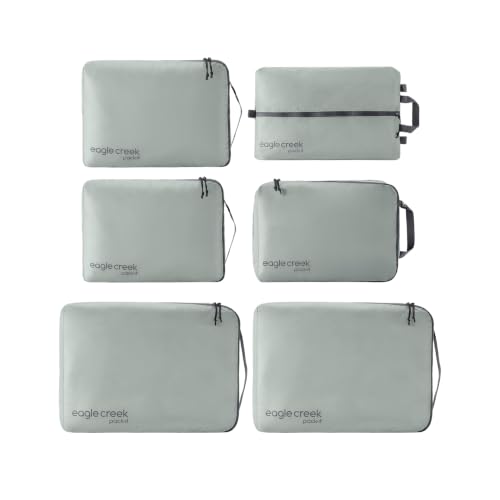
- Six-piece set that the maker says fits 20, 24 and 28 inch suitcases
- Extra compression zipper that reduces bag volume (the brand cites up to 60% in marketing)
- Sturdy handles and machine-washable fabric
- Typical mix across listings: one large, two medium, two small cubes and a shoe bag, though some listings use different combinations
- One listing gives cube sizes of about 11.6 x 12.6 in (large), 9.3 x 13.2 in (medium) and 8.3 x 11.6 in (small); check the exact listing you buy
Best for: A typical weekend or one-week carry-on trip. Skip if: you want a single huge cube for bulky winter clothes.
BAGSMART gets the sizing math right for a standard roller bag. A 20 to 22 inch carry-on has an interior roughly 14 inches wide and 20 inches long, so medium cubes in the 9 by 13 inch range sit side by side and two small cubes fill the end. The compression zipper is the feature that earns the set its spot: zip the cube closed, then run the second zipper and the cube flattens. A hoodie that would take the space of three T-shirts becomes about the size of two.
The handles are useful when you pull a cube out of an overhead bin or hotel closet. Machine-washable fabric is a practical plus after a trip with wet or muddy clothes. Sizes and the exact cube mix differ between listings, so confirm the number of large, medium and small cubes before you buy.
Pros: Sensible sizes; compression zipper; handles; washable. Cons: Compression is not vacuum-tight; cube mix varies; fabric is not water-resistant.
2. TRIPPED Travel Gear Compression 3-Pack: Best for Backpacks
- Carry-on set with two large cubes (about 14 x 10 x 4 in expanded) and one small cube (about 10 x 7 x 4 in), per maker and retailer data
- Compressed height about 1 inch
- Ultralight ripstop fabric with compression zippers
- Set weight listed at about 7.7 oz; load capacity listed at about 10 pounds
- The maker markets the same three-cube layout as a personal-item set rated for roughly 1 to 3 days
Best for: Backpackers, commuters and anyone using a personal-item-sized bag. Skip if: you need more than three cubes.
Fewer cubes is the point. A large backpack or underseat bag has little spare volume, so a trio of thin cubes that compress to about an inch is the right trade-off. Ripstop fabric keeps the weight low, and the 10-pound listed capacity is a reminder that these are for clothes, not shoes or toiletries.
Because the cubes are flat when compressed, they stack cleanly in a backpack and avoid the pillow shape of loose clothing. Use one large cube for tops, one for bottoms and the small cube for underwear and socks. This is a very different strategy from a 10-piece set, and it makes sense when every ounce counts.
Pros: Very light; slim when compressed; good for backpacks; ripstop fabric. Cons: Only three cubes; low load rating; not for bulky coats.
3. BAGAIL 6-Set Ultralight Compression Cubes: Best Lightweight Set
- Six-piece set with compression design
- Made from 70D ultralight fabric per the listing
- Designed for suitcases and backpacks
- Exact dimensions and weight: not listed in the headline
Best for: Airline weight limits and ultralight packers. Skip if: you are hard on gear.
The 70D fabric used here is thin and light, which helps when your carry-on has a tight weight limit. The trade-off is durability, because thin fabric can snag on zippers or rough bag edges and can tear sooner than heavy nylon. If you pack carefully and avoid sharp objects, a set like this saves ounces that add up when you carry a bag through an airport.
The compression design gives you a little extra room, but do not overstuff a light cube because the zippers will strain. Choose it for clothes and avoid cramming shoes into it.
Pros: Light; compression; multiple sizes; low cost. Cons: Thin fabric; sizes not specified in the listing title; may wear sooner.
4. Veken 9/11-Set Compression Cubes: Best Large Set
- Nine or eleven pieces depending on the option you pick
- Compressible, expandable design
- Mesh panels (the listing cites over 1,000 mesh holes) for visibility and breathability
- Includes multiple sizes; exact contents vary by option
Best for: Long trips and people who want a cube for every category. Skip if: you only have a small carry-on.
A large set solves a specific problem: sorting a long trip into clear categories, such as shirts, pants, underwear, toiletries, workout gear, shoes and electronics. The mesh panels let you see what is inside without opening the cube, which saves time at a hotel desk.
For carry-on travel, think of it as a menu rather than a recipe. You do not need to use every cube. Pick the three or four that fit your bag and leave the rest at home, or lend them to a travel partner.
Pros: Many sizes; mesh visibility; compression; good value per cube. Cons: Easy to over-pack; extra cubes add weight.
5. Aerotrunk 6-Pack Compression Cubes: Best Premium Compression
- Six compression cubes
- Maker claims about 50% space saving
- Marketed to fit most suitcases
- Fabric weight and exact sizes: not listed in the headline
Best for: People who consistently overpack and want strong compression. Skip if: price matters more than compression.
Aerotrunk positions itself as a premium option for heavy packers. The marketing claim of about 50% space savings should be treated as a best case with soft clothes, because real compression depends on what you pack. Cotton sweaters and fleece compress dramatically, while denim and leather jackets compress little.
It costs more than most other sets here, so the real question is whether you will use the compression every trip. If you regularly struggle to close your carry-on, a stronger compression design can solve that. If you pack light, a cheaper set will do the job.
Pros: Strong compression focus; fits many suitcases; six cubes. Cons: Costs more; claims are marketing; sizes not specified in the headline.
6. Shacke 5-Set With Laundry Bag: Best for Mixed Clean and Dirty Clothes
- Four water-resistant luggage cubes in sizes from XL to small
- One laundry bag
- For carry-on or checked luggage
- Standard cubes, not compression design
Best for: A trip where you need to separate clean and dirty clothes. Skip if: you need strong compression.
The laundry bag is the useful twist. By the end of a trip, the best use of a bag is to keep dirty clothes away from clean ones, and a dedicated bag does that without using one of the cubes. The water-resistant fabric helps if a drink leaks or a damp swimsuit goes in.
These cubes do not compress, so they do not reduce volume. They organize. That makes them a sensible choice for people who pack light and just want order.
Pros: Laundry bag; water-resistant fabric; XL to small sizes. Cons: No compression; moderate durability; fewer small cubes.
7. OlarHike 10-Set Compression Cubes: Best Value for Families
- Ten-piece set
- Compressible and expandable design
- Mesh panels (the listing cites over 1,000 mesh holes)
- Suitable for clothing and garment organization
Best for: Families sharing a bag and long trips. Skip if: you only travel with a backpack.
A ten-piece set lets each family member have a color or size of cube, which makes it easy to find things in a shared suitcase. The compression layer helps when a single bag has to hold everyone’s clothes for a weekend.
The same warning applies: more cubes means more cube weight. Use only what fits.
Pros: Many cubes; compression; mesh visibility; good value. Cons: Heavy for solo carry-on use; fabric thickness not listed.
Also Consider
- NICOSHOW 6-set compression cubes: A compressible, lightweight set that sits between BAGSMART and BAGAIL in features.
- LANSKLBD 6 or 8 set: Cubes with shoe, toiletry and laundry bags, offered at a low cost.
- Yintrest 8-set: A basic eight-piece set for budget-conscious packers.
- Mystifire 4-set compression cubes: A small compressible set for short trips.
How We Chose
We did not personally test any of these packing cubes. Instead, we compared listing details, maker product pages and independent travel gear reviews, and we focused on sizes that match carry-on bags, compression design, fabric weight and extra pieces. We marked claims such as percentage space savings as marketing figures, and where listings gave different cube sizes for the same set name, we said so. We used airline carry-on size guidance as context but did not assume any single airline’s limits. Prices are shown as tiers because they change often.
Buying Guide
Match cube sizes to the bag, not the other way around
A standard US carry-on roller is about 22 x 14 x 9 inches including wheels and handles, and many airlines allow it. Budget carriers and international airlines often allow smaller bags, so check your airline’s limits before you pack. Inside, you can usually fit cubes whose combined width is about 13 inches. Choose cubes that nest in pairs: two mediums side by side, or one large across the width, rather than odd sizes that leave gaps. A cube that is wider than the bag will bulge and be hard to close.
Decide whether you need compression
Compression cubes have a second zipper that squeezes clothing flat. They are best for bulky clothes such as sweaters and hoodies, and they help when you cannot close the bag. They also make it easy to overpack, which can push you over an airline’s weight limit. Non-compression cubes are lighter and cheaper, and they are better if you pack light and only want organization. A good rule is to choose compression if your trip involves layers, and standard cubes if it involves warm-weather clothes.
Check fabric weight and zipper quality
Thin 70D fabric is light but tears more easily. Ripstop nylon is a good balance of light weight and durability. Look for zippers that glide without snagging and have a fabric guard so the zipper teeth do not wear the cube. Seams should be stitched with reinforced corners. A mesh panel helps you see inside but allows lint and sand in, so choose solid fabric for beach trips.
Use the right number of cubes
For a carry-on trip of up to a week, three to four cubes are enough: one each for tops, bottoms, underwear and socks, and a small one for accessories. Anything more splits your clothing too finely and adds weight. A set of six is a fine start because you can leave extras behind.
Plan the packing method
Roll soft items and fold stiff ones. Place heavy cubes near the wheels for balance. Keep one flat cube on top for items you need at security. Put shoes in a bag outside the cubes. Fill the gaps between cubes with socks, a belt or small accessories.
Which Cubes for Which Trip?
| Trip | Choose | Reason |
|---|---|---|
| Weekend city break, roller bag | BAGSMART 6-set | Sizes match a standard carry-on |
| Backpack-only trip | TRIPPED 3-pack | Thin, light and flat |
| Strict airline weight limit | BAGAIL ultralight | Lowest cube weight |
| Cold-weather layers | Aerotrunk or BAGSMART | Compression for bulky items |
| Family trip, shared bag | OlarHike or Veken | Many cubes to sort by person |
| Beach or wet-gear trip | Shacke 5-set | Water-resistant and laundry bag |
A Sample Seven-Day Carry-On Packing Plan
With a six-piece set, put three tops, one sweater and sleepwear in the large cube. Place two pairs of pants and one pair of shorts in a medium cube. Use the second medium cube for underwear and socks, and use the two small cubes for a swimsuit, workout clothes or accessories. Put shoes in the shoe bag and pack them at the wheel end of the case. This approach gives you four to five days of outfits in the cubes and relies on one laundry stop. It also lets you swap a single cube at security or in a hotel safe without unpacking the whole bag.
Worked Example: Will Your Cubes Actually Fit?
Measure before you buy. Open your carry-on and measure the clear interior at its narrowest point, usually the width between the wheel wells and the handle channel. Suppose it is 13.5 inches wide and 19 inches long, with 7 inches of usable depth once the lid is closed. A BAGSMART-style medium cube at roughly 9.3 by 13.2 inches fits across the width with a little slack, so two medium cubes stack along the length with room left for a small cube at the end. A TRIPPED large cube at 14 by 10 inches, which is 14 inches long, would just fit across a bag that is 14 inches wide but not across one that is 13.5, which is the sort of detail that makes a cube bulge. The fix is to turn the cube so that the long side runs along the length of the bag. Depth matters too: compressed cubes at about an inch thick stack five or six high without trouble, while uncompressed cubes at 4 inches fill the depth in two layers.
The same arithmetic works for backpacks. A 20 to 30 liter pack has an interior of roughly 12 by 18 inches, and the flat cubes in a three-cube set slide down the back panel as slabs. Round or soft-sided bags prefer cubes that can flex, so a thin fabric set beats a stiff one. If you are not sure, take a tape measure to your bag, write down the numbers and compare them with the listing dimensions before you order. When a listing gives no dimensions, treat the sizes as unknown and ask the seller or check the maker page.
Cost Per Trip: Are Cubes Worth the Outlay?
A decent six-piece set is a one-time purchase that can last many years if you treat it well. If you take six trips a year, a set that lasts three years has been used on about eighteen trips, so the cost per trip is small. The more useful calculation is time: if cubes save you five minutes at each end of a trip finding a shirt or repacking after a security check, the benefit is real. The place where cubes can cost you is weight. A six-cube set can weigh a pound or more, which counts against an airline limit of around 15 to 22 pounds for some carry-on bags. Weigh your cubes empty, add them to your packing list and drop any cube you do not use. Many experienced packers end up using just three cubes and leaving the rest at home.
Common Mistakes to Avoid
- Over-compressing. A cube that is too full can burst a zipper or crush delicate fabric.
- Buying a set that does not fit the bag. Measure the interior before you buy.
- Packing shoes in cubes meant for clothes, which can mark the fabric.
- Using too many cubes so that the weight of the cubes eats your allowance.
- Forgetting that compressed clothes wrinkle more, so fold or roll delicate items first.
Frequently Asked Questions
What are the best packing cubes for carry on travel?
For a standard roller carry-on, the BAGSMART compression 6-set is the best all-round choice. For a backpack or personal item, the TRIPPED Travel Gear 3-pack is lighter and slimmer.
Do packing cubes really save space?
Compression cubes can reduce the volume of soft clothing noticeably, though the savings depend on what you pack. Standard cubes mainly improve organization and usually do not save space on their own.
How many packing cubes do I need for a carry-on?
Three to four cubes are enough for most carry-on trips. A set of six gives you flexibility without forcing you to use them all.
What size packing cubes fit a 22-inch carry-on?
Medium cubes around 9 by 13 inches and large cubes around 12 by 12 inches fit well, and small cubes fill gaps. Check the interior width of your specific bag first.
Are compression packing cubes worth it?
They are worth it if you pack bulky clothes or struggle to close your bag. If you pack light, regular cubes are lighter and cheaper.
Can packing cubes cause me to go over the weight limit?
Yes. Cubes weigh a few ounces each, and compression makes it easy to pack more. Weigh your bag before you leave and check your airline’s limit.
How do I wash packing cubes?
Many fabric cubes can be washed on a gentle cycle and air dried. Check the maker’s care label, and avoid heat that could warp zippers or damage coatings.
Which One Should You Buy?
For most travelers with a rolling carry-on, the BAGSMART 6-set is the one to buy. Choose the TRIPPED 3-pack if you travel with a backpack or underseat bag, and the BAGAIL set if weight is your top concern. Pick Aerotrunk if you want stronger compression, Shacke for laundry separation, and Veken or OlarHike for a large family trip. Whichever set you choose, measure your bag, use only the cubes you need and weigh the bag before you head to the airport.
Sources
- BAGSMART and TRIPPED Travel Gear maker product pages
- BAGAIL, Veken, Aerotrunk, Shacke and OlarHike product listings
- Airline carry-on baggage policy pages
- Independent travel gear reviews from travel and outdoor publications
Last updated: October 2026