Key takeaways
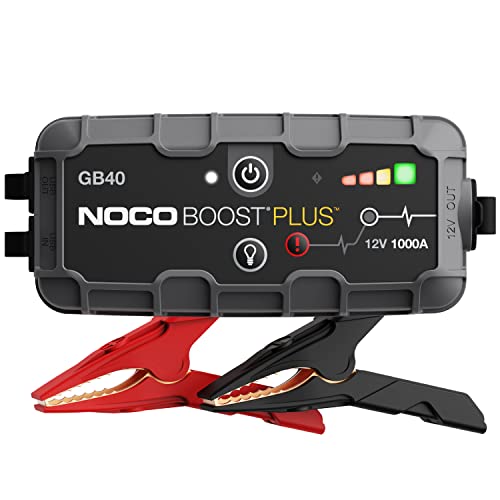
- Small car, compact SUV, or occasional emergency kit: NOCO Boost Plus GB40. Its 1,000-amp rating and compact design suit most 12-volt gasoline vehicles up to roughly 6.0 liters, subject to the vehicle maker’s requirements.
- Large SUV, pickup, or frequent winter travel: NOCO Boost HD GB70. It provides more reserve and stronger starting capability without the bulk of a workshop-style booster.
- Heavy-duty pickup or large gasoline engine: NOCO Boost Max GB150. Its 3,000-amp rating is aimed at larger engines and repeated starts, but its size makes it less convenient for a small glove box.
- Maximum starting reliability and long leads: a lead-acid booster such as the Clore Automotive Jump-N-Carry JNC660. It is heavy, but its long cables and conventional high-current design are useful for garages, fleets, and larger vehicles.
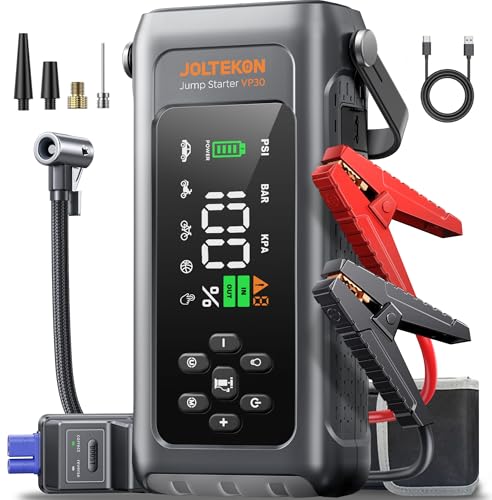
- Lowest-cost backup for a rarely driven car: a reputable lithium-ion unit rated around 1,000–1,500 peak amps, with reverse-polarity protection and a clear charge indicator. Avoid choosing solely by an unusually large advertised milliamp-hour figure.
The best portable jump starters are the ones whose starting current, battery reserve, cable reach, safety controls, and weight match your vehicle—not simply the model with the highest peak-amp number.
Our top picks


As an Amazon Associate we earn from qualifying purchases at no extra cost to you. Ratings are shown as listed on Amazon.
Quick picks by travel situation
- Small car, compact SUV, or occasional emergency kit: NOCO Boost Plus GB40. Its 1,000-amp rating and compact design suit most 12-volt gasoline vehicles up to roughly 6.0 liters, subject to the vehicle maker’s requirements.
- Large SUV, pickup, or frequent winter travel: NOCO Boost HD GB70. It provides more reserve and stronger starting capability without the bulk of a workshop-style booster.
- Heavy-duty pickup or large gasoline engine: NOCO Boost Max GB150. Its 3,000-amp rating is aimed at larger engines and repeated starts, but its size makes it less convenient for a small glove box.
- Maximum starting reliability and long leads: a lead-acid booster such as the Clore Automotive Jump-N-Carry JNC660. It is heavy, but its long cables and conventional high-current design are useful for garages, fleets, and larger vehicles.
- Lowest-cost backup for a rarely driven car: a reputable lithium-ion unit rated around 1,000–1,500 peak amps, with reverse-polarity protection and a clear charge indicator. Avoid choosing solely by an unusually large advertised milliamp-hour figure.
Best portable jump starters compared
The figures below are useful for sizing, but peak amperage is not a universal testing standard. Battery temperature, cable resistance, engine oil viscosity, and the condition of the vehicle battery all affect real starting performance.
| Model or type | Advertised peak current | Battery or energy figure | Approximate weight | Cable and vehicle-use profile |
|---|---|---|---|---|
| NOCO Boost Plus GB40 | 1,000 A | About 24 Wh internal lithium battery | 2.4 lb | Short integrated leads; compact emergency backup for cars and smaller SUVs |
| NOCO Boost HD GB70 | 2,000 A | About 56 Wh internal lithium battery | 5.0 lb | Longer, heavier-duty leads; better reserve for trucks, SUVs, and cold conditions |
| NOCO Boost Max GB150 | 3,000 A | About 88 Wh internal lithium battery | 7.5 lb | Heavy-duty cables; suited to large gasoline engines and repeated starts |
| Clore Automotive Jump-N-Carry JNC660 | 1,700 peak A | 12 V, 22 Ah lead-acid battery | About 18 lb | 46-inch cables; workshop and fleet use where reach matters more than portability |
| Typical compact lithium starter | 1,000–1,500 A | Approximately 20–40 Wh | 1.5–3.0 lb | Usually short cables; appropriate for one small or mid-size vehicle emergency |
Battery capacity deserves careful interpretation. A 12,000 mAh claim may be measured at the battery’s internal voltage rather than at 12 volts, so it cannot be compared directly with an 88 Wh model. Watt-hours are more useful: a 24 Wh starter theoretically contains enough energy for several starting attempts, but the starter must deliver very high current briefly, and conversion losses reduce the usable amount.
How to match peak amps to your vehicle
Start with engine size and fuel type, then add margin for cold weather and an aging vehicle battery. Gasoline engines generally need less starting current than diesel engines of similar displacement. A small four-cylinder car can often use a 600–1,000-amp unit, while a large V6, V8, diesel pickup, or vehicle with thick cold-weather oil benefits from 1,500–3,000 amps.
These are practical buying bands rather than guarantees:
- Up to 2.0 liters gasoline: 600–1,000 peak amps.
- 2.0–4.0 liters gasoline: 1,000–1,500 peak amps.
- 4.0–6.0 liters gasoline or moderate diesel use: 1,500–2,000 peak amps.
- Large gasoline engines, diesel trucks, or repeated roadside use: 2,000–3,000 amps or a commercial lead-acid booster.
Check the owner’s manual before buying. Some vehicles have remote positive terminals, battery-monitoring sensors, or jump points that must be used instead of clamping directly to the battery posts.
Safety features matter more than extra USB ports
Look for reverse-polarity detection, short-circuit protection, over-current protection, spark-resistant connection design, and a manual override only when the instructions specifically permit it. Reverse-polarity protection should warn you if the red clamp is on the negative terminal or the black clamp is on the positive terminal.
A manual override can help with a deeply discharged battery that the automatic system cannot detect, but it removes some protection. Do not use it casually, and never allow the clamps to touch each other. A built-in flashlight is useful at night, while USB-C charging is more convenient than an older micro-USB input. An air compressor is helpful for tire inflation but usually makes a starter larger, slower to recharge, and less focused as an emergency starting tool.
Head-to-head: compact lithium versus heavy lead-acid
Compact lithium-ion starters
Lithium models are the better travel choice for most private motorists. They weigh roughly 2–8 pounds, fit under a seat, and can provide USB power for a phone. Their disadvantages are shorter cables, greater sensitivity to extreme temperatures, and the need for regular charging. A lithium starter that has been left in a freezing trunk may need to warm before it can deliver its rated performance.
Lead-acid boosters
Lead-acid units are much heavier, but they often provide longer cables, a physically larger battery, and a more familiar operating behavior for workshops and commercial vehicles. They can be awkward to carry and may self-discharge over time. Their batteries also age if they are stored discharged, so they are best kept connected to a suitable maintenance charger when the manufacturer allows it.
For a road-trip kit, the compact lithium option usually wins. For a service van, farm truck, or garage where cable reach and repeated use matter, lead-acid can be the more practical choice.
A decision matrix for real-world buyers
| Your situation | Recommended specification | Why |
|---|---|---|
| Small car, limited storage, rare emergencies | 600–1,000 A; 20–30 Wh; under 3 lb | Enough reserve without sacrificing glove-box space |
| Family SUV and winter road trips | 1,500–2,000 A; 40–60 Wh; 3–6 lb | More starting margin and fewer recharge concerns |
| Diesel pickup or large gasoline truck | 2,000–3,000 A; 60–90 Wh; heavy-duty clamps | Higher reserve for high-compression engines and cold starts |
| Inexperienced user | Automatic detection, polarity warning, insulated clamps, clear status lights | Reduces connection mistakes under stress |
| Fleet, workshop, or frequent use | Long cables; replaceable or serviceable battery preferred | Reach and ownership cost matter more than minimum weight |
How to use and maintain a portable starter
- Charge it before travel. A full indicator does not guarantee long-term storage capacity, so top it up before a trip.
- Turn off the vehicle and accessories. Put the transmission in Park or Neutral and engage the parking brake.
- Connect positive first. Attach the red clamp to the designated positive terminal or jump point, then attach the black clamp to the approved negative point or a solid unpainted chassis ground.
- Confirm the safety indicator. If the unit reports a polarity or connection error, stop and correct it before attempting a start.
- Crank briefly. Try for about three to five seconds, then wait at least 30 seconds before another attempt. Repeated long cranking overheats the starter motor and cables.
- Disconnect in reverse order. Remove the black clamp first, then the red clamp, keeping the clamps separated.
- Recharge and store correctly. Clean dirt from the clamps, keep the unit dry, and store it away from extreme heat. Check its charge every one to three months, following the manufacturer’s guidance.
A jump starter is not a repair for a failing battery, damaged alternator, or electrical fault. If the vehicle repeatedly needs a boost, have the battery and charging system inspected. The component that commonly wears first is the internal battery, especially when the unit is stored fully discharged or exposed to high heat. A modestly sized, well-maintained starter is usually more dependable than an oversized model forgotten in the trunk.
Bottom line
For most travelers, the NOCO GB40 is a sensible compact choice for a small car, while the GB70 offers a stronger balance for SUVs and pickups. Choose the GB150 or a commercial lead-acid booster when engine size, diesel compression, cold weather, or repeated use justifies the extra weight. Compare usable battery energy, cable reach, protection features, and storage conditions alongside peak amps; that combination identifies the best portable jump starters for your particular trip.