Key takeaways
- Drone and gimbal protector: about 3–5 L once padding and clearance are included.
- Controller: about 1–2 L, more if it has a built-in display.
- Three batteries and a charging hub: about 1–2 L.
- Spare propellers, cables, memory cards and filters: about 0.5–1 L.
- Tablet, jacket or personal items: another 3–6 L.
The best drone backpacks for travel are the ones that match your aircraft’s folded dimensions, protect batteries and gimbals separately, and remain comfortable after several hours of walking: the Lowepro DroneGuard BP 250 is a strong compact choice, the Lowepro DroneGuard BP 450 AW II suits larger camera drones, and the PGYTECH OneMo 2.0 is better when camera equipment and drone accessories must share one bag.
Our top picks

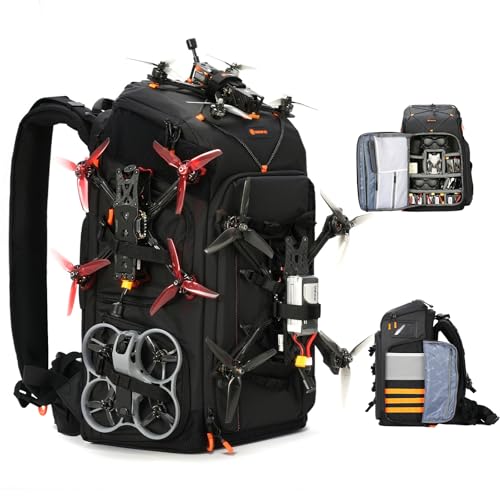

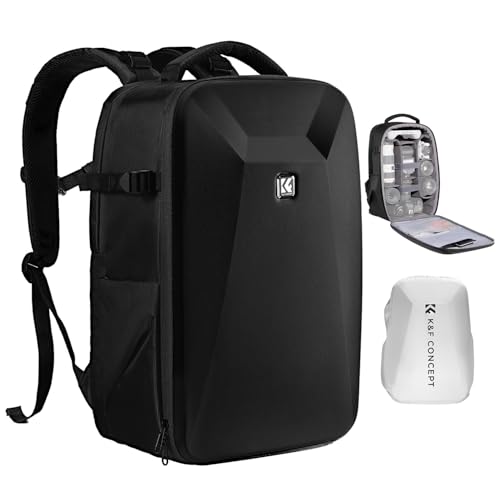
As an Amazon Associate we earn from qualifying purchases at no extra cost to you. Ratings are shown as listed on Amazon.
Best drone backpacks at a glance
| Backpack | Best for | Approx. internal space | Weight | Carry and protection highlights |
|---|---|---|---|---|
| Lowepro DroneGuard BP 250 | Compact folding drones and light travel kits | Approximately 26 × 21 × 12 cm | Approximately 1.2 kg | Structured drone compartment, adjustable dividers, padded shoulder straps and waist belt |
| Lowepro DroneGuard BP 450 AW II | Camera drones with multiple batteries | Approximately 34 × 23 × 15 cm | Approximately 1.8 kg | Rigid internal structure, configurable dividers, dedicated battery and controller storage, rain cover |
| PGYTECH OneMo 2.0 25L | Drone plus mirrorless camera and lenses | Variable modular main compartment, roughly 25 L total | Approximately 2 kg | Removable insert, wide-opening access, separate quick-access compartments and expandable capacity |
| Drone-specific 15–20L hard-shell backpack | Maximum impact protection in a compact kit | Usually about 30 × 22 × 13 cm | Approximately 1.5–2.5 kg | Closed-cell foam or molded shell, precise cutouts, excellent crush resistance but less flexible packing |
Internal dimensions are more useful than advertised external volume. Manufacturers measure compartments differently, and removable dividers can reduce usable width by several centimeters. Measure the drone folded, with propellers and gimbal protector removed, then allow at least 1 cm of clearance on each side for padding and easy removal.
Which drone backpack fits your situation?
| Your situation | Look for | Most suitable type |
|---|---|---|
| Occasional weekend travel with a small folding drone | 12–18L capacity, light frame, room for two batteries and a tablet | Compact drone-specific backpack such as the DroneGuard BP 250 |
| Frequent flying with a camera drone | Firm base, replaceable dividers, battery sleeves, rain protection and a waist belt | Large structured pack such as the DroneGuard BP 450 AW II |
| Drone and mirrorless camera travel together | Modular insert, lens-height dividers and fast side access | PGYTECH OneMo 2.0 25L or a camera backpack with a drone insert |
| Public transport and overhead-bin travel | Protected propellers, compact depth, luggage pass-through and concealed pockets | 15–20L structured pack with a firm but not bulky frame |
| Rough terrain, cycling or motorcycle travel | Crush-resistant shell, stable harness and minimal loose accessories | Hard-shell or semi-rigid drone backpack |
Lowepro DroneGuard BP 250: best compact option
The DroneGuard BP 250 is aimed at smaller folding drones and is easier to carry than a large camera-style backpack. Its internal compartment is approximately 26 cm high, 21 cm wide and 12 cm deep, enough for a compact drone, controller, two or three batteries, a charger, spare propellers and a small tablet, depending on the exact drone and controller design.
Its value is the structured interior rather than maximum capacity. The padded dividers can separate the aircraft from the controller and protect the gimbal area from cables or battery weight. The bag is most efficient when the drone sits in the central compartment, batteries occupy their own sleeves, and the upper pocket holds small items such as memory cards, USB cables and propeller screws.
Carry comfort is good for a light load. Padded shoulder straps and a waist belt help, but the harness is not intended for carrying a fully packed professional kit all day. Once the contents approach 5–6 kg, a larger backpack with better load transfer becomes more comfortable.
Lowepro DroneGuard BP 450 AW II: best for a larger drone kit
The DroneGuard BP 450 AW II is the stronger choice for a camera drone, several batteries and a controller with a built-in screen. Its main drone compartment is approximately 34 × 23 × 15 cm, although dividers and padding reduce the practical packing area. The structured design helps keep the aircraft away from heavier accessories, while adjustable dividers let you create separate bays for batteries, charger, controller and spare parts.
The larger size also makes it more suitable for drones whose arms, propellers or gimbal cover make them awkward to pack. Do not assume that a drone will fit simply because its folded length is below 34 cm: the controller may need a separate vertical space, and thick battery padding can reduce available depth.
The built-in all-weather cover is useful in brief showers, but it is not a substitute for a dry bag during prolonged rain. The pack is also heavier before any equipment is added, so it makes most sense for frequent flying, road trips and flights where protection matters more than the lightest possible carry.
PGYTECH OneMo 2.0 25L: best hybrid camera and drone backpack
The OneMo 2.0 25L is less restrictive than a molded drone case. Its removable modular insert can be arranged around a folding drone, mirrorless camera, lenses and a compact gimbal. That flexibility is valuable when every trip has a different equipment list.
The trade-off is that the bag does not provide a dedicated, perfectly shaped cavity for every drone. Protection depends on arranging the dividers correctly. Put the drone in the padded insert, place the gimbal end away from the base, and keep batteries from pressing against the aircraft. A filled 25L bag can become heavy quickly, particularly when camera lenses and a laptop are added.
Its separate access points are helpful for travel: frequently used batteries, cables or a controller can be reached without unpacking the entire main compartment. For photographers who fly only occasionally, this is often more useful than dedicating an entire backpack to one drone.
How much space do you really need?
Start with the aircraft, then add accessories by volume rather than by item count. A compact setup generally needs:
- Drone and gimbal protector: about 3–5 L once padding and clearance are included.
- Controller: about 1–2 L, more if it has a built-in display.
- Three batteries and a charging hub: about 1–2 L.
- Spare propellers, cables, memory cards and filters: about 0.5–1 L.
- Tablet, jacket or personal items: another 3–6 L.
That produces a practical target of 10–16 L for a small drone and 18–25 L for a larger drone or mixed camera kit. Avoid filling every pocket. Empty space is not wasted: it prevents the gimbal, propellers and battery contacts from being compressed when the bag is set down.
Padding, dividers and the details that matter
Padding thickness
Look for approximately 10–15 mm of closed-cell foam around the aircraft, with thicker protection at the base and sides. Soft fabric alone prevents scratches but does little against a dropped bag. A rigid frame or semi-rigid panel is especially useful when the backpack may be placed under a vehicle seat or in a crowded luggage compartment.
Divider layout
Dividers should attach firmly and be long enough to reach the walls. Short dividers can move during travel and allow batteries to strike the drone. A good arrangement gives the aircraft its own bay, keeps the controller in a second bay, and uses narrow padded sections for batteries and chargers.
Harness design
For loads above roughly 6 kg, prioritize a sternum strap, ventilated back panel and waist belt. Adjust the waist belt so it carries part of the load on the hips, then tighten the shoulder straps. A narrow, rigid bag may protect equipment well but feel uncomfortable if its frame digs into the lower back.
Ownership realities: what wears first
Shoulder-strap stitching, zipper pulls and the bottom fabric usually show wear before the foam does. Repeatedly overloading the main compartment can stretch the zipper line and compress the padding. Keep batteries in protective sleeves, remove sand before closing zippers, and wipe salt or dust from the exterior with a damp cloth.
Do not store a drone in the backpack while it is wet or warm from operation. Let it cool and dry first, then leave the bag open briefly after a damp trip. Check divider hook-and-loop fasteners periodically; clogged fibers can let a divider detach when the bag is lifted. Replace damaged dividers rather than relying on loose clothing as structural padding.
A simple packing method for safer travel
- Remove propellers, gimbal protectors and any detachable sticks or accessories that could press into the aircraft.
- Place the drone in the central padded bay with the gimbal facing a protected, low-pressure side.
- Put batteries in individual sleeves, contacts covered, and keep them away from sharp cables.
- Place the controller in its own compartment so its joysticks and screen cannot contact the drone.
- Fill small gaps with soft, non-abrasive items, but do not force the zipper closed.
- Lift the packed bag by its handle and gently rotate it. Nothing should shift, rattle or press against the gimbal.
For most travelers, the decision is simple: choose the DroneGuard BP 250 for a compact, drone-only kit; choose the DroneGuard BP 450 AW II when a larger aircraft and several batteries need dedicated protection; and choose the PGYTECH OneMo 2.0 25L when flexibility for camera equipment matters as much as drone protection.