Key takeaways
- Clean the rear filter: Unplug the dryer, remove lint and hair from the intake, and follow the manual for removable-filter cleaning. A blocked filter reduces airflow and makes the motor work harder.
- Protect the hinge and cord: Do not wrap the cord tightly around the handle or force the handle closed around the cord. Store the dryer fully cool and use a pouch to keep grit out of the hinge.
- Inspect attachments: Replace cracked concentrators or loose diffusers. A damaged attachment can redirect heat unevenly.
- Do not cover the intake: Holding the dryer against clothing, bedding, or a towel can restrict ventilation and trigger overheating protection.
- Allow cooling time: A cool-shot cycle does not make the casing instantly safe to pack. Wait until the housing and nozzle are cool.
The best travel hair dryers are dual-voltage models under 1.5 lb that fold small without sacrificing a concentrator, usable airflow, or enough heat control for your hair type; for most travelers, the BaBylissPRO Nano Titanium Bambino is the strongest compact all-rounder, while a mini dryer is better for occasional short-hair use and a full-size high-speed model is better for thick or long hair.
Our top picks

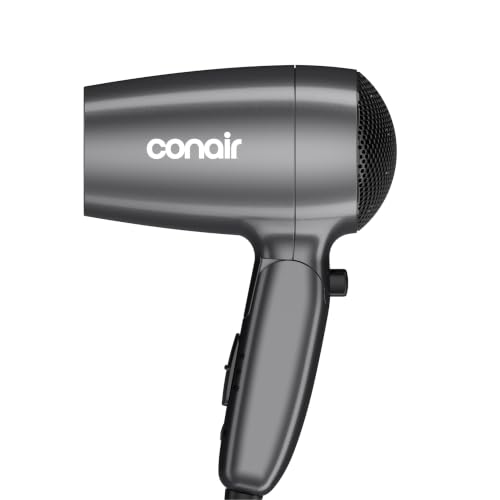
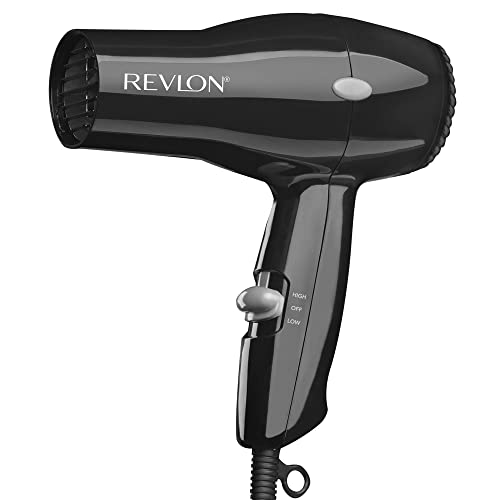

As an Amazon Associate we earn from qualifying purchases at no extra cost to you. Ratings are shown as listed on Amazon.
Quick picks by travel situation
| Situation | Best choice | Why it fits | Main compromise |
|---|---|---|---|
| Most international travelers | BaBylissPRO Nano Titanium Bambino | Compact body, folding handle, dual-voltage versions, concentrator attachment | Less powerful than a full-size salon dryer |
| Short, fine, or low-maintenance hair | Dual-voltage mini dryer | Usually the smallest and lightest option, often about 0.7–1.0 lb | Can require more passes on dense hair |
| Long, thick, or curly hair | Compact high-speed dryer such as the Shark SpeedStyle | Stronger airflow and faster rough-drying than basic hotel-size dryers | Usually larger, heavier, and more expensive |
| Frequent styling on trips | Dual-voltage dryer with separate speed and heat switches | More control and less reliance on maximum heat | More controls and attachments take packing space |
| Smallest possible suitcase load | Folding mini dryer with a 1,000–1,200 W motor | Often folds to roughly 5–7 inches long | Slower drying and weaker airflow are common |
What separates the best travel hair dryers
Folded size and weight
A dryer’s advertised length may describe the handle open, so check the folded dimensions before buying. A practical travel target is approximately 6–8 inches long when folded, 3–5 inches wide, and below 1.5 lb without the cord or attachments. Some high-speed compact dryers exceed 1.5 lb but can still be worthwhile if they reduce drying time substantially.
Look for a hinge that locks firmly in both positions. A loose folding joint creates an awkward grip and is one of the first parts likely to become unreliable in a frequently packed dryer. A short cord can save space, but a cord around 6 feet is easier to use in unfamiliar hotel bathrooms.
Drying speed is airflow, not wattage alone
Wattage indicates electrical power draw, not a guaranteed drying time. A 1,875-watt dryer may produce less useful airflow than a well-designed 1,200-watt compact model. Air outlet shape, fan design, nozzle width, and the distance between the heating element and your hair all affect performance.
For fine or short hair, a compact dryer in the 1,000–1,400 W range is often adequate. Long or dense hair benefits from stronger airflow and a concentrator that directs air through sections. If your hair takes 20 minutes with a weak dryer, a faster model may justify extra suitcase space even if its wattage is not dramatically higher.
Heat and speed controls
At minimum, choose two speed settings, two heat settings, and a cool-shot button. Separate controls are more useful than a single combined switch: you can keep strong airflow while lowering heat, which is helpful for fine, color-treated, or easily dried-out hair.
A concentrator nozzle is valuable for straightening and smoothing because it narrows the airflow along the hair shaft. Curly or wavy hair usually benefits more from a compatible diffuser than from extra heat. Many very small dryers do not include a diffuser, so check whether an attachment is supplied or sold separately.
Head-to-head: mini dryer versus compact high-speed dryer
| Specification | Typical folding mini dryer | Compact high-speed dryer |
|---|---|---|
| Folded length | 5–7 inches | 7–10 inches |
| Weight without attachments | 0.7–1.1 lb | 1.2–1.8 lb |
| Typical power range | 1,000–1,400 W | 1,300–1,600 W |
| Best use | Short, fine, or occasional styling | Long, thick, or frequent styling |
| Typical rough-dry time | 8–18 minutes | 5–12 minutes |
| Common attachments | Concentrator, sometimes none | Concentrator and sometimes diffuser or styling attachments |
| Typical market price | About $20–$60 | About $100–$300 |
These are useful comparison ranges, not guarantees: hair density, starting dampness, climate, and the hotel’s voltage supply can change the result. A high-speed dryer is not automatically better if it is uncomfortable to hold or lacks the attachment your routine requires.
Voltage, plugs, and international use
Dual voltage is essential for international travel. A dryer marked “110–120 V” is not suitable for a 220–240 V country merely because a plug adapter fits. Look for a label or manual stating “dual voltage,” “110–240 V,” or a similar automatic-voltage range. Some models require a small voltage selector; set it while the dryer is unplugged and verify the setting before use.
A plug adapter changes the shape of the plug, not the voltage. In countries with a different mains voltage, a non-dual-voltage dryer needs a correctly rated transformer, and many travel dryers should not be used with one unless the manufacturer explicitly allows it. A dual-voltage dryer plus the correct plug adapter is usually the simpler arrangement.
Also check the wattage limit of the destination’s bathroom outlet. If the dryer repeatedly trips the circuit, do not keep resetting it while other high-power appliances are connected. Hotel outlets may have residual-current protection, which can shut off a dryer if the cord or appliance has a fault.
Performance by hair type
Fine, short, or easily flattened hair
Prioritize low heat, a lower speed, and a narrow concentrator. Excessive airflow can create frizz or remove volume. A lightweight mini dryer is usually enough, and its smaller motor may be easier to control near the roots.
Long or thick hair
Choose airflow over extreme heat. A powerful compact dryer can shorten rough-drying, but divide hair into sections and stop when it is mostly dry rather than repeatedly blasting already-dry ends. A wide nozzle or diffuser can make a compact high-speed model more versatile.
Curly, wavy, or coily hair
Attachment compatibility matters more than a very small folded measurement. A diffuser with deep fingers and a stable fit helps distribute airflow, while low-to-medium heat and speed generally make styling easier to control. If a dryer has no compatible diffuser, it may be a poor travel choice even when its motor is powerful.
Color-treated or heat-sensitive hair
Look for independent heat and speed controls, a genuinely usable cool setting, and a concentrator that lets you keep the dryer moving. “Ionic” labeling can be a secondary feature, but it should not outweigh dual voltage, airflow, weight, and temperature control.
Ownership realities: what to maintain
- Clean the rear filter: Unplug the dryer, remove lint and hair from the intake, and follow the manual for removable-filter cleaning. A blocked filter reduces airflow and makes the motor work harder.
- Protect the hinge and cord: Do not wrap the cord tightly around the handle or force the handle closed around the cord. Store the dryer fully cool and use a pouch to keep grit out of the hinge.
- Inspect attachments: Replace cracked concentrators or loose diffusers. A damaged attachment can redirect heat unevenly.
- Do not cover the intake: Holding the dryer against clothing, bedding, or a towel can restrict ventilation and trigger overheating protection.
- Allow cooling time: A cool-shot cycle does not make the casing instantly safe to pack. Wait until the housing and nozzle are cool.
A simple space calculation can clarify the trade-off. If a folded mini dryer occupies roughly 7 by 3 by 3 inches, its rectangular packing volume is about 63 cubic inches. A compact high-speed dryer measuring approximately 9 by 4 by 4 inches occupies about 144 cubic inches before accounting for its attachments—more than twice the space. If the larger dryer saves 8 minutes per use and you style your hair six times on a trip, that is 48 minutes saved, which may justify the additional volume for frequent users but not for a one-night stay.
Bottom line
Choose the BaBylissPRO Nano Titanium Bambino or a similar folding, dual-voltage mini dryer when compactness and dependable basic styling matter most. Choose a compact high-speed model such as the Shark SpeedStyle when thick, long, or frequently styled hair makes drying time the priority. Before purchasing, confirm the exact model’s voltage range, folded dimensions, weight, included attachments, and plug type; those details can vary between regional versions and are more important than promotional claims about power or technology.