Key takeaways
- Waterless humidification: HME cartridges capture some moisture from exhaled air and return it during inhalation. They are convenient for flights and hotels, but cartridges must be replaced according to the manufacturer’s instructions and may not provide the same comfort as a heated water chamber.
- Noise: Published noise ratings are usually measured under controlled conditions. A mask leak can sound louder than the motor. Hose placement, a bedside table that resonates, and an overly tight mask can also increase perceived noise.
- Mask compatibility: A nasal-pillow mask, nasal mask, and full-face mask can each require different pressure and fit adjustments. If you change machines or use an adapter, check that the connection is secure and that the prescribed therapy settings remain appropriate.
- Dryness and congestion: If waterless humidification does not suit you, discuss alternatives with a sleep professional rather than improvising a water container or adding unapproved tubing components.
The best travel CPAP machines for most people are the ResMed AirMini for the smallest established ecosystem, the Transcend Micro for low weight and broad mask compatibility, and the Breas Z2 Auto for travelers who prefer a conventional waterless setup with a lower purchase price.
Our top picks

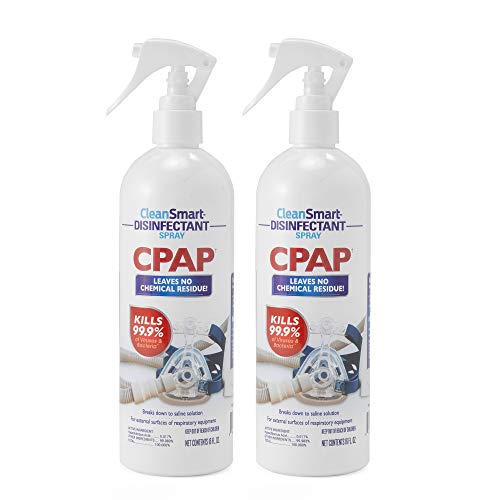


As an Amazon Associate we earn from qualifying purchases at no extra cost to you. Ratings are shown as listed on Amazon.
Best travel CPAP machines at a glance
| Machine | Approx. size and weight | Humidification | Mask compatibility | Battery and power notes | Typical market range |
|---|---|---|---|---|---|
| ResMed AirMini | 5.4 × 3.3 × 2.0 in; about 0.66 lb / 300 g | Waterless HumidX or HumidX Plus cartridges | Full compatibility with selected ResMed masks; other masks generally require an adapter | 100–240 V AC power supply; optional battery solutions vary by manufacturer | About $900–$1,000 |
| Transcend Micro | About 3.6 × 3.6 × 3.6 in; about 0.65 lb / 295 g | Optional waterless M20 moisture-exchange system | Designed to work with most standard CPAP masks using the appropriate connection | AC power and optional portable battery; confirm the battery’s airline requirements | About $800–$1,000 |
| Breas Z2 Auto | About 6.5 × 3.3 × 2.3 in; about 0.65 lb / 295 g | Optional waterless HME system; no conventional heated humidifier | Standard hose connection supports most CPAP masks | AC power and optional Z2 battery systems; use the correct voltage converter or adapter | About $700–$900 |
Dimensions and prices can vary slightly by package and region. Battery runtime depends on pressure, altitude, temperature, mask leak, humidification, and whether the machine is running from a dedicated battery or an inverter.
Which travel CPAP fits your situation?
| Your priority | Best starting choice | Why | Trade-off |
|---|---|---|---|
| Smallest established setup | ResMed AirMini | Very compact, light, and supported by a mature travel-focused accessory ecosystem | Mask compatibility and humidification are more restricted |
| Use your existing mask | Transcend Micro or Breas Z2 Auto | Standard hose connections make switching from a home mask simpler | Check pressure settings and hose or adapter requirements before departure |
| Frequent camping or power outages | Transcend Micro or Breas Z2 Auto with a matched battery | Portable battery options are available and the units are designed for travel | Battery cost and charging logistics add to the total price |
| Lowest weight in a compact kit | AirMini or Transcend Micro | Both weigh approximately 300 g before adding the power supply, hose, mask, and battery | The complete kit is considerably heavier than the device alone |
| Quiet hotel-room operation | Compare the manufacturer’s noise rating and hose design | All three are designed for quiet operation, but perceived noise also comes from airflow, leaks, and the bedside surface | A quoted decibel figure does not predict every sleeper’s experience |
Head-to-head: AirMini, Transcend Micro, and Z2 Auto
ResMed AirMini: best for a compact, integrated ecosystem
The AirMini is a strong choice when luggage space matters and you already use a compatible ResMed mask. Its approximately 300-gram body is easy to pack, and the companion app can help with setup and data review. The machine uses waterless HumidX or HumidX Plus cartridges rather than a water tank. That eliminates spills and the need to carry distilled water, but the cartridges are consumables and the system’s humidification works only with supported mask and tubing combinations.
The most important AirMini limitation is mask compatibility. It is not simply a universal miniature version of a home CPAP. Selected ResMed masks connect directly, while other masks may need a specific adapter. Before buying, identify your exact mask model, not just its brand. A favorite mask that works with a home machine may not provide the same compatibility or humidification options on the AirMini.
Transcend Micro: best balance of weight and conventional mask flexibility
The Transcend Micro has a rounded, highly portable design and weighs roughly 295 g. It uses a standard CPAP hose connection, which is useful if you want to keep using an existing nasal, nasal-pillow, or full-face mask. Its optional waterless moisture-exchange accessory can reduce dryness without a water chamber, although it does not feel identical to heated humidification.
For campers and international travelers, the Micro is appealing because a dedicated battery can provide off-grid operation. Do not interpret a battery’s advertised runtime as a guarantee: higher pressure, large leaks, cold temperatures, and moisture accessories can shorten it. Test the complete machine, mask, hose, and battery combination at home before relying on it on a trip.
Breas Z2 Auto: best for a familiar standard-hose arrangement
The Z2 Auto is a compact automatic CPAP with a conventional hose connection and an optional waterless HME humidification approach. Its approximately 295-gram device weight is similar to the Micro, although its rectangular shape may use luggage space differently. The Z2 can be attractive if standard mask compatibility is more important to you than having a phone-centered travel ecosystem.
Some users notice sound transmitted through the hose or a hard bedside surface rather than loud motor noise. A soft, stable surface and careful mask fitting can help reduce vibration, but never cover the machine’s air inlet or place it where bedding can block ventilation.
Humidification, noise, and mask fit: the details that affect comfort
- Waterless humidification: HME cartridges capture some moisture from exhaled air and return it during inhalation. They are convenient for flights and hotels, but cartridges must be replaced according to the manufacturer’s instructions and may not provide the same comfort as a heated water chamber.
- Noise: Published noise ratings are usually measured under controlled conditions. A mask leak can sound louder than the motor. Hose placement, a bedside table that resonates, and an overly tight mask can also increase perceived noise.
- Mask compatibility: A nasal-pillow mask, nasal mask, and full-face mask can each require different pressure and fit adjustments. If you change machines or use an adapter, check that the connection is secure and that the prescribed therapy settings remain appropriate.
- Dryness and congestion: If waterless humidification does not suit you, discuss alternatives with a sleep professional rather than improvising a water container or adding unapproved tubing components.
Battery runtime: a practical way to estimate it
Battery claims are easiest to compare using watt-hours rather than an advertised number of nights. For example, a 97 Wh battery theoretically powering a machine that averages 12 W would provide:
97 Wh ÷ 12 W = 8.1 hours
After allowing for inverter or conversion losses, temperature, and startup overhead, the usable result may be closer to 6–7 hours. A second night would require either a larger battery or recharging during the day. Pressure, mask leaks, and humidification can raise energy use. Dedicated CPAP batteries are usually more efficient than a general power bank paired with an incompatible inverter.
Airline rules are separate from machine specifications. Spare lithium batteries are commonly subject to watt-hour limits and are generally carried in the cabin, not checked baggage. Confirm the current policy with your airline, keep the battery’s watt-hour label visible, and carry the CPAP as medical equipment when applicable. A CPAP may be used during a flight only when the airline permits it and the device is operated under its instructions.
International power and packing checklist
- Check the input rating on the machine’s power supply. A supply marked 100–240 V, 50/60 Hz generally needs only a plug-shape adapter in many countries.
- Do not confuse a plug adapter with a voltage converter. A plug adapter changes the physical connection; a converter changes voltage.
- Pack the manufacturer’s power supply, a short extension lead if useful, and a backup charging plan for battery travel.
- Carry the machine, mask, hose, and power supply in cabin baggage. Protect the hose from crushing and keep the machine’s air inlet clear.
- Save your prescribed settings and clinician’s contact details. Avoid changing pressure settings simply to compensate for a different machine.
Cleaning and ownership costs
Travel size does not remove routine maintenance. Wipe the mask cushion as directed, wash the mask and hose with mild soap and water when appropriate, allow parts to air-dry fully, and replace filters and waterless cartridges on the manufacturer’s schedule. Never use ozone or ultraviolet cleaning devices unless the manufacturer specifically supports that method; such devices can affect materials and may not replace ordinary washing.
The parts most likely to wear first are the mask cushion, headgear, hose, filters, and humidification cartridge—not necessarily the CPAP motor. Budget for those consumables and carry a spare filter and a backup mask cushion on longer trips. For a first trip, set up the complete kit at home for several nights. This exposes adapter problems, dryness, battery limitations, and unexpected hose noise before you are away from your usual equipment.
Bottom line
Choose the AirMini when compact size and ResMed integration matter most and your mask is supported. Choose the Transcend Micro when low weight, standard mask flexibility, and portable-battery use are priorities. Choose the Z2 Auto when you want a compact automatic CPAP with a familiar hose arrangement and waterless humidification option. Whichever you select, confirm compatibility with your prescribed therapy and mask with a sleep professional before replacing your primary machine.