Key takeaways
- Pro: 3,800 cuts per minute for its size and price
- Pro: Reduced vibration and lightweight design
- Con: 17-inch blade requires more passes on long hedges
A hedge that has been left untrimmed for a season or two becomes more than an eyesore. It blocks sightlines, crowds neighboring plants, and harbors pests. Bringing it back is a task that separates gardeners with a plan from those who procrastinate until the job feels impossible, and the tool you choose determines whether the work takes twenty minutes or an entire weekend.
A good hedge trimmer for 2026 balances blade reach, motor output, vibration management, and overall weight. Corded models deliver sustained power without battery anxiety but tether you to an outlet and a trailing cord. Cordless units trade some runtime for freedom of movement, and the best ones keep cuts per minute high enough to slice through woody growth without bogging down. Manual shears remain relevant for precision work on smaller shrubs where a power tool would be overkill. Comparing published specs and owner-reported experiences across these eight models reveals clear trade-offs in each category.
Our top picks




As an Amazon Associate we earn from qualifying purchases at no extra cost to you.
Quick Picks
| Product | Best for | Price |
|---|---|---|
| BLACK+DECKER BEHT150 | Small hedges on a tight budget | $34 |
| BLACK+DECKER LHT2220 | First cordless trimmer with kit included | $79 |
| BLACK+DECKER BEHT350FF | Larger shrubs with corded power | $59 |
| 20V 22″ Cordless 2-Battery Kit | Extended cordless runtime | $59.99 |
| 20V 22″ Cordless Budget Kit | Lowest cordless entry price | $53.44 |
| EGO POWER+ HT2600 | Professional-grade cordless reach | $179 |
| Fiskars PowerLever Shears | Precision shaping and tight spaces | $25.50 |
| WORX WG252 | Tall hedges and hard-to-reach spots | $89.99 |
How We Picked
We narrowed this category using four criteria that directly affect daily usability: power source and realistic runtime for an average yard, blade length paired with cut frequency to gauge how efficiently a model clears growth, weight and vibration level as proxies for fatigue over extended sessions, and price relative to the features a buyer actually needs rather than what marketing highlights. Owner feedback on long-term durability and cutting performance in woody or dense hedges informed the final ranking where specs alone were ambiguous.
The 8 Best Hedge Trimmer 2026 in 2026
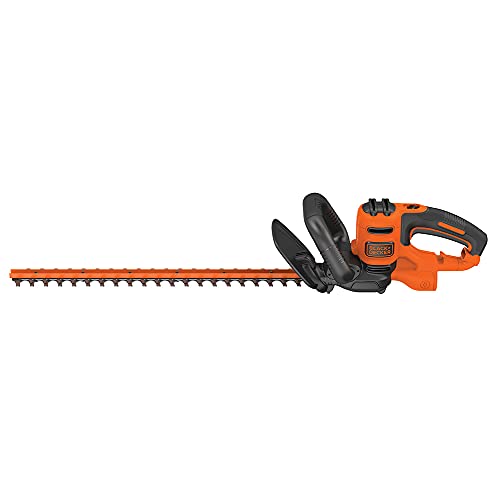
BLACK+DECKER BEHT150
This 17-inch corded trimmer with a 3.2-amp motor and 3,800 cuts per minute is the obvious choice for anyone maintaining a short boundary hedge or a handful of small shrubs near a house outlet. The dual-action blade reduces the sawing motion that older single-sided units force on your wrists, and the reduced-vibration design keeps hands comfortable over a longer session. At $34 it is the cheapest powered option here, and owners consistently note how lightweight it feels compared to larger corded models. The main limitation is reach: 17 inches means more passes over the same section, and the cord management on a large yard can become tedious. Skip this one if your hedges exceed waist height or span more than a dozen feet in a single run.
- Pro: 3,800 cuts per minute for its size and price
- Pro: Reduced vibration and lightweight design
- Con: 17-inch blade requires more passes on long hedges
BLACK+DECKER LHT2220
For the buyer who wants cordless freedom without a separate battery purchase, this 20V MAX unit ships with both battery and charger included. The 22-inch steel blade covers more ground per pass than the BEHT150, and the soft grip plus low-vibration housing make extended trimming sessions noticeably easier on the hands. At $79 it sits in a fair middle range for a complete cordless kit. Owners praise its balance and the fact that it handles typical suburban privet and boxwood without stalling. The runtime on a single charge limits it to moderate jobs, and heavy or woody growth will drain the battery faster than the manufacturer estimate. Skip it if your property has over thirty feet of tall hedge in one continuous section.
- Pro: Battery and charger included in the box
- Pro: 22-inch blade with soft grip and less vibration
- Con: Single-battery runtime caps job size
BLACK+DECKER BEHT350FF
Stepping up to 4.0 amps and a 22-inch blade, this corded trimmer is built for homeowners who need sustained power on larger shrub rows without battery anxiety. The full wraparound handle gives you a secure grip when working overhead or at awkward angles, and the high-output motor handles denser wood than lighter models. At $59 it costs only a bit more than the LHT2220 while delivering more raw cutting force. The trade-off is the cord: you are managing a power line around bushes and garden beds, which some owners find disruptive on irregularly shaped lots. Skip it if your nearest outlet is far from the hedge or you dislike cord management.
- Pro: 4.0-amp motor handles denser, woodier growth
- Pro: Full wraparound handle improves control at angles
- Con: Cord limits range and requires management
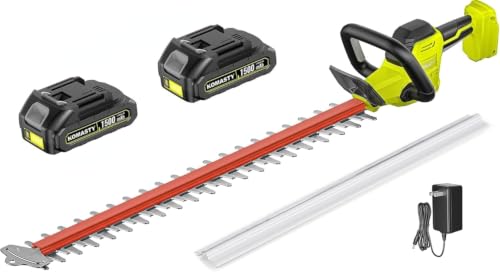
20V 22-Inch Cordless with 2×5.0Ah Battery and Charger
Two 5.0Ah batteries in the box mean roughly double the runtime of a single-battery kit, making this a practical pick for longer trimming sessions without waiting for a recharge. The 22-inch blade matches the size on more established brand-name models, and at $59.99 the total cost is comparable to a corded option that includes no battery at all. Owners report solid cutting on common garden shrubs and appreciate the flexibility of swapping batteries mid-job. The less-known brand means replacement parts and long-term support are less certain than with BLACK+DECKER or EGO. Skip it if brand reputation and service network matter more than upfront cost to you.
- Pro: Two 5.0Ah batteries extend work time significantly
- Pro: Charger included for a price under $60
- Con: Unfamiliar brand raises questions about parts availability
20V 22-Inch Cordless Budget Kit (2 Battery)
At $53.44 this is the least expensive cordless hedge trimmer with two batteries in the roundup. It suits the gardener who has experimented with corded models and wants to try cordless without committing much money. The 22-inch blade and 20V platform keep it competitive with similarly sized units, and owners who bought it for light-to-moderate trimming report it gets the job done. Build quality and blade steel hardness appear to trail the BLACK+DECKER and EGO options based on feedback mentioning faster dulling. Skip it if you plan to trim more than a small section of hedge per session or expect several seasons of heavy use.
- Pro: Lowest cordless price with two batteries included
- Pro: Adequate 22-inch blade for average shrubs
- Con: Blade longevity appears shorter on woody growth
EGO POWER+ HT2600
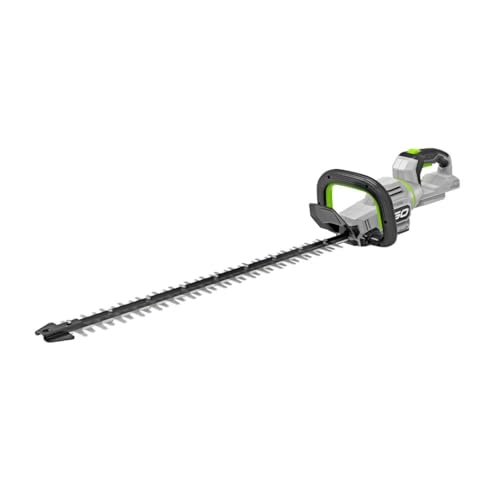
The 26-inch blade on this cordless unit is the longest here, giving it an edge on tall, wide hedges where fewer passes mean less time on a ladder or step. EGO’s 56V platform is the power source, and at $179 (battery and charger sold separately) it is priced as a professional-grade tool aimed at users who already own EGO batteries or intend to build the ecosystem. Owners praise its ability to cut through thicker branches without forcing, and the weight distribution feels balanced despite the large blade. The total cost after adding a battery exceeds $300, which is significant. Skip it if you only maintain a single short hedge and do not need 26 inches of reach.
- Pro: 26-inch blade covers more area per pass
- Pro: Handles thick, woody growth without stalling
- Con: Battery and charger sold separately, raising total cost
Fiskars PowerLever Shears
These extendable manual shears are not a power-trimmer replacement but a complement, and at $25.50 they earn a place in any gardener’s kit. The 10-inch blades with the PowerLever mechanism multiply your hand force, making them effective on branches up to a reasonable diameter without a motor. The telescoping handle extends from 25 to 33 inches, giving reach without a pole saw. Owners value them for precision shaping, deadheading, and trimming where a powered unit risks shearing off more than intended. For an entire hedge line they are slow and tiring. Skip them as your primary tool if you have more than a few feet of hedge to maintain.
- Pro: PowerLever mechanism multiplies cutting force
- Pro: Extendable handle reaches higher growth
- Con: Manual effort makes them impractical for full hedges
WORX WG252
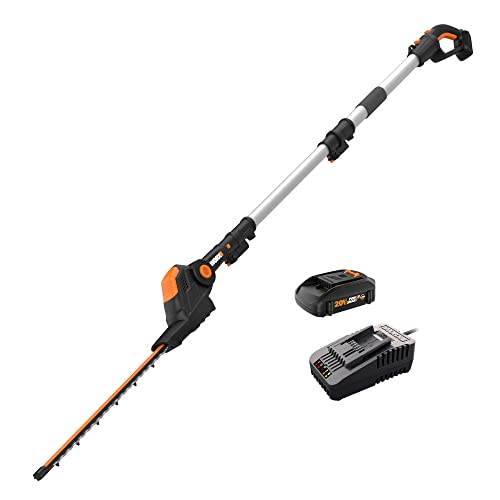
This 20V cordless pole trimmer is designed for one specific job: reaching the top of tall hedges without a ladder. The 20-inch blade on an extended pole lets you trim upper growth from the ground, and the 2-in-1 attachment capability means you can swap heads for other yard tasks. At $89.99 it is a reasonable investment for anyone whose hedges consistently exceed comfortable arm-reach height. Owners report it handles the top-face job well but note that the pole geometry can feel unwieldy for side trimming compared to a standard handheld unit. Skip it if your hedges are under five feet and you already own a standard trimmer for face work.
- Pro: Pole design eliminates ladder need for tall hedges
- Pro: 2-in-1 attachment adds versatility to one purchase
- Con: Less nimble for detailed side trimming than handhelds
Buying Guide
Power Source and What It Means in Practice
Corded trimmers deliver consistent power for as long as your extension cord reaches, making them ideal for large continuous hedges where battery swaps interrupt flow. Cordless models offer unrestricted movement and start instantly without a generator or outlet nearby, but realistic runtime on dense growth is shorter than advertised. If your hedge run exceeds thirty feet, a corded unit or a two-battery cordless kit saves frustration. Manual shears belong in the kit for touch-ups and odd angles regardless of which powered option you choose.
Blade Length and Cuts Per Minute
Blade length determines how much area each pass covers: a 17-inch blade on a short hedge is manageable, but a 22-inch or longer blade reduces passes proportionally and cuts total time. Cuts per minute matters most when you encounter semi-woody stems under half an inch thick; higher frequency clears them without the blade binding. The BEHT150 at 3,800 cuts per minute is a useful reference point for what a budget corded motor achieves, while higher-amp models deliver comparable or better frequency at larger blade sizes.
Weight, Vibration, and Handle Design
A trimmer that feels fine for five minutes can exhaust your shoulders and forearms after thirty. Vibration is the primary fatigue driver, and models marketed with reduced-vibration or dual-action blades are worth the small premium if you trim more than once a month. Handle design affects overhead and angled work: wraparound handles provide a secure grip when the blade points upward, while single-top handles suit flat-side trimming. Match the handle type to the shape of your hedges rather than choosing on looks.
Our Verdict
The BLACK+DECKER BEHT350FF is the best hedge trimmer 2026 overall: 4.0 amps and a 22-inch blade deliver cutting force that outlasts every cordless unit here, and at $59 the price undercuts most battery-included kits. For buyers who cannot tolerate a cord, the LHT2220 at $79 with its included battery is the easiest cordless entry. If your hedge stands taller than a ladder-free reach, the WORX WG252 is the one trimmer here that solves the problem from the ground.
FAQ
What size hedge trimmer do I need for a six-foot tall hedge?
A standard handheld trimmer works on the face and sides, but trimming the top of a six-foot hedge without a ladder requires a pole model like the WORX WG252. If you own a sturdy step ladder, a 22-inch blade handles the top face in two or three passes per section.
Is cordless or corded better for a long hedge row?
For a continuous row over twenty feet, corded power avoids runtime interruptions and the cost of multiple large-capacity batteries. Cordless wins on irregular layouts where an outlet is inconvenient and total trimmed length is moderate.
How often should hedge trimmer blades be sharpened?
Most owners report noticeable dulling after one full season of trimming, especially on woody growth. A professional sharpening once per year keeps the blade at near-new cutting frequency; attempting to cut through branches thicker than a quarter inch accelerates dulling regardless of blade quality.
Can I use a hedge trimmer on small branches?
Trimmers handle stems up to roughly half an inch comfortably, and some high-amp or high-voltage models manage slightly thicker growth. Beyond that diameter you risk binding and stalling, and loppers or a small saw are safer and faster choices for individual thick branches inside a hedge.