Key takeaways
- Setting a code incorrectly is the most common failure; follow the reset instructions and test before closing the zipper.
- Cheap cables can fray, so replace any lock with damaged coating.
- Avoid locks that look like they hold valuables; the lock is a signal as much as a barrier.
- Do not lock items you do not mind TSA opening; lock carry-on laptops with a cable.
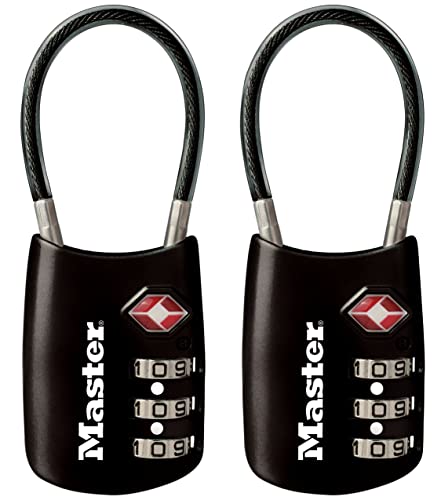
The Master Lock 4688D is the best travel lock for most people: it is a TSA-accepted combination cable lock with a vinyl-coated braided cable that is gentle on zippers, and it costs very little. If you want to know whether a screener opened your bag, choose a Forge or Sure Lock model with a search-alert indicator, and for hostel lockers or cable-locking a bag to a fixed object use a dedicated cable or padlock instead of a luggage lock.
Our top picks



As an Amazon Associate we earn from qualifying purchases at no extra cost to you.
Quick Comparison of the Best Travel Locks
| Pick | Best for | Type | TSA-accepted | Key feature | Price range |
|---|---|---|---|---|---|
| Master Lock 4688D | Best overall | Combination cable lock | Yes | Coated braided cable, set-your-own code | Budget |
| Forge TSA Open Alert (multi-pack) | Best for tamper awareness | Combination or keyed cable lock | Yes | Red indicator shows if opened | Budget to mid |
| Sure Lock with SearchAlert | Best alternative indicator lock | Combination lock | Yes | Search-alert indicator | Budget to mid |
| Puroma 4-digit set | Best budget multi-pack | 4-digit combination | Yes | More code combinations | Budget |
| Cable lock class (Kensington-slot or security cable) | Best for securing bags and laptops | Steel cable | Not applicable | Anchors your bag to a fixed point | Mid |
Details follow the makers’ published specs and common reviewer descriptions; models vary by pack size, so confirm the exact version on the product page. Prices are general bands, so use Check price for today’s number.
What “TSA-Accepted” Means
A TSA-accepted lock has a keyhole that screeners can open with a master key, so they do not have to cut the lock to inspect your bag. These locks carry a red diamond logo from Travel Sentry or similar. They work for US flights and are respected in some other countries, but many airports abroad do not have master keys and may cut locks. A luggage lock is a deterrent for casual tampering and not a defense against a determined thief, because a zipper can be opened with a pen on many bags.
Best Overall: Master Lock 4688D
The 4688D is a combination lock on a 3 mm braided steel cable with a vinyl coating, so the cable does not scratch zipper pulls or fabric. You set your own code, and it is accepted by TSA. It is also very cheap, so you can buy a few and match them to each bag. Master Lock backs it with a limited lifetime warranty.
Who it suits: casual travelers who want a simple, reliable lock. Main trade-off: it is mostly a deterrent and a cut-evident tool, and the short cable limits what you can lock together. As with most combination locks, a shorter code has fewer permutations, so avoid obvious codes like 000 or 123.
Best for Tamper Awareness: Forge TSA Open Alert
Forge locks use a red indicator that shows when TSA used the master key. After inspection, the agent has to relock the bag to hide the red indicator, which helps you notice that the bag was opened. Forge’s alloy build and relock design are reviewed positively, and the brand offers a lifetime warranty.
Who it suits: travelers carrying valuables or electronics who want to know if bags were opened. Main trade-off: the cable is short, around 4 inches, so it works best on standard zipper pulls and does not tie to larger objects.
Best Alternative Indicator Lock: Sure Lock with SearchAlert
Sure Lock also makes TSA locks with a search indicator. They are sold in multi-packs, which is convenient for families with several bags.
Who it suits: families and groups, or travelers who want to compare indicator locks. Main trade-off: fewer independent details are available than for Master Lock or Forge, so check the warranty and pack contents on the current listing.
Best Budget Multi-Pack: Puroma 4-Digit Combination
Puroma’s lock uses a four-digit code. Four digits means 10,000 possible combinations, compared with 1,000 for a three-digit lock. They come in multi-packs and colors, so you can color-code bags.
Who it suits: families who need many locks. Main trade-off: build quality is less proven than Master Lock, so test the combination setting before departure.
Best for Securing Gear: A Steel Cable Lock
A travel cable lock is not TSA-accepted but is useful in hostels, trains and cafes. It lets you loop a bag or laptop to a fixed object. A laptop cable using the Kensington security slot is common on Windows laptops and some monitors. Do not use non-TSA locks on checked baggage on US flights, since screeners may cut them.
How to Choose a Travel Lock
Checked bag or carry-on?
For checked bags on US flights use a TSA-accepted lock. For carry-ons, hostel lockers and day packs use any padlock or cable lock, since they will not need to be opened by screeners.
Combination or key
Combination locks mean no key to lose. Keyed locks are slightly harder to pick by guesswork, but you must keep the key safe. Most travelers prefer combinations.
Number of digits
A 3-digit lock has 1,000 combinations and a 4-digit lock has 10,000. Longer codes are harder to guess but also harder to remember. Write the code in your phone, not on the lock.
Cable length and thickness
A thicker cable resists cutters better but is stiffer and harder to thread through small zipper holes. A 3 mm cable is a good middle ground for luggage.
Search alert
A search alert indicator is a nice addition for tamper awareness, though it does not stop anyone from opening the bag.
Worked Example: How Many Locks Do You Need?
A bag with two zippered compartments uses one lock per zipper pair. A family of four with one checked bag each and one backpack each needs about 8 locks if every compartment is locked. A 4-pack plus a 4-pack covers it, and using different colors lets you remember the codes. Set the same code on all locks for a trip so there is only one number to remember, then change it after you return.
Decision Matrix
| Your situation | Choose |
|---|---|
| Basic checked-bag lock | Master Lock 4688D |
| Valuables, want to know if opened | Forge Open Alert |
| Many bags, low cost | Puroma 4-digit multi-pack |
| Hostels and trains | Steel cable lock |
Ownership Realities and Mistakes
- Setting a code incorrectly is the most common failure; follow the reset instructions and test before closing the zipper.
- Cheap cables can fray, so replace any lock with damaged coating.
- Avoid locks that look like they hold valuables; the lock is a signal as much as a barrier.
- Do not lock items you do not mind TSA opening; lock carry-on laptops with a cable.
Frequently Asked Questions
Do I need TSA-approved locks?
If you use a lock on a checked bag in the US, yes, because otherwise it may be cut open. For carry-on bags and lockers, any lock is fine.
Can TSA cut my lock?
Yes. If a screener cannot open a lock, they can break it, and the airline is generally not responsible for the damage.
Do TSA locks work outside the US?
They work like normal locks abroad, but many airports do not have master keys and may cut them, so do not rely on them for security.
Are luggage locks really secure?
They deter opportunistic tampering, but a thief can often bypass the zipper itself. Consider them part of a layered approach with a bag that has lockable, tough zippers.
What is a good lock for a hostel locker?
Use a sturdy padlock or combination padlock with a thicker shackle. TSA luggage locks are not designed for locker security.