Key takeaways
- Fit fins with your intended boots or socks, and check the strap or foot pocket for pressure points.
- Rinse in fresh water after each dive and let them dry away from direct sun and heat.
- Check straps and buckles for cracks before each trip and carry a spare strap.
- Train in new fins in a pool or shallow water before using them on a deep or demanding dive.
- If you have a medical condition affecting your legs or heart, consult a doctor before diving, and dive within your training level.
The Scubapro Go Sport and Go Travel suit divers who put luggage space first, the Mares Avanti Quattro Plus suits divers who want one durable all-round fin and can spare the bag space, the Scubapro Seawing Nova suits divers who want power in current without a huge bag penalty, and the Cressi Frog Plus is the budget pick. Split fins such as the Atomic suit divers with sore knees or those who want gentler kicking. Travel fins are a trade-off between packed size, power and the way you kick.
Our top picks


As an Amazon Associate we earn from qualifying purchases at no extra cost to you.
Travel Fins at a Glance
| Fin | Best for | Key points reported | Limits |
|---|---|---|---|
| Scubapro Go Sport / Go Travel | Best for travel | Scubapro Go Sport wins for travel in one guide; Divingsquad names the Go Travel its best fin for travel | Lighter, travel-oriented blade; not the strongest in heavy current |
| Mares Avanti Quattro Plus | Top overall in several 2026 guides | Described as a tough, dual-material fin that suits nearly every diving style | Long and bulky for luggage |
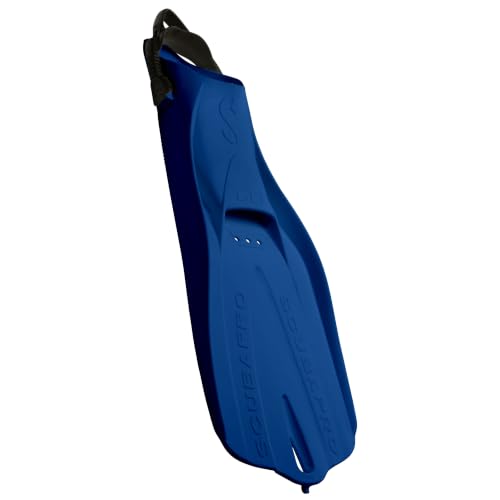
| Scubapro Seawing Nova | Power in current | Stiff hinged blade gives more power; reported to be negatively buoyant enough for thick boots without weighing down a bag | Moderate tier cost; stiff |
| Cressi Frog Plus | Budget | Made in Italy; short, stiff blade works for flutter and frog kicks | Basic; foot pocket fit varies |
| Atomic Split Fins | Easy kicking, sore knees | Usual best split fin in roundups; suits divers with knee problems | Soft blades are a poor choice for frog kicking |
| Cressi Reaction Pro / Aqualung Stratos 3 | Lightweight warm-water travel | Recommended in one guide as lightweight warm-water travel fins | Less power for cold, current-heavy dives |
How to Choose Travel Fins
Packed size and weight
Full-length fins can take up a large part of a bag and push you over weight limits. Shorter, travel-oriented fins free space for a regulator, mask and wetsuit. The Avanti Quattro Plus is a favourite for performance but is described as long and bulky, so some divers consider it too big for travel. If luggage allowances are tight, a travel fin or a compact split fin is the practical choice.
Open-heel or full-foot
Full-foot fins are worn barefoot or with thin socks and suit warm water. Open-heel fins are worn with booties and an adjustable strap, which makes them suitable for cold water and shore entries over rough ground. For travel, full-foot fins save more space, while open-heel fins give more versatility. Match the fin type to the destination.
Blade stiffness and power
Stiffer blades push more water and help in current, but they can tire the legs and strain the knees for divers who are not used to them. Softer blades are easier on joints but give less power. Reviewers describe the Seawing Nova as a stiff hinged blade, while the Atomic split fins are soft and gentle.
Kicking style
The flutter kick works with most fins. Frog kick and back kick, used for fine control around reefs and wrecks, are more effective with a stiffer blade. Reviewers note that split fins are a poor choice if you prefer frog kicks. If you dive in tight spaces, pick a stiffer paddle-style fin.
Buoyancy and weighting
Heavier fins sink at the feet and can change your trim, while very buoyant fins lift the legs. A reviewer reports that the Seawing Nova is negatively buoyant enough for thick boots. Think about your exposure suit and how you trim.
Fit and comfort
Try fins on with the boots or socks you will use. Poor fit can cause cramps and blisters. Check the foot pocket size chart from the maker, because sizing differs between brands.
Detailed Looks
Scubapro Go Sport and Go Travel
These are the fins most often tied to travel in the 2026 roundups. The Go Sport wins the travel category in one guide, and Divingsquad names the Go Travel its best fin for travel. They are lighter and shorter than full-size performance fins, so they save space and weight in your bag. They suit warm-water holiday divers who value luggage space over maximum thrust.
Mares Avanti Quattro Plus
This is the top overall pick in several guides. It is a dual-material fin with a strong all-round reputation. The drawback is its size: it is long and bulky, so divers who travel with a small bag may leave it at home. If you can spare the space, it is a dependable choice for varied conditions.
Scubapro Seawing Nova
The Nova has a stiff, hinged blade that gives extra power in currents. One reviewer says it is negatively buoyant enough to balance thick boots without weighing down a gear bag, which makes it a good choice for dive travel. It sits at a mid-range to premium cost, and its stiffness may not suit everyone’s legs.
Cressi Frog Plus
The Frog Plus is the budget pick in the roundups. It has a short, stiff blade that works for both flutter and frog kicks, and it is made in Italy. It suits divers who want a solid, simple fin without spending much.
Atomic Split Fins
Atomic’s split fins are the usual choice in this style. They give easy propulsion and are friendly to divers with knee problems. The soft blades work against frog kicks, so choose a paddle fin if you need precise control.
Cressi Reaction Pro and Aqualung Stratos 3
One guide suggests these lightweight fins for warm-water travel. They are an option when you want to keep weight down and do not face strong currents.
Trade-offs by Budget Tier
| Tier | Examples | You get | You give up |
|---|---|---|---|
| Budget | Cressi Frog Plus, Cressi Reaction Pro | Low outlay, simple design | Fewer refinements |
| Mid-range | Mares Avanti Quattro Plus, Scubapro Go Sport | Durable build and good all-round performance | Size or power depending on model |
| Premium | Scubapro Seawing Nova | Power and clever design | Higher cost; stiff blade |
Pick X If… Decision Table
| Pick | If you… |
|---|---|
| Scubapro Go Sport / Go Travel | dive in warm water and want to save luggage space |
| Mares Avanti Quattro Plus | want the best all-round fin and have bag space |
| Scubapro Seawing Nova | need power for current and wear thick boots |
| Cressi Frog Plus | want a budget fin that handles frog kicks |
| Atomic Split Fins | have knee problems or prefer easy flutter kicks |
| Cressi Reaction Pro / Aqualung Stratos 3 | want the lightest option for calm warm water |
Fit, Care and Safety Notes
- Fit fins with your intended boots or socks, and check the strap or foot pocket for pressure points.
- Rinse in fresh water after each dive and let them dry away from direct sun and heat.
- Check straps and buckles for cracks before each trip and carry a spare strap.
- Train in new fins in a pool or shallow water before using them on a deep or demanding dive.
- If you have a medical condition affecting your legs or heart, consult a doctor before diving, and dive within your training level.
Alternatives Worth Considering
- Rental fins: many dive centres rent fins, which avoids luggage weight, although fit and quality vary.
- Snorkel fins: shorter and lighter, but not designed for scuba propulsion.
- Jet-style fins: a stiffer, vented design for strong currents and technical diving, but heavy for luggage.
Packing Fins and Planning Around Luggage Limits
Dive travel is often limited by weight rather than space, so plan the load before you choose fins. Weigh your regulator, buoyancy device, exposure suit, mask and fins on a home scale and compare the total to your airline’s checked-bag allowance. If you are close to the limit, lighter fins or a compact fin can be the difference between a normal bag and an excess-weight fee. Some divers bring only their mask, regulator and computer and rent the rest; that works well if the dive centre has good equipment and sizes.
When you do pack fins, place them flat against the back panel of the bag, put soft items such as a wetsuit around them and fill the foot pockets with socks or small accessories. Do not leave fins in a hot trunk or luggage hold area for long periods, since heat can deform the rubber over time. At the destination, rinse them after each day, dry them in the shade and check straps before the next dive. Whatever fin you choose, practise with it in a pool or on an easy dive first, because a new fin changes your kick, trim and air consumption, and a calm first dive is the safest way to adapt.
Frequently Asked Questions
What are the best scuba fins for travel?
The Scubapro Go Sport and Go Travel are the usual picks for travel because they are shorter and lighter. The Mares Avanti Quattro Plus performs well overall but is bulky. The best choice depends on your luggage allowance and dive conditions.
Are split fins good for travel?
Split fins are lightweight and gentle on the knees, which many divers like. They are less effective for frog kicks and precise control. If you plan to dive in tight spots or want fine manoeuvring, a paddle fin may suit you better.
Should I choose open-heel or full-foot fins?
Full-foot fins save space and suit warm water, while open-heel fins work with boots for cold water and rough shore entries. For simple tropical trips, full-foot fins are usually enough. For mixed destinations, open-heel is more flexible.
How do I pack fins to save weight?
Choose a shorter travel fin and place heavier items near the wheels or back panel of the bag. Pack small items inside the foot pockets. Check the airline’s weight and sporting equipment rules.
How stiff should my fins be?
Stiffer blades give more power in current but demand stronger legs and can cause cramps. Softer blades are easier on the joints. Choose according to your fitness, kicking style and typical conditions.
How do I care for my fins?
Rinse with fresh water after every dive and dry in the shade. Avoid leaving them in a hot car or in direct sunlight, which can warp the rubber. Inspect straps and replace them when worn.
More from Amazon
Programs that pair well with the guide above. Offers and eligibility are set by Amazon and may change.
Free shipping on eligible items, Prime Video and more. Eligible new members can start with a free trial.
Start a Prime free trialA Prime membership for ages 18-24 with a trial period. Eligibility is set by Amazon.
See Prime for Young AdultsAudiobooks and podcasts to listen to on the go. Eligible new members can start with a free trial.
Try Audible freeAd-free music streaming. Eligible new subscribers can start with a free trial.
Try Music Unlimited freeAs an Amazon Associate we earn from qualifying purchases.