Key takeaways
- Outdoor saunas are built as standalone structures with weatherproof shells, sloped or barrel roofs for rain/snow shedding, tempered glass doors, and treated foundations. They require a level base (concrete pad, pavers, or deck rated for 800-2,500+ lbs) but no interior remodeling. They handle steam and ventilation naturally.
- Indoor saunas are designed to sit inside a spare room, basement, or garage. They use thinner walls, rely on the home’s climate control to protect the wood, and vent moisture into your house. Moving an indoor unit outdoors will void warranties and cause rapid rot and heater failure.
- Hybrid or modular outdoor kits split the difference. Brands like Almost Heaven and Dundalk LeisureCraft sell outdoor kits that ship as panels or staves and assemble on-site in a day. They are not indoor units placed outside – the wood, roofing, and hardware are rated for exterior exposure.
The best backyard saunas for a home wellness retreat are outdoor-rated barrel or cabin models with an electric or wood-burning heater, sized for 2-4 people if you have a small to medium yard and 4-6 people if you have a large, level pad and a 240V supply. For most suburban yards, a 4-person electric infrared or traditional steam cabin sauna offers the best balance of heat-up time, year-round usability, and simple assembly without a dedicated outbuilding.
Our top picks
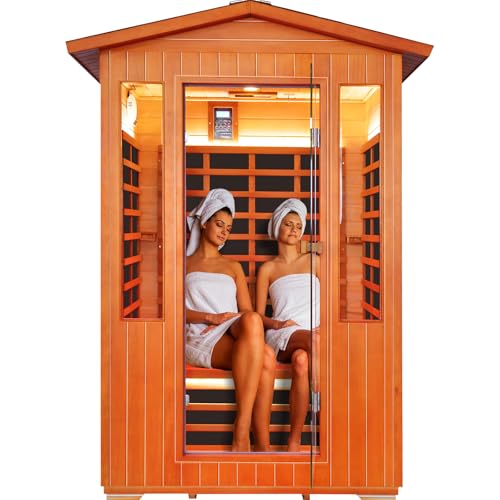
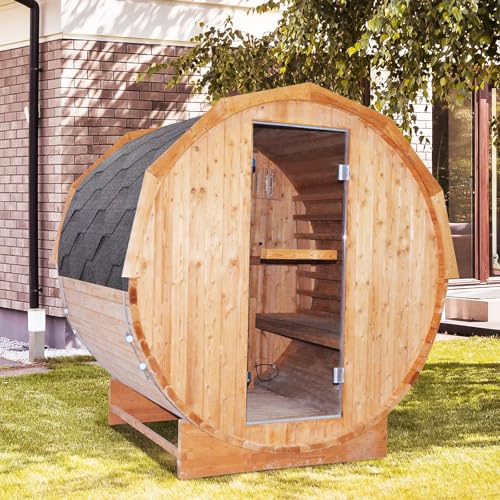


As an Amazon Associate we earn from qualifying purchases at no extra cost to you. Ratings are shown as listed on Amazon.
Indoor vs. Outdoor Saunas: Which Actually Fits a Backyard Retreat?
An indoor sauna and an outdoor backyard sauna solve different problems, even when the heater technology is the same. Choosing the wrong fit leads to moisture issues, electrical headaches, or wasted yard space.
- Outdoor saunas are built as standalone structures with weatherproof shells, sloped or barrel roofs for rain/snow shedding, tempered glass doors, and treated foundations. They require a level base (concrete pad, pavers, or deck rated for 800-2,500+ lbs) but no interior remodeling. They handle steam and ventilation naturally.
- Indoor saunas are designed to sit inside a spare room, basement, or garage. They use thinner walls, rely on the home’s climate control to protect the wood, and vent moisture into your house. Moving an indoor unit outdoors will void warranties and cause rapid rot and heater failure.
- Hybrid or modular outdoor kits split the difference. Brands like Almost Heaven and Dundalk LeisureCraft sell outdoor kits that ship as panels or staves and assemble on-site in a day. They are not indoor units placed outside – the wood, roofing, and hardware are rated for exterior exposure.
If your goal is a backyard wellness retreat, choose a purpose-built outdoor model. Only consider an indoor model if you plan to convert a garage or enclosed patio with proper vapor barrier, floor drain, and dedicated ventilation.
Heater Types Compared for Backyard Use
Heater type determines heat-up time, temperature range, operating cost, and climate suitability more than any other spec.
1. Traditional Electric Heater (Stones & Steam)
The most common for backyard cabins. A Harvia or similar stainless steel heater with volcanic stones heats the air to 150-195°F (65-90°C). You can pour water for a burst of steam (löyly). Requires a dedicated 240V / 30-50 amp circuit installed by an electrician. Heats a 4-person cabin in 30-45 minutes. Works reliably in cold climates down to -20°F if the cabin is well-insulated and has a proper roof.
2. Wood-Burning Stove
Preferred for off-grid locations or where you want high heat without electrical upgrades. Reaches similar temperatures but takes 45-75 minutes and needs a chimney, clearances, and firewood storage. Best for rural yards with setback allowances. Check local burn codes and HOA rules – many suburbs restrict wood-burning backyard structures.
3. Infrared (IR) Heaters
Uses carbon or ceramic panels to heat the body directly at lower air temperatures, typically 115-150°F. Heats in 15-20 minutes, runs on 120V or 240V depending on size, and uses less energy per session. Feels less like a traditional steam sauna and more like radiant warmth. Excellent for users who prefer milder heat, quicker sessions, and easier electrical requirements. Less effective in uninsulated outdoor models during deep winter unless the cabin is specifically rated for low-ambient infrared use.
General information only: Sauna use affects heart rate, blood pressure, and hydration. If you have cardiovascular conditions, are pregnant, or take medications affected by heat, talk to a healthcare professional before regular use.
Best Backyard Saunas by Capacity and Yard Size
Capacity affects footprint, weight, power needs, and how comfortably adults can stretch out. Manufacturer “4-person” ratings often assume shoulder-to-shoulder bench seating. For comfort, subtract one person if you want everyone to recline or have extra elbow room.
| Model Type (Example Brands) | Capacity (Comfortable) | Footprint (L x W) | Weight (Empty) | Wood / Build | Heater & Power | Heat-Up Time |
|---|---|---|---|---|---|---|
| 2-Person Barrel Kit (Almost Heaven, Dundalk LeisureCraft) | 2 adults | 6′ x 6′ diameter | 750 – 950 lbs | Western red cedar or Nordic spruce, 1-3/8″ staves | 4.5kW electric (240V/20A) or small wood stove | 25-35 min |
| 4-Person Barrel or Cabin (Almost Heaven, Cedarbrook) | 3-4 adults | 6′ x 8′ to 7′ x 7′ | 1,100 – 1,600 lbs | Canadian red cedar, double-wall cabin option | 6kW – 8kW electric (240V/30-40A) | 30-45 min |
| 4-Person Infrared Cabin (Sun Home Equinox, Clearlight Outdoor) | 3-4 adults | 6′ x 7′ to 7′ x 7.5′ | 900 – 1,300 lbs | Cedar or eucalyptus, insulated panels + tempered glass | Full-spectrum IR, 2,100-3,000W (120V or 240V) | 15-20 min |
| 6-Person Cabin (Dundalk LeisureCraft, Almost Heaven Yellowstone) | 5-6 adults | 8′ x 10′ to 10′ x 12′ | 2,000 – 2,800 lbs | Thermo-treated spruce or cedar, asphalt shingle roof | 8kW – 9kW electric (240V/40-50A) or large wood stove | 40-60 min |
| 6-Person Barrel | 6 adults (tight) | 7′ x 10′ diameter | 1,800 – 2,200 lbs | Western red cedar, stainless steel bands | 8kW electric or wood stove | 35-50 min |
How to Match Capacity to Yard Size
- Small yard or deck (under 150 sq ft available): 2-person barrel. Requires only a 6′ x 8′ pad. Fits through side gates in panel form and sits well on a reinforced deck.
- Medium yard (150-300 sq ft): 4-person cabin or barrel. Ideal all-rounder. Leaves room for a 3-foot clearance on all sides for maintenance and airflow, which most manufacturers require for warranty.
- Large yard (300+ sq ft): 6-person cabin. Needs a dedicated concrete pad or gravel foundation with drainage. Consider proximity to the house for electrical runs – every 50 feet of trenching adds significant electrician cost.
Decision Matrix: Which Sauna Should You Pick?
| Your Situation | Best Fit | Why |
|---|---|---|
| Limited budget, no 240V, want low running costs | 2-4 person infrared cabin | Lower upfront price range ($3,500-$7,000 market range), plugs into existing power on some 120V models, heats fastest |
| Cold climate (regular snow, below 20°F), year-round use | Insulated cabin with 8kW electric heater | Flat walls hold heat better than single-wall barrel; higher kW recovers temperature after door opens in winter |
| Off-grid, large property, enjoy fire ritual | Barrel or cabin with wood-burning stove | No electrical upgrade; wood heat feels softer and works during power outages |
| Small urban yard, HOA restrictions | 4-person electric cabin, low profile | Electric heaters avoid smoke complaints; cabin footprint is more space-efficient than barrel |
| Frequent family/social use (4+ people, 3-5x per week) | 6-person cabin with 8-9kW heater | Bench length and heater capacity prevent crowding and long recovery times between sessions |
| Renter or may move in 2-3 years | Modular infrared or small barrel kit | Lighter, easier to disassemble and relocate than custom-built cabins |
Assembly and Climate Requirements by Yard Type
Most backyard saunas ship as DIY kits. Professional assembly is optional but affects warranty and weatherproofing.
Foundation and Space Prep
All outdoor saunas need a level, load-bearing base that drains. A 4-inch reinforced concrete pad is ideal. A compacted gravel pad with concrete pavers is acceptable for barrels up to 1,600 lbs if the ground does not heave. Never place directly on grass or bare soil – moisture wicks into the base boards and causes rot within one season. Leave at least 24-36 inches of clearance from fences and overhangs for rain runoff and service access.
Electrical and Ventilation
Traditional electric models from 4.5kW to 9kW require a hardwired 240V circuit with GFCI protection. Expect an electrician to run conduit from your main panel, often 30-80 feet for backyard placement. Infrared models under 2,000W may run on a dedicated 120V/20A outlet, but 4-person and larger IR cabins still need 240V. Every sauna needs low and high vents (adjustable sliding vents) to circulate fresh air – blocked vents cause uneven heat and excess moisture on the ceiling.
Assembly Time
- 2-person barrel kit: 1 day with 2 adults, basic tools. Staves interlock around cradles, then bands tighten.
- 4-person cabin kit: 1-2 days with 2-3 adults. Panelized walls bolt together; roof and benches assemble last.
- 6-person cabin: 2-3 days with 3 adults or a hired crew. Heavier panels and shingled roofs benefit from professional installation, especially for leveling and roofing.
Climate-Specific Choices
- Wet / coastal climate: Choose western red cedar or thermo-treated wood with stainless steel hardware and a full shingle or metal roof. Oil the exterior annually with a UV-protective wood sealer.
- Snow / freeze-thaw climate: Prefer a cabin with a pitched roof over a flat-roof pod. Barrel designs shed snow well due to their curve. Elevate slightly on pavers to prevent ice damming at the base.
- Hot / high sun climate: Position the door facing away from direct afternoon sun to keep the glass cooler and reduce wood checking. Lighter exterior stains reflect heat better than dark.
Cost Per Use: A Worked Calculation
Understanding running costs helps you compare heater types beyond the purchase price. Use this formula for any model.
Formula: (Heater kW x Hours per session x Electricity rate) + Water/consumables = Cost per session
Example: A 4-person electric cabin with a 6kW heater, heated for 0.75 hours (45 min heat-up + 30 min session counts as ~0.75 hrs at full draw, then cycling) at a national average rate of $0.16 per kWh:
6kW x 0.75h = 4.5 kWh; 4.5 x $0.16 = $0.72 per session in electricity. Add $0.10-$0.25 for water and wood treatment amortized monthly. Even with 4 sessions per week, monthly operating cost stays around $12-$18. Infrared cabins at 2.5kW for 0.5 hours cost roughly $0.20 per session, about one-third the electricity of a traditional heater, but provide a different heat experience.
Wood-burning costs vary by cord price. A typical session consumes 8-14 lbs of softwood. At $250 per cord (roughly 2,000 lbs usable), that is $1.00-$1.75 per session plus chimney cleaning once per season ($100-$200 if hired).
Durability and Ownership Realities
A backyard sauna can last 15-25 years if you maintain what actually fails first.
- What wears first: Door gaskets and tempered glass seals (3-7 years), heater elements and contactors (5-10 years, $150-$400 replacement), bench boards where sweat accumulates, and exterior finish in full sun. Barrel bands need re-tightening after the first heating season as wood shrinks.
- Wood care: Cedar and spruce should not be sealed on the interior – leave benches and walls unfinished and clean with mild soap and water. Lightly sand benches annually to remove body oils. Seal only the exterior with a breathable, sauna-rated oil, not a film-forming varnish that peels.
- Moisture control: Prop the door open after sessions and leave vents open for 30 minutes to dry the interior. In winter, keep a small gap vent open to prevent condensation freezing inside wall cavities.
- Common mistakes: Placing the sauna under a tree without gutter protection (sap and leaves stain and clog drainage), undersizing the heater for the cubic footage (a 4.5kW heater in a 6-person cabin will never reach 180°F in winter), and skipping the level check. Even a 1-inch out-of-level base stresses barrel staves and causes door binding.
- Consumables: Sauna stones need restacking yearly and replacement every 1-2 years as they crack and reduce airflow. Infrared panels do not use stones but may need controller or bulb replacement after 5-7 years.
Frequently Asked Questions
Do I need a permit for a backyard sauna?
In many U.S. municipalities, structures under 120 sq ft without plumbing avoid a building permit, but electrical work always requires a permit and inspection. Larger 6-person cabins over 120 sq ft, wood-burning chimneys, and HOA-governed neighborhoods often need approval. Check city and county codes before ordering.
How close can a sauna be to my house?
Manufacturers typically recommend 3-5 feet minimum from structures for fire safety and ventilation, with wood-burning models requiring larger setbacks (often 10 feet) and chimney height clearance. Your local fire code prevails over the manual.
Can I use a backyard sauna in winter?
Yes, if it is outdoor-rated and properly insulated. Traditional electric cabins perform best in winter; infrared outdoor models work in winter only if rated for low ambient temperatures. Expect 10-15 minutes longer heat-up time for every 20°F drop in outdoor temperature.
What maintenance does a backyard sauna need each year?
Clean benches and floor, re-tighten barrel bands, inspect heater connections, restack or replace stones, reseal exterior wood if water no longer beads, and clear roof and vents of debris. In coastal or humid regions, do this twice per year.