Key takeaways
- Format: pre-cut adhesive strips applied over the lips, not inside the nostrils
- Pack size: 30 strips, roughly one month at one strip per night
- Intended use: overnight sleep and nasal-breathing practice; the listing positions it around promoting nasal breathing
- Sizing: adult sizing; category-typical pre-cut lip strips run about 3 in × 1 in (roughly 76 mm × 25 mm), wide enough to cover the lip line without reaching the nostrils
- Adhesive class: the listing does not publish a peel-adhesion figure, which is normal for this category — assume a mid-tack, skin-contact adhesive and patch-test it
- Reuse: single-use; adhesive strips are consumables and lose tack once skin oils and humidity reach the backing
- Price tier: premium
For most adults who want a strip that actually goes over the lips, the Napify Breath Training Tape for Adults, 30-count, is the best mouth tape for nose breathing during sleep: it is pre-cut, sized for adult faces, sold in roughly a month’s supply, and positioned specifically for overnight nasal-breathing practice rather than general-purpose taping. It suits adults who can already breathe freely through the nose and want a simple, single-use consumable they do not have to measure or cut. If your nose — not your mouth — is the real bottleneck, a nasal strip such as the SHI 30-count pack is the cheaper, lower-commitment starting point, and reusable trainer kits from Rilicco and FFX sit between the two extremes. One caveat before anything else: mouth taping is not appropriate for everyone. Anyone with nasal congestion, a suspected sleep disorder, or an undiagnosed breathing problem should talk to a clinician before putting adhesive over their lips.
Top 3 Picks
Best overall: Napify Breath Training Tape for Adults (30-count)
The closest thing in this roundup to a purpose-built mouth tape. It is pre-cut for adult faces, sold as a 30-strip pack that maps neatly onto one month of nightly use, and its listing frames it around nasal-breathing practice rather than snoring or sports. Choose it if you have a clear nose, you are new to taping, and you want to test the habit for a month without buying in bulk.
Best budget: SHI Nasal Strips (30-count)
Not mouth tape at all — and that is the point. If you are not sure whether you are a mouth breather or simply a narrow-nose breather, the SHI pack is the cheapest way to find out. External nasal strips cost less per night than premium lip tape, carry no aspiration risk, and can be worn alongside lip tape later if you decide you need both.
Best premium: FFX MEW X AIR 24 Hour Nose Breathing Kit
A kit rather than a consumable, positioned by its listing as a day-and-night nose-breathing system and an explicit alternative to mouth tape. It is the pick if you want a reusable routine you can run at your desk and in bed, you dislike adhesive on your lips, and you are willing to pay a premium and read the listing carefully to see exactly what is included.
Quick Comparison
| Product | Best for | Format & key specs | Price tier |
|---|---|---|---|
| Napify Breath Training Tape for Adults (30-count) | First-time mouth tapers who want a ready-made monthly supply | Pre-cut adhesive lip strips; 30 per pack; adult sizing; single-use; sleep-focused | Premium |
| SHI Nasal Strips (30-count) | Cheapest test of whether nasal opening helps at all | External nasal strips; 30 per pack; single-use; adhesive-backed; no lip contact | Budget |
| FFX MEW X AIR 24 Hour Nose Breathing Kit | All-day plus overnight routine without lip adhesive | Multi-piece reusable kit; day and night use; marketed as a mouth-tape alternative; contents vary by listing | Premium |
| Rilicco Anti-Snoring Nose Breathing Trainer Kit | Zero-consumable budget route; day and night use | Reusable trainer tips in 2 styles; washable; no adhesive; sleep-aid positioning | Budget |
| CIPGAP Nasal Strips (120-count) | Heavy nightly users who want the longest supply per pack | External nasal strips; 120 per pack; extra-strength adhesive claim; sleep and sport use | Mid-range |
| UPMOSTEK Nasal Strips (100-count) | Committing to a full trial period before bulk buying | External nasal strips; 100 per pack; extra-strength adhesive claim; sleep and sport use | Mid-range |
How We Chose
Nothing here was tested, worn, or benchmarked. The selection is a specification exercise: we took the products available in this category and ranked them on what their listings state and on well-established facts about how each format behaves.
The criteria, in order of weight. First, format fit — a genuine mouth tape and an external nasal strip solve different problems, so a nasal strip cannot be judged by mouth-tape rules, and it should not be dismissed for not being one. Second, adhesive class and removal comfort: single-use strips live or die on whether they hold through eight hours of side-sleeping and still peel off without taking skin with them. Third, materials and breathability, because an occlusive film over the lips behaves very differently from a porous paper or fabric strip. Fourth, pack economics — 30, 100, or 120 pieces, and what that works out to per night. Fifth, reusability and upgrade path, which is why two reusable trainer kits are included alongside four consumables: they are where a frustrated tape user often lands next. Sixth, safety transparency, meaning whether a listing is clear about single-use status, skin contact, and who the product is not for. Products whose listings were vague about a basic property were described by spec class rather than credited with a number we could not verify.
1. Napify Breath Training Tape for Adults — Best for First-Time Mouth Tapers
As an Amazon Associate we earn from qualifying purchases at no extra cost to you.

This is the only true mouth tape in the roundup, and it is the one to start with if you have decided that lip adhesive is the approach you want. The listing sells it as a breath-training product for adults in a pack of 30 — deliberately close to one month of nightly use, which is a sensible trial length. You are not buying a hundred nights of a habit you have not established yet.
It suits a specific reader: an adult who can breathe through the nose without effort, who wakes with a dry mouth or a slack jaw, and who wants the simplest possible intervention. Pre-cut strips matter more than they sound. Roll tape requires scissors, a mirror, and a decision every night about length and placement, and most people abandon that routine within two weeks. A pre-cut strip removes all three friction points.
Key specs
- Format: pre-cut adhesive strips applied over the lips, not inside the nostrils
- Pack size: 30 strips, roughly one month at one strip per night
- Intended use: overnight sleep and nasal-breathing practice; the listing positions it around promoting nasal breathing
- Sizing: adult sizing; category-typical pre-cut lip strips run about 3 in × 1 in (roughly 76 mm × 25 mm), wide enough to cover the lip line without reaching the nostrils
- Adhesive class: the listing does not publish a peel-adhesion figure, which is normal for this category — assume a mid-tack, skin-contact adhesive and patch-test it
- Reuse: single-use; adhesive strips are consumables and lose tack once skin oils and humidity reach the backing
- Price tier: premium
What it does well
The strongest argument for this product is that it is not a multi-purpose tape being repurposed. Generic medical paper tape works, but it is sold in rolls and boxes intended for dressings, and the adhesive is formulated for gauze, not for eight hours on the thinnest skin on your face. A strip designed for the lip line can be cut to a length that lets you open your mouth if you need to, and a width that stops short of the nostrils so you are not fighting for air at 4 a.m.
The 30-count format is also an honest amount to commit to. A month is long enough to know whether the habit sticks and whether your sleep feels different, and short enough that a bad reaction or a dislike of the sensation does not leave you with 400 strips in a drawer. If you decide after three weeks that you also want a nasal strip for a narrow nose, you have not sunk a large amount into a single approach.
Finally, it keeps the routine to one step. Reusable trainer kits need washing, storing, and a decision about whether you are using them during the day or only at night. A strip is one action at bedtime and one action in the morning.
Pros
- Pre-cut, so there is no measuring or cutting at bedtime
- Adult sizing designed for the lip line rather than a dressing roll
- 30-count pack matches a realistic trial period
- Single-use format is hygienic and needs no cleaning
- Sleep-specific positioning, not a general-purpose tape
Cons
- Premium tier means the highest cost per night in this roundup
- No published adhesive specification, so you cannot compare tack numerically before buying
- Will not help if your nose is congested or structurally narrow — it assumes a clear nasal airway
- Unsuitable for anyone who should not tape their mouth at all
- Single-use means ongoing repurchasing
How it compares
Against the SHI Nasal Strips, the decision is diagnostic. If you are unsure whether your problem is the mouth or the nose, start with the SHI pack: it is budget tier, it carries no lip-adhesive risk, and it answers the question faster. If you already know your nose is clear and your mouth falls open, the Napify strip addresses the actual mechanism.
Against the Rilicco reusable kit, the trade is cost versus friction. Rilicco costs less over time because there is nothing to repurchase, but it lives inside the nostrils and must be washed. Napify costs more per night and requires nothing but a fresh strip. Readers who hate cleaning small objects should pay the premium; readers who hate recurring purchases should not.
2. SHI Nasal Strips — Best for Low-Cost, Tape-Free Nasal Opening

The SHI pack is the entry point to the whole category, and it is the one to buy if you are still diagnosing yourself. It is a 30-count box of external nasal strips — adhesive bands that sit across the outside of the nose and are marketed for breathing, snoring, and sleep. There is no adhesive anywhere near your lips, which removes the single biggest safety objection to mouth taping.
It suits adults who wake unrefreshed and suspect a narrow or collapsing nasal valve, who cannot tolerate anything over their mouth, or who want to test whether opening the nose changes anything before spending premium money on lip tape. It is also the sensible choice for anyone whose clinician has raised concerns about mouth occlusion, because nothing is occluded.
Key specs
- Format: external nasal strip, applied across the nasal bridge, single-use
- Pack size: 30 strips — one month at one per night
- Mechanism: a springy backing lifts the nasal sidewall outward; no medication, no adhesive on the lips
- Sizing: category-typical external strips run roughly 2.6 in × 0.8 in (about 66 mm × 20 mm); fit is usually sold as small, medium, or large, and nose width is the variable that matters
- Adhesive class: light-to-medium tack; the strip only has to hold its own spring tension, not resist jaw movement
- Reuse: single-use; the spring loses shape and the adhesive picks up skin oils
- Price tier: budget
What it does well
Nasal strips are the lowest-risk item in this roundup, and that is a real advantage rather than a consolation prize. Because they do not touch the mouth, they sidestep the entire question of whether occluding the lips is appropriate for you. They also work in the opposite direction to mouth tape: instead of forcing air through the nose by closing the mouth, they try to make the nose a more attractive path by widening it.
They are also the cheapest way to run an experiment. At budget tier and 30 to a box, you can wear them for a couple of weeks and note whether you wake with a less dry mouth, whether your bed partner notices a change, and whether you actually notice anything at all. That information is worth more than any review, because it tells you which of the two mechanisms you are dealing with.
Finally, they are compatible with everything else. A nasal strip and a lip strip can be worn together, which is the setup many long-term users land on: open the nose, then gently discourage mouth breathing. Starting with the cheaper half of that pair is the rational order.
Pros
- No adhesive on the lips, so no occlusion risk
- Lowest cost per pack in the roundup
- Useful as a diagnostic before committing to mouth tape
- Can be combined with lip tape later
- Single-use and travel-friendly, with nothing to clean
Cons
- Does not address mouth breathing directly — if your jaw drops open, the strip will not stop it
- Adhesive can lift on oily or moisturised skin
- Skin irritation from repeated nightly removal is possible
- Fit is nose-width dependent; a poorly sized strip does little
- Effect fades if you reapply the same strip
How it compares
Against the CIPGAP 120-count and UPMOSTEK 100-count packs, the difference is almost entirely volume and price per strip. SHI gives you 30 nights at budget tier; the two mid-range packs give you 100 or 120 nights at a lower cost per night but a higher upfront spend. If you have never worn a nasal strip, buy the small pack first. If you already know they help, the larger packs are the better economics.
Against the Napify mouth tape, this is a different mechanism, not a lesser version of the same one. SHI widens the airway; Napify closes the mouth. Neither substitutes for the other, and the correct answer for many readers is to own both and use them together.
3. FFX MEW X AIR 24 Hour Nose Breathing Kit — Best Premium All-Day System

The FFX kit is the odd one out, and deliberately so. Its listing positions it as a 24-hour nose-breathing and oxygen-enhancing kit and explicitly frames it as an alternative to mouth tape — “better than mouth tape,” in the listing’s own words. It is not a box of strips. It is a system you use during the day as well as at night, which makes it the pick for readers who want to train nasal breathing as a habit rather than simply block their mouth for eight hours.
It suits adults who dislike adhesive on the lips, who have tried tape and found it either irritating or ineffective, or who want a daytime component they can use at a desk without looking like they are wearing a sleep aid. It also suits anyone whose motivation is broader than snoring — posture, jaw position, and general breathing-pattern work are all part of the framing here.
Key specs
- Format: multi-piece reusable kit rather than single-use strips
- Use window: marketed for 24-hour use — daytime practice plus overnight wear
- Positioning: the listing presents it as a mouth-tape alternative, so it works without lip adhesive
- Components: kit contents vary by listing; check the current product page for exactly what is included before buying, because a kit is only good value if you will use every piece in it
- Reuse and maintenance: reusable, therefore washable; expect daily rinsing and periodic replacement of any soft components
- Adhesive: none required on the lips; some kit formats use a light retention element rather than a full-coverage strip
- Price tier: premium
What it does well
The core insight behind a kit like this is that mouth breathing is a habit, not just a sleep position. Taping treats the symptom — the open mouth — for the eight hours you are unconscious. A trainer tries to change the default during the sixteen hours you are awake, on the theory that the daytime pattern carries into the night. Whether that theory holds for you is something only a few weeks of use will tell, but it is a genuinely different approach from anything else in this roundup.
Removing lip adhesive is the second advantage. A meaningful share of people who try mouth tape stop because of skin reaction, not because it fails. A kit that keeps adhesive off the lips and out of the picture removes that entire failure mode, and it removes the recurring cost with it. There is nothing to reorder.
The third advantage is the daytime option. Most mouth tape is useless between breakfast and bedtime. A kit you can use while working gives you a way to practice nasal breathing consciously, which is the only version of this that involves any feedback — you can feel whether you are doing it right, whereas with tape you are asleep and guessing.
Pros
- No adhesive over the lips at any point
- Reusable, so no per-night consumable cost after purchase
- Daytime and overnight use from one product
- Explicitly positioned as a mouth-tape alternative, so it fits readers who have rejected tape
- No pack to run out of mid-week
Cons
- Premium tier, and the highest upfront cost here
- Kit contents need checking — value depends entirely on what is in the box
- Requires cleaning and storage, unlike a strip you throw away
- Needs more discipline than tape: it only works if you actually use it
- Not a substitute for medical assessment if you have a diagnosed breathing disorder
How it compares
Against the Rilicco reusable kit, the difference is scope and price. Rilicco is the budget version of the same idea — reusable trainer tips in two styles, day and night, no adhesive, no consumables. FFX charges premium for a broader system and a stronger brand position. If you are not sure you will stick with a trainer, buy the cheap one; if you have already proven you will, the premium kit buys you a more complete setup.
Against the Napify mouth tape, this is a philosophy difference. Napify assumes you want the simplest possible overnight fix and will accept a recurring cost and lip adhesive to get it. FFX assumes you want to change the breathing pattern itself and will accept cleaning and a higher upfront price to avoid adhesive entirely. Neither is wrong; they suit different temperaments.
4. Rilicco Anti-Snoring Nose Breathing Trainer Kit — Best Reusable Budget Alternative

Rilicco’s kit is the cheapest way to try a reusable approach. The listing describes a nose-breathing trainer for day and night use, reusable, with two styles of tip included, and it positions the product as a mouth tape alternative. There is no adhesive and no pack count, because there is nothing to consume — you buy it once and wash it.
It suits readers who object to recurring purchases, who have had a skin reaction to adhesive, who want to try nasal-breathing training before spending premium money on it, or who simply want the lowest-cost experiment in this roundup. It also suits anyone who wants something they can use on a plane or in a hotel without packing a month of strips.
Key specs
- Format: reusable trainer tips that sit at the nostrils, supplied in two styles
- Use window: day and night, per the listing
- Adhesive: none — no lip contact, no skin adhesion
- Sizing: category-typical reusable nasal trainer tips run roughly 0.4–0.8 in (about 10–20 mm) across the seated portion; fit depends on nostril size, and kits usually include more than one size or style for that reason
- Maintenance: wash after each use with mild soap and warm water; air-dry fully before storage
- Lifespan: reusable, but soft components are the wear item — expect to replace them periodically rather than never
- Price tier: budget
What it does well
The economics are the headline. A one-time purchase at budget tier, divided across a few months of nightly use, lands in the same per-night range as a bulk pack of nasal strips and below premium lip tape — and unlike either, it does not run out. If you are the kind of person who resents a subscription-style consumable, this is the format that stops the meter.
The two-style inclusion matters more than it looks. Nostril shape and size vary a lot between people, and a trainer that does not fit is not a trainer — it is an object that falls out at 2 a.m. Having two options in the box means you can find out which one stays put without buying a second product.
It is also the lowest-risk item for skin. There is no adhesive anywhere, so there is nothing to react to, nothing to peel, and no residue to remove in the morning. For readers who tried tape and ended up with a red upper lip, that alone justifies the switch.
The day-and-night framing is a real benefit too. You can use it while reading or working, which gives you a chance to notice whether nasal breathing actually feels easier when the airway is opened — feedback you never get from something worn only while asleep.
Pros
- Lowest long-run cost of any option here — no consumables
- No adhesive, so no lip irritation and no removal discomfort
- Two tip styles included, improving the odds of a workable fit
- Usable during the day as well as overnight
- Compact and travel-friendly; nothing to run out of
Cons
- Requires washing after every use, which is where most people quit
- Soft components wear and need eventual replacement
- Fit-dependent — the wrong size is useless
- Budget construction and finish compared with premium kits
- No published sizing chart, so expect some trial and error
How it compares
Against the FFX premium kit, Rilicco is the low-risk way to test the entire reusable category. The functional idea — reusable trainer, no adhesive, day and night — is the same. FFX offers a more complete system at premium pricing. If you have never used a nasal trainer, spending budget money first is the smarter sequence, because a meaningful number of people find the sensation inside the nostrils intolerable and stop within a week.
Against the SHI nasal strips, the trade is cleaning versus repurchasing. Strips are grab-and-go and disposable; Rilicco is neither, but it never runs out. Strips are also easier to travel with in the sense that you throw them away, while a trainer has to be washed and dried in a hotel sink. Pick based on which annoyance you tolerate better.
5. CIPGAP 120-Piece Nasal Strips — Best for the Longest Supply Per Pack
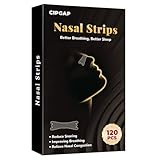
CIPGAP’s box is the volume play: 120 external nasal strips, sold for snoring, sports, and sleep, with an extra-strength adhesive claim. If you already know nasal strips work for you, this is the format that gets your cost per night down to the lowest level in the roundup without switching mechanisms.
It suits established users — people who have worn strips nightly for months and are tired of reordering every four weeks. It also suits households where two people use them, and athletes who want them for daytime training as well as sleep, since the listing covers sport use explicitly.
Key specs
- Format: external nasal strip, single-use, applied across the nasal bridge
- Pack size: 120 strips — four months at one per night, or two months for two people
- Adhesive claim: extra-strength, per the listing; expect it to hold better on oily skin and in humidity than a standard-tack strip
- Trade-off of extra strength: stronger tack usually means more resistance on removal, so slow, low-angle peeling matters more with this pack than with a light-tack one
- Use cases listed: snoring, sleep, and sports — the sports framing suggests daytime wear during exercise
- Sizing: category-typical external strips are about 2.6 in × 0.8 in (roughly 66 mm × 20 mm); check whether the box offers one size or a range
- Price tier: mid-range
What it does well
The arithmetic is the whole argument. At a mid-range pack price spread across 120 nights, the per-night cost lands well below a premium lip tape and comfortably below a 30-count strip box. For a nightly user, that difference compounds over a year, and it compounds without changing anything about how the product works.
The extra-strength adhesive claim addresses the most common complaint about nasal strips: that they lift at the edges by morning. Strips fail in a predictable order — first the outer edges curl, then the strip loses its spring and stops lifting the nasal sidewall. A stronger adhesive buys you more of the night before that happens. It is a genuine improvement for side sleepers, who drag their nose across a pillow, and for anyone in a humid climate.
The sports positioning is a bonus rather than a gimmick. Many people find nasal strips useful during exercise for the same mechanical reason they help at night, and a 120-count box makes daytime use affordable. If you were rationing a 30-count pack for sleep only, this changes what you can do with the product.
Pros
- Lowest cost per night of any single-use option here
- 120 strips means infrequent reordering
- Extra-strength adhesive claim suits oily skin, humidity, and side sleeping
- Daytime and sports use become affordable at this pack size
- Works with lip tape if you later add it
Cons
- Large upfront spend on a product you have not yet proven you like
- Stronger adhesive means more careful removal to avoid irritation
- Still does not stop the jaw from dropping open
- No published sizing breakdown in the listing name, so fit is a question mark
- 120 strips is a long commitment if your needs change
How it compares
Against the UPMOSTEK 100-count, the difference is almost purely arithmetic and risk. CIPGAP gives you 20 more strips for a slightly lower cost per night; UPMOSTEK gives you a marginally smaller commitment with the same extra-strength claim and the same sleep-and-sport positioning. If you have never used this brand’s adhesive, the smaller box is the lower-risk test. If you are already committed to nasal strips as a category, the 120-count is the better buy.
Against the SHI 30-count, this is the classic trial-versus-volume decision. SHI is for finding out; CIPGAP is for people who already know. Do not buy 120 strips to answer a question a 30-count box can answer in three weeks.
6. UPMOSTEK 100-Piece Nasal Strips — Best for Committing to a Full Trial Period

UPMOSTEK sits in almost exactly the same slot as CIPGAP: 100 external nasal strips, extra-strength adhesive, sold for snoring, sports, and sleep. The meaningful difference is pack size, and that difference is worth taking seriously if you are buying nasal strips in bulk for the first time.
It suits readers who want bulk economics but not the largest possible commitment — someone planning to wear strips for three months and reassess, or a couple who each use one a few nights a week. It also suits anyone who wants a mid-range pack they can split between a bedside drawer and a gym bag without feeling like they have depleted their supply.
Key specs
- Format: external nasal strip, single-use, applied across the nasal bridge
- Pack size: 100 strips — roughly three months at one per night
- Adhesive claim: extra-strength, per the listing; positioned for hold through the night
- Use cases listed: snoring, sleep, and sports
- Sizing: category-typical external strip dimensions, approximately 2.6 in × 0.8 in (about 66 mm × 20 mm); verify the box’s size options before buying in bulk
- Removal: with extra-strength adhesive, peel slowly and at a low angle, and use warm water or a facial oil if the strip resists
- Price tier: mid-range
What it does well
The 100-count size is the sweet spot for a first bulk purchase. It is large enough to bring the per-night cost down to bulk levels and small enough that if the adhesive irritates your skin, or the size is wrong for your nose, you are not sitting on 120 unusable strips. Twenty strips of difference sounds trivial; as a risk buffer on a first bulk order, it is not.
The extra-strength adhesive claim carries the same benefits as CIPGAP’s: better hold on oily skin, in humidity, and for side sleepers whose nose drags across a pillow. Strips that lift at the edges stop lifting the nasal sidewall, at which point you are wearing a sticker for no reason. Hold quality is the single biggest determinant of whether a nasal strip does anything at all.
The sleep-and-sport framing gives you a second use for the box. If you find the strips help during exercise, a 100-count pack absorbs that without forcing you to ration. If you find they do not, you have lost less than you would have on the larger box.
Because nasal strips involve no lip occlusion, this is also the format with the fewest safety caveats attached — which makes it the reasonable default for anyone who wants to improve nighttime breathing without taking on the mouth-taping question at all.
Pros
- Bulk-level cost per night with a smaller commitment than the 120-count
- Extra-strength adhesive claim improves overnight hold
- No lip occlusion, so the lowest-risk format in this roundup
- Dual sleep and sport use makes the box more versatile
- Compatible with mouth tape if you add it later
Cons
- Still a large upfront spend for a first purchase
- Stronger adhesive needs careful removal
- Cannot stop mouth breathing on its own
- No detailed sizing information in the listing name
- Overlaps almost entirely with CIPGAP, so there is little reason to own both
How it compares
Against CIPGAP’s 120-count, this is a near-tie decided by commitment size. CIPGAP wins on cost per night; UPMOSTEK wins on being the smaller gamble. If you have not used this class of strip before, 100 is the more forgiving number. If you have used nasal strips for years, the extra 20 pieces in the CIPGAP box are effectively free.
Against the Napify mouth tape, the comparison is mechanism again, and it is worth restating because it is the most common source of confusion in this category. A nasal strip opens the nose. Mouth tape closes the mouth. If your nose is clear and your jaw drops, buy tape. If your nose is narrow and your jaw stays shut, buy strips. If both are true — which is common — buy the cheaper one first, confirm it helps, then add the other.
How to Choose
The hardest part of buying in this category is that the products are not really competing with each other. A nasal strip and a mouth tape are not better or worse versions of the same thing; they act on opposite ends of the airway. Before comparing brands, decide which mechanism you actually need — then compare adhesive, material, size, and pack economics within that format.
Step 1: Identify the mechanism
| Your situation | Format to buy | Example from this list |
|---|---|---|
| Nose is clear; jaw falls open at night | Pre-cut lip tape | Napify |
| Nose feels narrow or collapses; mouth stays shut | External nasal strip | SHI, CIPGAP, UPMOSTEK |
| Both problems, first purchase ever | Nasal strip first, add tape later | SHI |
| Adhesive irritates your skin | Reusable trainer, no adhesive | Rilicco, FFX |
| You resent recurring purchases | Reusable trainer kit | Rilicco, FFX |
| You want a daytime habit component | Reusable trainer kit | FFX, Rilicco |
| You want the lowest cost per night | Bulk nasal strips or reusable trainer | CIPGAP, Rilicco |
| Congestion, suspected sleep apnea, or an undiagnosed breathing problem | None of these — see a clinician first | — |
Step 2: Match the strip format to your face and sleeping position
Format is not a marketing detail. Each shape behaves differently over eight hours, and the wrong one fails in a predictable way.
| Format | Typical footprint | Where it sits | Reuse | Common failure |
|---|---|---|---|---|
| Pre-cut lip strip | ~3 in × 1 in (76 × 25 mm) | Over the lips, centred | Single use | Lifts at the corners when you sleep on your side |
| X- or H-cut tape | ~2.4 in × 2.4 in footprint | Four anchor points around the mouth | Single use | Adheres unevenly; harder to remove cleanly |
| Vented oval strip | ~3.1 in × 1.2 in with 1–3 vents | Over the lips, vents at mouth centre | Single use | Vents let air escape, weakening the nasal-only effect |
| External nasal strip | ~2.6 in × 0.8 in (66 × 20 mm) | Across the nasal bridge | Single use | Edges curl; spring flattens before morning |
| Internal nasal dilator | ~1.2 in × 0.6 in | Inside the nostrils | Reusable, weeks | Falls out if the size is wrong |
| Trainer tips | ~0.4–0.8 in seated portion | At the nostrils, seated | Reusable, washed daily | Discomfort; abandoned within a week |
Two practical rules follow. If you sleep on your side or your stomach, prioritise hold over gentleness — a strip that comes off at 3 a.m. is worse than one that feels slightly firm. If you sleep on your back and have never taped before, prioritise gentleness, because your first bad removal experience is the one that makes you quit.
Step 3: Understand adhesive strength as a trade-off, not a feature
Adhesive strength is usually described in peel-force terms — the force needed to lift the tape from skin at a set angle. Listings in this category almost never publish that figure, so you are working with three practical classes:
- Low tack (paper-type): gentle on removal, best for sensitive skin and first-timers. Fails first on oily skin, after skincare products, and in humid rooms.
- Medium tack (fabric and most purpose-made lip strips): the default. Holds through a normal night, peels without drama, tolerates light movement.
- High tack (film and “extra strength” strips): holds through sweat, oil, and side sleeping. The cost is removal — high tack is where skin irritation happens, and it is where you must slow down.
Extra-strength claims, like those on the CIPGAP and UPMOSTEK packs, are aimed at the most common failure: edge lift. But every step up in tack raises the removal risk. The fix is technique, not a different product — see Step 5.
Step 4: Read the material, because it decides breathability
Over eight hours, the material under the adhesive matters as much as the adhesive. Porous paper and non-woven fabric allow some moisture to escape, which keeps skin drier and makes removal easier. Solid films and hydrocolloid-style patches block moisture completely; they hold better and feel more secure, but they are also the ones that leave skin macerated and red if you wear them every night without a break.
For nasal strips, the material question is about the backing rather than the skin side: the strip needs enough spring to lift the nasal sidewall and enough flexibility to follow the curve of the nose without peeling at the edges. That is why cheap nasal strips sometimes feel stiff — the backing is doing the work, and a stiff backing does not conform.
Step 5: Removal comfort is a technique, not a spec
Most “this tape hurt my skin” stories are removal stories, and almost all of them are avoidable:
- Peel slowly and at a low angle, folding the strip back on itself rather than pulling it away from the face.
- Support the skin with your other hand so it does not stretch.
- If the strip resists, wet it first — warm water or a few drops of facial oil breaks the adhesive bond in seconds.
- Never remove a strip straight after waking in a hurry. Give it thirty seconds.
- Skip a night if your skin is red or tender. Adhesive on compromised skin is how irritation becomes a week-long problem.
Step 6: Do the per-night arithmetic before you buy
Pack size is where the real price differences live. Using general market ranges and simple division — not quoted prices, which change constantly:
- Premium lip tape, 30-count: a premium-tier pack works out to roughly $0.65–$1.00 per night, or about $240–$365 a year at one strip nightly.
- Budget nasal strips, 30-count: roughly $0.25–$0.45 per night, or about $90–$165 a year.
- Mid-range nasal strips, 100–120 count: roughly $0.12–$0.22 per night, or about $45–$80 a year.
- Reusable trainer kit: a one-time budget-tier purchase spread across three months of nightly use lands around $0.10–$0.20 per night equivalent, with no recurring cost until components wear.
Two multipliers are worth building into that math. If your adhesive fails on oily skin, you may use two strips on some nights — add 50% to any single-use figure. And if you end up combining a nasal strip with lip tape, which is the setup many long-term users settle on, you are paying both lines at once. That combination still lands under the premium-tape-only figure if you use a bulk strip pack.
Step 7: Know who should not do this at all
Mouth taping is not a universal intervention, and the exceptions are not edge cases. General guidance in this area says to avoid it, or clear it with a clinician first, if any of the following apply:
- Nasal congestion, a cold, allergies, or sinus problems — if you cannot breathe freely through your nose, closing your mouth removes your airway.
- Known or suspected obstructive sleep apnea — snoring with pauses, gasping, or heavy daytime sleepiness needs professional assessment, not a strip.
- Undiagnosed breathing conditions — asthma, COPD, or any respiratory condition should be discussed with a doctor before you start occluding your mouth at night.
- A deviated septum or structural nasal blockage you have not had assessed.
- Alcohol or sedative use before bed, which deepens sleep and reduces your ability to respond to a blocked airway.
- Children and teenagers — paediatric mouth taping is not something to start without a clinician’s involvement.
- Adhesive allergies or a history of reacting to acrylic-based medical tapes.
- Anyone who cannot easily remove the tape themselves, or who has a condition that carries a risk of vomiting while asleep.
Nasal strips and reusable trainers carry far fewer of these caveats because they do not occlude anything, which is a large part of why they are the safer first purchase. None of this is medical advice; it is a reason to have a conversation with a professional if you are unsure.
Durability and ownership realities
What wears out first, in order. For a single-use strip, the adhesive goes before the material: skin oils and humidity reach the edges first, the corners lift, and the strip stops doing its job. For a nasal strip, the spring flattens before the adhesive fails — a strip that is still stuck but no longer lifting is doing nothing. For a reusable trainer, the soft tip is the wear item: it softens, discolours, and eventually stops seating properly, which is your signal to replace it.
Consumables are the defining cost of this category. Only the two trainer kits avoid them, and both require daily washing to stay hygienic. The most common mistakes we see described in this category are applying anything to damp or moisturised skin (adhesion drops sharply), applying over lip balm or night cream (same problem), trying to stretch a strip to a second night (it will not hold), and skipping the patch test on a first purchase