Key takeaways
- Laptop position: A compartment suspended above the bottom seam offers more protection from floor impacts than a sleeve resting directly on the base.
- Padding: Look for padding on the back, base, and side facing the main compartment, not only a thin divider.
- Harness adjustment: A height-adjustable sternum strap and a padded hip belt matter more when the bag exceeds about 8–10 kg.
- Load placement: Put dense items close to your back and near shoulder-blade height. Packing shoes and toiletries at the far outer edge makes the bag feel heavier.
- Access: A clamshell opening is convenient, but excessive internal dividers can reduce usable space for bulky clothing.
The best carry-on backpacks are the Osprey Farpoint 40 for most one-bag travelers, the Patagonia Black Hole MLC 45 for maximum capacity, and the Cotopaxi Allpa 35 for organized packing in a smaller, easier-to-handle size.
The right choice depends less on the biggest advertised capacity than on four practical limits: your airline’s cabin dimensions, the protection your laptop needs, how long you will carry the bag, and whether it can compress enough to work as a personal item. A 40-liter bag can be excellent for a week, but it is usually too large for the seat-underneath allowance on budget airlines.
Our top picks

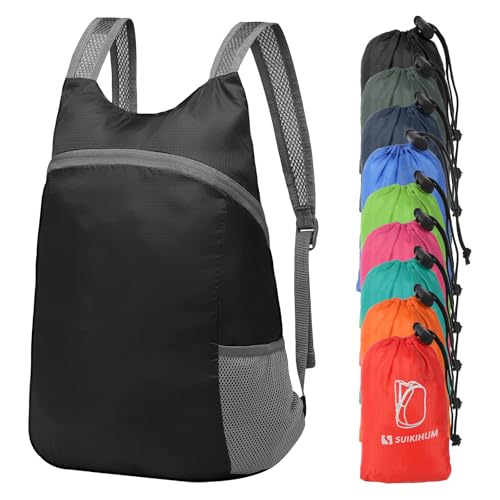


As an Amazon Associate we earn from qualifying purchases at no extra cost to you. Ratings are shown as listed on Amazon.
Quick comparison of the leading carry-on backpacks
| Backpack | Approx. dimensions | Capacity | Weight | Laptop protection | Best for |
|---|---|---|---|---|---|
| Osprey Farpoint 40 | 55 x 35 x 23 cm | 40 L | About 1.6 kg | Padded sleeve, suspended from the base | Frequent one-bag trips and mixed transport |
| Patagonia Black Hole MLC 45 | 55 x 36 x 19 cm | 45 L | About 1.6 kg | Padded laptop compartment | Longer trips and maximum cabin capacity |
| Cotopaxi Allpa 35 | 51 x 30.5 x 23 cm | 35 L | About 1.5 kg | Padded compartment for a laptop and tablet | Organized packing and shorter trips |
| Aer Travel Pack 3 | About 55 x 35 x 23 cm | 33 L | About 1.7 kg | Raised, padded laptop pocket | Business travel and tech-heavy loads |
| Tortuga Travel Backpack | About 56 x 36 x 23 cm | 40 L | About 2 kg | Dedicated padded laptop compartment | Travelers who prioritize structure and fit adjustment |
Dimensions and weights can vary slightly by generation and regional specification. Airlines also measure differently, so treat the figures as planning guidance and confirm the allowance for your specific flight.
Best overall: Osprey Farpoint 40
The Osprey Farpoint 40 is the safest all-round recommendation because it combines a true travel backpack harness with a suitcase-style opening. Its 40-liter shape generally fits common European and international carry-on limits, while the hip belt and load-transfer design make it more comfortable than a large commuter backpack when walking between stations, airports, and hotels.
The harness and hip belt can be covered when you check the bag, reducing the chance of straps catching on conveyor equipment. The laptop sleeve is positioned to reduce the risk of the computer striking the ground when the pack is set down, although a separate slim sleeve is still sensible for expensive equipment.
Choose it for trips of roughly four to seven nights if you can pack efficiently. Its main weakness is organization: compared with clamshell bags with two fully divided halves, the interior is less naturally segmented. Packing cubes solve much of that problem without wasting as much space as permanently sewn-in compartments.
Best for maximum carry-on space: Patagonia Black Hole MLC 45
The Black Hole MLC 45 offers 45 liters in a relatively shallow 19-centimeter profile. That combination makes it attractive for a one-week trip, business clothing, or travelers who need room for shoes and a second layer. It can be carried as a backpack, shoulder bag, or suitcase, so it works well when most movement is through airports and hotels rather than long walks.
Its recycled fabric has a durable, weather-resistant finish, and the large opening makes it easy to pack like luggage. The trade-off is harness comfort. The shoulder straps are useful for transit, but they do not feel as supportive as the Farpoint’s trekking-influenced suspension under a heavy load. The 45-liter capacity can also exceed stricter airline limits, particularly when fully stuffed.
Pick it when capacity matters more than all-day carrying comfort. Leave some expansion space if your itinerary includes airlines with a 55 x 35 x 20 cm limit.
Best compact organizer: Cotopaxi Allpa 35
The Cotopaxi Allpa 35 is a strong middle ground for three- to five-night trips. Its 35-liter capacity is easier to keep within carry-on limits, and the suitcase-style split opening gives fast access to clothing, toiletries, and electronics. The internal compression system helps prevent a half-empty bag from collapsing around its contents.
The bag’s structure and bright color options make items easy to locate, but the divided interior can be less flexible for bulky objects. It also has less space for jackets, extra shoes, or souvenirs than a 40- or 45-liter model. The harness is comfortable for city travel, though many people will prefer to stow the hip belt rather than use it continuously.
Choose the Allpa 35 if you value organization and predictable airline fit over maximum capacity.
Best for laptops and business travel: Aer Travel Pack 3
The Aer Travel Pack 3 is aimed at travelers carrying a laptop, tablet, chargers, documents, headphones, and office accessories. Its 33-liter capacity is modest, but its compartment layout is efficient for technology-heavy packing. The laptop pocket is elevated and well padded, and the bag’s dense fabric and structured panels help it stand upright.
The downside is weight: a highly structured business backpack can weigh nearly as much empty as a lighter travel pack. Its harness is comfortable for commuting and short airport transfers, but the bag is less suitable for carrying camping gear or a very dense load over several hours.
Choose it for two- to four-night work trips, especially when your personal item must contain a laptop and your carry-on holds clothing.
Decision matrix: which size fits your trip?
| Your situation | Useful capacity | Best match | Why |
|---|---|---|---|
| Strict budget-airline personal item | About 16–25 L; check the airline’s exact limit | Compact travel or commuter backpack | A 35–45 L bag is unlikely to fit under the seat when full |
| Two- to four-night business trip | 25–35 L | Aer Travel Pack 3 or Cotopaxi Allpa 35 | Enough room for clothing while preserving laptop organization |
| Four- to seven-night city trip | 35–40 L | Osprey Farpoint 40 | Balances capacity, carry comfort, and common cabin dimensions |
| Cold-weather or equipment-heavy trip | 40–45 L | Patagonia Black Hole MLC 45 | Extra volume accommodates thicker garments and shoes |
| Frequent walking with a heavy load | 35–40 L | Osprey Farpoint 40 or an adjustable-harness travel pack | Load transfer matters more than extra pockets |
Carry-on versus personal item: avoid the common mistake
A carry-on backpack usually goes in the overhead bin. A personal item must fit beneath the seat, and its dimensions are often substantially smaller. Do not assume that a 40-liter backpack becomes a personal item because it has shoulder straps.
For a two-bag setup, use the travel backpack overhead and a small personal item for passport, medication, laptop accessories, water bottle, and valuables. For a one-bag setup on a restrictive airline, select a compact pack designed around the published personal-item dimensions rather than trying to compress a full-size travel bag.
Before departure, measure the packed bag at its fullest points, including exterior pockets. A soft bag that is 2 or 3 centimeters over the limit may compress into a sizer, but relying on that is risky when the bag is rigid, overfilled, or weighed at the gate.
What to look for in laptop protection and harness comfort
- Laptop position: A compartment suspended above the bottom seam offers more protection from floor impacts than a sleeve resting directly on the base.
- Padding: Look for padding on the back, base, and side facing the main compartment, not only a thin divider.
- Harness adjustment: A height-adjustable sternum strap and a padded hip belt matter more when the bag exceeds about 8–10 kg.
- Load placement: Put dense items close to your back and near shoulder-blade height. Packing shoes and toiletries at the far outer edge makes the bag feel heavier.
- Access: A clamshell opening is convenient, but excessive internal dividers can reduce usable space for bulky clothing.
Durability and ownership realities
The parts that usually wear first are zipper pulls, shoulder-strap foam, hip-belt stitching, and the fabric corners that rub against floors. A lighter bag may be easier to carry, but a heavier structured bag often tolerates repeated business travel better. No fabric is damage-proof: coated materials resist light rain, not prolonged immersion.
Keep zippers free of sand and do not force them around an overfilled corner. Empty the bag after each trip, brush out grit, and clean fabric with mild soap and cool water rather than bleach or aggressive solvents. Air-dry it completely before storage. Avoid hanging a heavily loaded backpack from a single top handle, which concentrates stress on one seam.
A useful ownership calculation is cost per trip. A $250 backpack used for 50 trips costs about $5 per trip before repairs; a $120 bag used five times costs $24 per trip. The cheaper purchase is only the better value if its harness, zippers, and fabric remain suitable for how often you travel.
Final recommendation
Buy the Osprey Farpoint 40 if you want one versatile carry-on backpack for frequent travel. Choose the Patagonia Black Hole MLC 45 when extra space and luggage-style access matter most, the Cotopaxi Allpa 35 for compact organization, or the Aer Travel Pack 3 for business electronics. If your airline allows only a small personal item, skip these full-size models and choose a genuinely compact backpack designed to fit under the seat.