Key takeaways
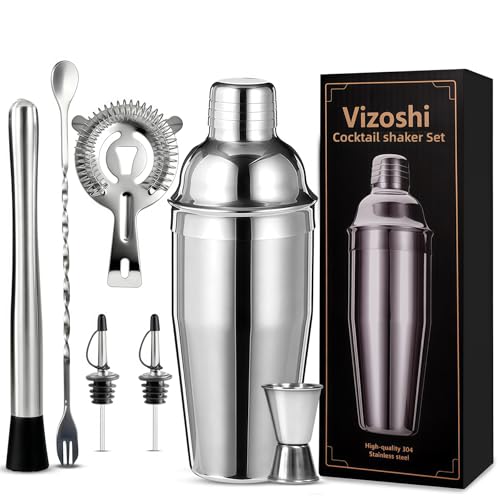
- Shaker: A two-piece Boston shaker is durable and easy to dry, while a three-piece cobbler shaker is more approachable because its strainer is built into the lid.
- Jigger: Choose clearly engraved internal or external markings, ideally including 15 ml, 22.5 ml, 30 ml, and 45 ml measurements.
- Hawthorne strainer: A removable spring is easier to clean and replace than a permanently fixed spring.
- Bar spoon: Look for a twisted shaft and a bowl of about 5 ml. The twist helps the spoon move smoothly through a mixing glass.
- Muddler: A nylon or stainless-steel head is less likely to absorb odors than unfinished wood.
- Pouring tools: Speed pourers are convenient but not necessary. They can drip, collect dust, and pour inconsistently when the bottle angle changes.
The best home mixology kits are the Cocktail Kingdom Essential Barware Set for serious durability, the OXO SteeL Cocktail Shaker Set for an easier beginner setup, and a modular Barfly or A Bar Above collection for frequent users who want better tools than a gift-box bundle normally provides.
A complete kit should do more than look good on a counter. The useful comparison is whether it includes the tools required for common drinks, uses stainless steel thick enough to survive repeated washing, and measures spirits accurately enough to keep cocktails balanced. Prices vary by finish and retailer, but expect roughly $35–$70 for a basic set, $70–$150 for a durable mid-range kit, and $150 or more for a professional-style collection assembled piece by piece.
Our top picks


As an Amazon Associate we earn from qualifying purchases at no extra cost to you. Ratings are shown as listed on Amazon.
Best home mixology kits by situation
| Situation | Best fit | Why it makes sense | Typical budget |
|---|---|---|---|
| First cocktail kit or occasional use | OXO SteeL Cocktail Shaker Set | Simple cobbler-style shaker, integrated strainer, and a measuring solution with fewer loose parts | $35–$60 |
| Frequent home bartender | Cocktail Kingdom Essential Barware Set | More bar-oriented tools, dependable stainless-steel construction, and easier replacement of individual pieces | $90–$150 |
| Maximum durability | Barfly stainless-steel tools bought as a set or individually | Professional-style weighted shaker tins, mixing spoon, strainer, and heavy-duty finishes | $100–$200 |
| Gift with attractive presentation | Viski barware set | Broad availability, polished designs, and enough equipment for basic shaken and stirred drinks | $50–$120 |
| Small kitchen or limited storage | Compact three-piece set with a 500–700 ml shaker | Fewer accessories and a smaller footprint without sacrificing the essential measuring and straining functions | $30–$70 |
What a complete kit should include
For most households, “complete” means a shaker, jigger, Hawthorne strainer, bar spoon, muddler, and a basic way to open bottles. A mixing glass is useful for spirit-forward drinks such as a Manhattan or Negroni, but it is not essential if the budget is tight. A citrus press, fine-mesh strainer, ice tongs, and garnish peeler improve results, although they are often better purchased separately.
- Shaker: A two-piece Boston shaker is durable and easy to dry, while a three-piece cobbler shaker is more approachable because its strainer is built into the lid.
- Jigger: Choose clearly engraved internal or external markings, ideally including 15 ml, 22.5 ml, 30 ml, and 45 ml measurements.
- Hawthorne strainer: A removable spring is easier to clean and replace than a permanently fixed spring.
- Bar spoon: Look for a twisted shaft and a bowl of about 5 ml. The twist helps the spoon move smoothly through a mixing glass.
- Muddler: A nylon or stainless-steel head is less likely to absorb odors than unfinished wood.
- Pouring tools: Speed pourers are convenient but not necessary. They can drip, collect dust, and pour inconsistently when the bottle angle changes.
Material and steel quality: what matters in practice
Most good cocktail tools use 18/8 or 18/10 stainless steel, commonly identified as food-grade stainless steel. Both are suitable for home bar use. The number describes the approximate chromium and nickel content: chromium helps resist corrosion, while nickel improves finish and resistance to staining. A kit does not become automatically superior because it says “18/10,” but vague descriptions such as “metal alloy” or “premium steel” deserve caution.
Thickness and construction affect ownership more than the label alone. Thin shaker walls chill quickly, but they can dent and become difficult to separate after vigorous shaking. Heavier tins feel steadier and tolerate years of use. Rolled rims are more comfortable to hold and less likely to develop sharp edges. Welded or securely fastened handles on strainers and spoons are preferable to decorative pieces attached with weak joints.
Mirror-polished steel looks attractive but shows fingerprints. Brushed steel hides marks better. Black, copper-colored, and gold-colored finishes can wear at contact points, especially if cleaned with abrasive pads or placed in a dishwasher against other metal objects. If long-term durability matters more than appearance, plain stainless steel is usually the safest choice.
Jigger accuracy is the feature most kits under-explain
A cocktail can be thrown off by a small measuring error. Suppose a recipe calls for 45 ml of gin, 30 ml of vermouth, and 22.5 ml of liqueur. If each pour is only 5 ml too large, the total drink contains 15 ml of extra liquid. That is a 15 ml error in a 97.5 ml pre-dilution recipe—more than 15 percent before ice melts into the drink.
For that reason, favor a bell jigger with two clearly marked sides rather than an unmarked cup. A 30/45 ml jigger is versatile, but a 15/30 ml or 22.5/45 ml model can be more useful for recipes that use half-ounce increments. Internal lines are convenient when a recipe calls for a partial measure, though they can be harder to see in dim light.
To check a jigger at home, place it on a kitchen scale, tare the empty vessel, and add water using a graduated measuring syringe or a kitchen measuring cup. Water weighs approximately one gram per milliliter at room temperature. This is not a laboratory calibration, but it can reveal a jigger that is noticeably undersized or oversized.
Head-to-head: cobbler versus Boston shaker
Cobbler shaker
A cobbler shaker is the better choice for beginners, shared households, and anyone who wants a built-in strainer. The lid can be easier to lose, and the cap may freeze into place when the drink is shaken with ice. Some inexpensive models also leak around the lid or have holes too small for thick citrus pulp.
Boston shaker
A Boston shaker uses two cups, commonly a larger 700–850 ml tin paired with a smaller metal tin or glass. It seals reliably once the user learns how to tap and separate the tins. It also has fewer parts to wash and no small cap to misplace. The trade-off is that it normally requires a separate Hawthorne strainer.
For two drinks, a shaker around 700–800 ml is usually sufficient. A larger 900 ml shaker is comfortable for batch-style preparation but takes more storage space and may be awkward when making a single drink. Oversizing the shaker does not improve the cocktail; it simply leaves more unused air around the ice.
Durability and cleaning realities
The parts that usually wear first are the shaker seal, the Hawthorne strainer spring, rubber feet on a muddler, and decorative surface coatings. A removable strainer spring can be replaced. A cobbler lid with a permanently distorted seal is harder to repair, which is one reason frequent users often prefer a Boston shaker.
- Rinse tools immediately after use, especially after citrus, dairy-based ingredients, or sugary syrups.
- Wash the shaker, jigger, and strainer with warm water and mild dish soap.
- Use a narrow brush around strainer springs and jigger markings where syrup can dry.
- Dry every piece fully before storage to prevent trapped moisture and odors.
- Do not use chlorine bleach, steel wool, or abrasive powder on stainless steel.
- Follow the manufacturer’s dishwasher guidance; repeated high-heat cycles can dull finishes and loosen some handles.
Never leave a sealed shaker full of ice while attending to another task. As the ice melts, pressure and temperature changes can make the lid harder to remove. Open the shaker promptly, rinse it, and let the pieces dry separately.
Which kit offers the best value?
The cheapest kit is not always the lowest-cost option. Imagine a $40 set used twice a month for one year: 24 uses produce a cost of about $1.67 per use. A $120 professional-style set used twice a week produces 104 uses in a year, or about $1.15 per use. The second purchase costs more initially but may be better value for someone who actually makes drinks regularly.
For occasional cocktails, spend on a readable jigger and a leak-resistant shaker rather than a large accessory count. For weekly use, prioritize a replaceable strainer, heavier stainless steel, and tools that can be washed thoroughly. For entertaining, buy a larger shaker, a separate mixing glass, and a second jigger; serving several guests is where a single compact kit becomes frustrating.
Bottom line
Choose the OXO SteeL Cocktail Shaker Set when ease of use and compact storage matter most. Choose Cocktail Kingdom for a balanced, bar-oriented kit with durable everyday tools. Choose Barfly when weighted stainless-steel construction and long-term repairability outweigh price. Viski is a reasonable presentation-focused option, while a carefully selected mix of individual tools is best for experienced users who already know which shaker size, jigger ratio, and strainer style they prefer.