Key takeaways
- Valve smoothness: Press each valve slowly and quickly. It should travel straight down, return promptly, and make no gritty or scraping sound. New valves may need oil, but oil cannot fix bent stems or damaged guides.
- Valve alignment: With the valves depressed, look through the ports if the design allows. Misalignment can make the instrument stuffy and may indicate repair work.
- Water keys: Springs should close the seals firmly without leaking. A loose water-key cork is a small repair; corrosion around the joint can be more serious.
- Slides: Main and valve slides should move with controlled resistance. Slides that are frozen or fall out easily suggest neglect.
- Mouthpiece: The rim should be smooth, the shank undamaged, and the mouthpiece should fit the receiver without forcing. A standard euphonium mouthpiece is preferable to an unbranded substitute with unknown dimensions.
- Case: Look for internal padding, working latches, reinforced corners, and straps. A hard-shell or well-padded molded case usually protects better than a thin gig bag during school transport.
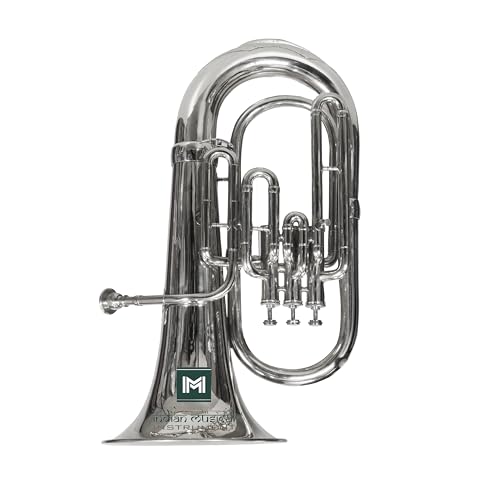
The best euphoniums for beginners are the Yamaha YEP-321 for dependable all-round use, the Jupiter JEP710 for a comfortable student setup, and a reputable intermediate euphonium with a .591-inch bore when budget and long-term durability matter most.
A beginner euphonium should not simply be the cheapest instrument available. A slightly heavier or poorly aligned instrument can make carrying, holding, and playing unnecessarily tiring, while stiff valves can slow down basic exercises. For most new players, prioritize a manageable weight, smooth top-action valves, a medium-large bore around .570 to .591 inches, and a mouthpiece and case that will survive regular school use.
Our top picks


As an Amazon Associate we earn from qualifying purchases at no extra cost to you. Ratings are shown as listed on Amazon.
Quick comparison of beginner-friendly euphoniums
The figures below are representative manufacturer specifications; finish, production year, and regional packages can change the exact details. Euphonium weights also vary depending on whether the case, water keys, and accessories are included, so treat the weight figures as useful carrying estimates rather than laboratory measurements.
| Model or type | Typical bore | Bell diameter | Unpacked weight | Valves | Best fit |
|---|---|---|---|---|---|
| Yamaha YEP-321 | 0.591 in / 15.0 mm | 11 in / 28 cm | About 8–9 lb / 3.6–4.1 kg | 3 top-action | Reliable school, private-lesson, and ensemble use |
| Jupiter JEP710 | About 0.591 in / 15.0 mm | About 11.8 in / 30 cm | About 8–10 lb / 3.6–4.5 kg | 3 top-action | Students wanting a broad, comfortable sound |
| Eastman EEP526 | About 0.591 in / 15.0 mm | About 11.8 in / 30 cm | About 8–10 lb / 3.6–4.5 kg | 3 top-action | Serious beginners and advancing students |
| Compact student euphonium | 0.570–0.580 in / 14.5–14.7 mm | 10–11 in / 25–28 cm | About 7–9 lb / 3.2–4.1 kg | 3 top-action | Smaller players or frequent carrying |
Our picks by beginner situation
Best overall: Yamaha YEP-321
The Yamaha YEP-321 is a strong default choice because its 0.591-inch bore provides the open, centered response expected from a full-size euphonium without being unusually demanding. Its three top-action valves are familiar to school-band programs, and Yamaha’s manufacturing consistency makes it easier for a teacher or repair technician to set up and service.
It is not the smallest euphonium, but its roughly 8–9-pound body is reasonable for a full-size student instrument. The included mouthpiece and fitted case make it practical as a complete starter package. Check the exact regional bundle before buying: accessories can differ, and some sellers offer the instrument with a different case or mouthpiece.
Choose the YEP-321 when the player expects to use the euphonium several times a week, join school ensembles, and keep the instrument for many years. Its main disadvantage is price: a new example usually sits in the upper student or lower intermediate market rather than the bargain tier.
Best for a broad, easy-blowing feel: Jupiter JEP710
The Jupiter JEP710 is aimed at students who want a conventional full-size euphonium with a generous sound and a comfortable response. Its approximately 0.591-inch bore is familiar to band directors, and the larger bell used on many versions can help produce a round ensemble tone.
Inspect the valve action carefully on any individual instrument. Top-action valves should move with light, even resistance and return immediately when released. Jupiter instruments commonly include a mouthpiece and protective case, but the case design and accessory specification can vary by market.
This is a sensible choice for a beginner who has reliable transport, regular instruction, and a budget above entry-level imported instruments. It may be less convenient than a compact model for a younger player who must carry it on public transport every day.
Best for a serious student: Eastman EEP526
The Eastman EEP526 is worth considering when the beginner is likely to continue beyond the first year. It uses the familiar full-size .591-inch bore and three-valve layout, giving the player a conventional platform for lessons, concert band, and community ensembles.
Its value is less about a special beginner feature and more about avoiding an early replacement. A durable case, properly fitted mouthpiece, and responsive valves matter more than cosmetic extras. Confirm that the supplied case has backpack straps or sturdy handles if the player will walk to rehearsals.
For a child with small hands or limited upper-body strength, have a teacher check the instrument’s sitting position before choosing this or any full-size model. A good euphonium still becomes frustrating if the player has to lift the shoulders or reach awkwardly for the valves.
Best when carrying weight is the priority: a compact student model
Compact euphoniums with bores around .570 to .580 inches can be easier to hold and transport than full-size instruments. They are often a practical solution for younger beginners, apartment storage, or students who walk to school. The trade-off is that they may produce a slightly narrower sound and may not match the feel of the larger euphoniums used in advanced ensembles.
Do not choose solely by the number on the scale. A case can add 5–8 pounds, and a poorly balanced instrument may feel heavier than a better-designed instrument with the same measured weight. Sit with the euphonium supported on the lap, keeping the right hand relaxed over the valves and the bell clear of the face.
How bore size affects a beginner
The bore is the internal diameter of the tubing. A smaller bore generally offers a more immediate response and can feel easier at quiet dynamics. A .591-inch bore is the common full-size reference for euphoniums: it supports a broad sound but requires the player to develop steady air rather than relying on shallow, tense blowing.
For most students, the bore should follow the school program and teacher’s recommendation. If the ensemble uses standard full-size euphoniums, buying a much smaller instrument can create an awkward transition later. Conversely, a very large or unusually heavy professional instrument gives a beginner little benefit and adds carrying and maintenance demands.
What to inspect before paying
- Valve smoothness: Press each valve slowly and quickly. It should travel straight down, return promptly, and make no gritty or scraping sound. New valves may need oil, but oil cannot fix bent stems or damaged guides.
- Valve alignment: With the valves depressed, look through the ports if the design allows. Misalignment can make the instrument stuffy and may indicate repair work.
- Water keys: Springs should close the seals firmly without leaking. A loose water-key cork is a small repair; corrosion around the joint can be more serious.
- Slides: Main and valve slides should move with controlled resistance. Slides that are frozen or fall out easily suggest neglect.
- Mouthpiece: The rim should be smooth, the shank undamaged, and the mouthpiece should fit the receiver without forcing. A standard euphonium mouthpiece is preferable to an unbranded substitute with unknown dimensions.
- Case: Look for internal padding, working latches, reinforced corners, and straps. A hard-shell or well-padded molded case usually protects better than a thin gig bag during school transport.
Durability and ownership costs
The parts that usually wear first are valve guides, valve felts or corks, water-key seals, and case handles or latches. These are normal maintenance items, not reasons to reject a good instrument. The expensive problems are dents near slides, damaged valve casings, solder separation, and deep red-rot corrosion inside the tubing.
Budget for valve oil, slide grease, a cleaning snake, a mouthpiece brush, and a lint-free cloth. Valve oil is a recurring consumable; a small bottle commonly lasts several months to a year depending on use. A technician’s cleaning and adjustment every one to two years is sensible for a student who plays regularly, with earlier service if valves become slow or slides stop moving.
A simple maintenance routine
- Empty condensation from the water keys after each playing session.
- Wipe fingerprints and moisture from the exterior before placing the instrument in its case.
- Oil the valves lightly when they begin to slow; remove excess oil that runs into the casing.
- Grease slides sparingly and move them through their full travel so the lubricant spreads evenly.
- Monthly, brush the mouthpiece and inspect the case latches, straps, and interior padding.
- Every few months, wash the tubing with lukewarm water and mild dish soap if the manufacturer’s care instructions permit it. Rinse thoroughly and dry completely before reassembly.
Never use hot water, abrasive metal polish, or force on a stuck slide. Heat can damage solder and lacquer, while forcing a slide can turn a routine service job into a costly repair.
Typical price expectations in 2026
New compact or entry-level student euphoniums generally occupy the lower market range, roughly $700–$1,500. Established full-size student models commonly fall around $1,500–$3,000, while higher-quality intermediate instruments can exceed $3,000. Used prices vary sharply with valve condition, dents, case quality, and recent servicing.
A useful comparison is cost per use. An instrument costing $2,000 and played four times weekly for five years receives about 1,040 uses, or approximately $1.92 per use before maintenance. A $900 instrument replaced after two years at twice-weekly use receives about 208 uses, or $4.33 per use. The calculation is not a guarantee of value, but it shows why durable valves and a protective case can matter more than the lowest purchase price.
Bottom line
Choose the Yamaha YEP-321 for the safest all-round recommendation, the Jupiter JEP710 for a full-size student instrument with a broad response, and the Eastman EEP526 for a beginner likely to continue seriously. If carrying comfort dominates every other concern, consider a compact .570–.580-inch model, but confirm compatibility with the student’s teacher and ensemble. Whatever the brand, smooth valves, a correctly sized mouthpiece, a protective case, and regular cleaning will have more effect on beginner satisfaction than decorative finish or a small difference in bell size.