Key takeaways
- GPU: The single decisive component. For native 4K ultra at 60+ fps you want at least an RTX 5070 Ti / RX 9070 XT tier card; for 100+ fps or heavy ray tracing, RTX 5080 or RX 7900 XTX-class and up. VRAM matters — 16GB is the practical floor for 4K texture packs in 2026.
- CPU: At 4K, a mid-range chip (Ryzen 7 7800X3D/9800X3D, Core Ultra 7) loses only a few percent to flagship CPUs. The exception is simulation-heavy games (strategy titles, Microsoft Flight Simulator) which stay CPU-bound even at 4K.
- Cooling: High-end GPUs dump 350–450W of heat into the case. A prebuilt with a sealed 120mm AIO and three fans will thermal-throttle a 9800X3D under sustained load. Look for 240mm+ liquid cooling or a large dual-tower air cooler, plus at least three intake fans.
- RAM and storage: 32GB DDR5 is the sensible standard now; 16GB causes stutter in some open-world titles. A 2TB NVMe drive is realistic — modern games routinely exceed 100GB each.
The best 4K gaming PC for most buyers in 2026 pairs an RTX 5080-class GPU with a modern 8-core CPU and a 240mm+ liquid cooler — that combination holds 60+ fps at ultra settings in nearly every current title, and it sits in the $2,200–$3,000 prebuilt range. Below that budget you’re relying on upscaling (DLSS or FSR) to stay above 60 fps; above it, you’re paying for headroom in ray tracing and future titles rather than a different experience today.
Our top picks


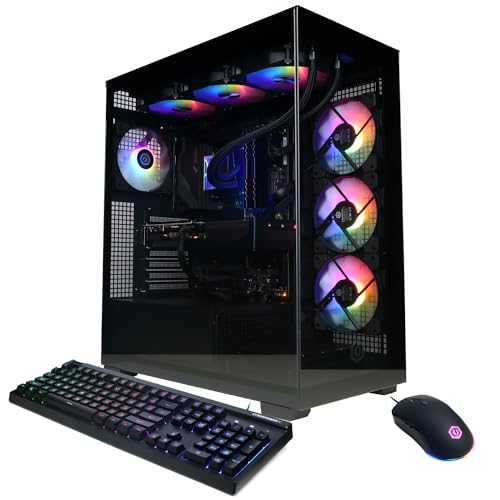
As an Amazon Associate we earn from qualifying purchases at no extra cost to you. Ratings are shown as listed on Amazon.
What Actually Determines 4K Performance
At 3840×2160, the GPU does roughly 90% of the work. This flips the usual buying logic: spending extra on a top-tier CPU while skimping on the graphics card is the most common mistake in 4K builds.
- GPU: The single decisive component. For native 4K ultra at 60+ fps you want at least an RTX 5070 Ti / RX 9070 XT tier card; for 100+ fps or heavy ray tracing, RTX 5080 or RX 7900 XTX-class and up. VRAM matters — 16GB is the practical floor for 4K texture packs in 2026.
- CPU: At 4K, a mid-range chip (Ryzen 7 7800X3D/9800X3D, Core Ultra 7) loses only a few percent to flagship CPUs. The exception is simulation-heavy games (strategy titles, Microsoft Flight Simulator) which stay CPU-bound even at 4K.
- Cooling: High-end GPUs dump 350–450W of heat into the case. A prebuilt with a sealed 120mm AIO and three fans will thermal-throttle a 9800X3D under sustained load. Look for 240mm+ liquid cooling or a large dual-tower air cooler, plus at least three intake fans.
- RAM and storage: 32GB DDR5 is the sensible standard now; 16GB causes stutter in some open-world titles. A 2TB NVMe drive is realistic — modern games routinely exceed 100GB each.
Quick Comparison: What Each Budget Buys at 4K
| Budget tier | Typical GPU | Typical CPU | Native 4K ultra fps (avg) | With upscaling | Ray tracing viable? |
|---|---|---|---|---|---|
| $1,400–$1,800 | RTX 5070 / RX 9070 | Ryzen 7 7700 / Core Ultra 5 | 35–50 fps | 60–85 fps | Light only |
| $1,900–$2,400 | RTX 5070 Ti / RX 9070 XT | Ryzen 7 7800X3D | 55–70 fps | 80–110 fps | Moderate |
| $2,500–$3,200 | RTX 5080 | Ryzen 7 9800X3D / Core Ultra 9 | 70–95 fps | 100–140 fps | Yes, most titles |
| $3,500+ | RTX 5090 | Ryzen 7 9800X3D+ | 95–130 fps | 120–165+ fps | Full path tracing |
Frame rates are approximate averages across demanding AAA titles; esports games run far higher at every tier.
Picks by Situation
Best balance for most players: RTX 5080 prebuilts (~$2,500–$3,200)
Systems like the Corsair Vengeance series, Maingear MG-1 configurations, or HP Omen 45L builds with an RTX 5080 and 9800X3D hit the sweet spot: native 4K ultra above 60 fps in everything current, real ray tracing headroom, and enough VRAM (16GB) to age well. This is where diminishing returns start — paying more buys fps you’ll only notice on a 144Hz monitor.
Best value: RTX 5070 Ti / RX 9070 XT prebuilts (~$1,900–$2,400)
The honest answer for budget-conscious buyers: use DLSS Quality or FSR upscaling and accept it. At 4K on a 32-inch screen viewed from a desk, Quality-mode upscaling is nearly indistinguishable from native in motion, and it pushes this tier comfortably past 60 fps. Lenovo Legion Tower and CyberPowerPC’s configurable lines are typical examples here. Skip RTX 5070 non-Ti builds at 4K — the 12GB VRAM is already tight.
Best for high-refresh 4K and path tracing: RTX 5090 prebuilts (~$3,500–$5,000)
Only worth it if you own (or are buying) a 4K 120Hz+ monitor and care about maximum ray tracing. The 5090’s 32GB VRAM and path-tracing capability are genuinely ahead of everything else, but at native 4K 60Hz the extra spend over a 5080 buys little you’d see.
Tightest budget that still counts as “4K”: ~$1,400–$1,600
An RTX 5070 or RX 9070 build runs 4K at high (not ultra) settings with upscaling at 60 fps. Set expectations correctly: this is a good 4K experience, not a maxed one. If a seller claims native ultra 60fps at this price, the spec sheet is lying somewhere.
Decision Matrix
| Your situation | Pick this tier | Key spec to insist on |
|---|---|---|
| 4K 60Hz TV or monitor, story-driven games | $1,900–$2,400 (5070 Ti) | 16GB VRAM, DLSS/FSR support |
| 4K 120–144Hz, competitive + AAA mix | $2,500–$3,200 (5080) | 9800X3D or equivalent, 240mm+ cooler |
| Path tracing, flight sims, modded games | $3,500+ (5090) | 32GB VRAM, 64GB RAM option |
| Strategy/simulation-heavy library | Any tier, prioritize CPU | X3D chip over GPU upgrade |
| Small room / noise-sensitive setup | Any tier, prioritize cooling | 360mm AIO or large case, not compact towers |
Ownership Realities Listings Won’t Tell You
- What wears first: Case fans and AIO pumps, typically around year 3–4 of heavy use. Budget prebuilts often ship with sleeve-bearing fans that get loud early — a $40 replacement set is a normal maintenance cost.
- Power supply headroom: A 5080 system should have at least an 850W quality PSU; some prebuilts ship 750W units that work but leave no upgrade margin. Check the listed wattage before buying.
- Dust is a fps tax: A dust-clogged GPU heatsink can cost 5–10% performance via thermal throttling. Compressed-air cleaning every 2–3 months in a carpeted room is the reality, not a suggestion.
- Common mistake: Enabling “Ultra” presets blindly. In most games, dropping shadows and volumetric effects one notch costs almost nothing visually and buys 15–20% fps — often the difference between 55 and 65 fps at 4K.
- Upscaler check: Confirm your most-played games support DLSS (Nvidia) or FSR (works on both). If your library is older titles without upscalers, buy one GPU tier higher than the averages suggest.
FAQ
Is 16GB of RAM enough for 4K gaming in 2026?
It runs most games, but several 2025–2026 releases already recommend 32GB, and background apps plus a 4K browser session can push past 16GB. Since DDR5 is cheap relative to the rest of the build, 32GB is worth the small premium.
Should I buy a prebuilt or build my own for 4K?
Prebuilts now carry roughly a 10–15% markup over parts cost, and high-end GPU availability often favors them. If you value warranty simplicity and want the machine working day one, prebuilt is reasonable at every tier. Building your own mainly pays off if you enjoy it or need unusual specs.
Will a 4K gaming PC also work well at 1440p?
Yes — and it will run 1440p at very high frame rates, which is useful if you own both a 4K TV and a high-refresh 1440p monitor. The reverse isn’t true: a PC built for 1440p ultra will struggle at native 4K.