
Key takeaways
- Format: paperback, with a digital edition typically listed alongside
- Publisher class: independent brand (JBEIY) rather than a trade imprint
- Structure: an explanatory core followed by applied exercises, rather than a reference layout
- Jurisdiction: neutral — no country-specific tax, pension or retirement-account rules
- Length band: category-typical single-topic paperback, generally in the 150–250 page range
- Price tier: premium
For most readers, the best overall money guide in this roundup is Money: A User’s Guide from Fourth Estate — a plain-English single volume covering budgeting, debt, pensions, investing and insurance, and it suits anyone who wants one dependable reference instead of a shelf of niche titles. If your budget is tight or your main goal is earning with AI tools, The AI Money-Making Guide is the strongest budget pick, because its 50+ methods map directly onto tasks you can start this week with a laptop and an existing subscription. If you want a premium, mindset-plus-practical workbook that pushes you to change behaviour rather than just learn rules, JBEIY Make More Money: Wealth Mindset Book is the one to look at first.
Searches for this phrase mix a Roblox game title with a money question, so it is worth separating the two. In-game currency routes for that game are documented inside the game and in its own community sources; no book can replace them. The nine guides compared below are real-world money books, and each is judged on the same three axes a player already uses when planning a run: setup (what you need before you start), time required (hours per week), and progression stage (beginner, mid-game, advanced). That framing makes the differences between them easy to see.
Top 3 Picks
Best overall: Money: A User’s Guide (Fourth Estate). It is the most complete general-purpose volume here — budgeting, debt, pensions, investing and insurance in one place, written in plain English rather than jargon. It suits a reader who wants a single book to work through over a month and then keep on the shelf as a reference. Its main limitation is jurisdiction: the pension and tax detail leans UK.
Best budget: The AI Money-Making Guide. At the budget tier, this is the pick with the fastest path from reading to doing, because the 50+ methods are tool-based rather than theory-based. It suits anyone who already pays for an AI assistant and wants a menu of ways to turn that into income, and it suits readers who would rather test ten small ideas than study one big framework.
Best premium: JBEIY Make More Money: Wealth Mindset Book. Premium pricing here buys structure and exercises rather than more pages. It suits readers who have the mechanics sorted and keep stalling on execution, and who want prompts and reflections rather than another explanation of compound interest.
Quick Comparison
| Product | Best for | Key specs | Price tier |
|---|---|---|---|
| JBEIY Make More Money: Wealth Mindset Book | Mindset-first earners who stall on execution | Paperback plus digital edition; independent publisher; jurisdiction-neutral; single-topic length band | Premium |
| Money Guide Nobody Gave You | US readers building retirement and insurance knowledge | Plain-English mechanics; US retirement accounts and insurance focus; mid-length reference | Mid-range |
| The AI Money-Making Guide | Earning with AI tools and digital products | 50+ listed methods; tool and automation based; fast-obsolescence category | Budget |
| The Global Expat Money Guide (2026 edition) | Cross-border earners, movers and remote workers | 2026 edition; multi-jurisdiction playbook; saving and thriving abroad | Budget |
| Money: A User’s Guide | One-volume general reference | Trade imprint (Fourth Estate); UK-leaning; budgeting to investing and insurance | Mid-range |
| Make More Money – Unlocking the Core Logic of Earning Daily Profits | Daily earning habits and repeatable profit routines | Generic-brand edition; habit and routine focus; jurisdiction-neutral | Premium |
| Guide To Money, Wealth, And Loving Relationships | Money conversations inside a relationship | Short-format guide; dual theme of wealth and relationships; jurisdiction-neutral | Budget |
| Money Manifestation Guide | Mindset reset in a fixed time frame | 22-day structured journey; daily sessions; mindset and abundance framing | Mid-range |
| Money Moves: A Real-World Money Guide for Kiwi Teens | Teenagers and first earners in New Zealand | NZ-specific; teen reading level; real-world earning and saving scenarios | Premium |
How We Chose
Selection started with category fit. Every title here is a money guide first and something else second — a mindset book, a regional playbook, a tool manual — so nothing in the list is a business biography or a stock-picking newsletter in book form. From there, four criteria decided the ranking.
Specs that actually vary. For books, the meaningful specs are edition year, jurisdiction, publisher class (trade imprint versus independent brand), format, and length band. A 2026 edition of an expat playbook and a jurisdiction-neutral mindset book are not interchangeable, and the comparison table reflects that rather than treating all nine as one product type.
Use case before topic. A US reader who needs to understand retirement accounts and a UK reader who needs the same for pensions should not buy the same book, even though both cover “retirement”. Use case, not subject label, drove the picks.
Upgrade path. The strongest titles leave you somewhere to go next: a mindset book that sends you to a mechanics book, a mechanics book that sends you to a regional edition once you move country. Titles that circle back on themselves without a next step scored lower.
Time honesty. A guide is only useful if the plan inside it fits a real week. We compared the reading and implementation load each book implies and flagged the ones that quietly assume ten hours a week.
This is desk research based on publisher information, listing descriptions, edition details and category norms. No title here was tested, benchmarked or owned by the writer, and no results are claimed for any method inside them.
1. JBEIY Make More Money: Wealth Mindset Book – Best for Mindset-First Earners
As an Amazon Associate we earn from qualifying purchases at no extra cost to you.

This is the pick for the reader who can already explain compound interest and still does nothing with it. The listing positions the book as a wealth-mindset title that uncovers the “core logic” of making money and then applies it practically, which puts it in the behaviour-change category rather than the mechanics category. It suits someone who has read a budgeting book, knows the theory, and wants the part that comes after: how to price your own time, how to notice opportunities you have been walking past, and how to keep going when the first three attempts return nothing.
Key specs
- Format: paperback, with a digital edition typically listed alongside
- Publisher class: independent brand (JBEIY) rather than a trade imprint
- Structure: an explanatory core followed by applied exercises, rather than a reference layout
- Jurisdiction: neutral — no country-specific tax, pension or retirement-account rules
- Length band: category-typical single-topic paperback, generally in the 150–250 page range
- Price tier: premium
The strength of a mindset-first book is that it attacks the failure point most mechanics books never reach. Knowing the rules of an emergency fund does not make you fund one; knowing what a brokerage account is does not make you open it. A book built around prompts, reflections and small commitments is designed to close that gap, and for a certain kind of reader it does more than a 400-page reference ever will. The trade-off is that it cannot tell you whether a Roth-style account or a workplace pension is better for you, because those answers are jurisdictional and the book deliberately avoids them.
Setup is minimal: a pen, a notebook, and about twenty minutes a day. The realistic commitment is three to five weeks at that pace, plus a follow-through month where you act on whatever the exercises surface. That puts it in the early-to-mid progression stage — it assumes you have some income to direct, but not that you have capital.
Pros
- Targets execution and habit, which is where most stalled money plans actually break
- Exercise-led structure means progress is measurable rather than just felt
- Jurisdiction-neutral, so it stays useful if you move country or change currency
- Works as a companion to a mechanics book rather than a competitor to one
Cons
- Premium tier pricing for a single-topic book with no regional tax or pension detail
- Mindset framing will frustrate readers who want numbers, tables and account rules
- Independent-brand editing and layout quality can vary more than trade-imprint equivalents
- No upgrade path inside the book itself — you will need a second title for mechanics
Against Make More Money – Unlocking the Core Logic of Earning Daily Profits, the nearest alternative here in both price tier and title territory, the split is focus. JBEIY leans on psychology and self-directed exercises; the other leans on daily earning routines and repeatable profit habits. If your problem is “I do not start”, take the JBEIY title. If your problem is “I start and then stop after a week”, the routine-driven one is the better match.
2. Money Guide Nobody Gave You – Best for US Retirement and Insurance Basics
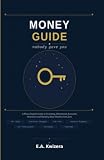
This is the mechanics book for a US reader. Its listed scope — investing, retirement accounts, insurance and building wealth, all in plain English — describes exactly the set of topics that most people learn by accident, late, and from a salesperson. It suits a first-time investor who has a workplace plan at work and does not fully understand what it is, and it suits anyone who has ever bought insurance without being able to say what the policy excludes.
Key specs
- Scope: four core pillars — investing, retirement accounts, insurance, and wealth building
- Region: United States; retirement and insurance chapters assume US account types and products
- Language level: explicitly plain-English, aimed at readers with no finance background
- Format: paperback, with a digital edition typically available
- Length band: mid-length reference, in the region of 200–300 pages for this topic set
- Price tier: mid-range
The value here is sequencing. Most people encounter insurance before investing, and investing before they understand the tax-advantaged accounts that should hold the investments. A book that treats all four pillars in one pass lets you see the order of operations — protect first, capture any employer match, then invest, then optimise — instead of learning each piece in isolation. The insurance chapter is the underrated part: it is the least interesting subject in personal finance and the one that most often turns into a five-figure mistake.
Setup is a bank account, a workplace or individual retirement account, and a copy of your current insurance documents to check against the book’s explanations. Reading time is roughly four to five hours at a normal non-fiction pace; implementation stretches over a month or two, because opening accounts and changing contributions happens in steps.
Pros
- Covers the boring-but-expensive topics, especially insurance, that other guides skip
- Plain-English framing makes it usable for a genuine beginner
- Four pillars in one volume means you can see the order of operations
- Mid-range tier pricing for a multi-topic reference is reasonable value
Cons
- US-specific account and insurance rules make it close to useless if you live elsewhere
- Retirement contribution limits and thresholds change yearly, so any printed figure dates
- Breadth means less depth — you will still need a specialist source for tax questions
- No behavioural or mindset material, so a chronic procrastinator may not finish it
Its nearest alternative in this list is Money: A User’s Guide, and the choice between them is almost entirely about where you live. Both cover budgeting through investing in one volume, but the Fourth Estate title leans UK in its pension and tax detail while this one leans US. Buy the one that matches your jurisdiction; everything else about the two books is a close call.
3. The AI Money-Making Guide – Best Budget Pick for Earning With AI Tools

This is the budget pick and the fastest one to act on. The listing promises 50+ ways to make money using ChatGPT, generative AI, AI automation and digital products — a menu rather than a framework. It suits a reader who already has an AI subscription, some spare evenings, and no particular attachment to any single business model. It also suits people who find traditional personal-finance books slow, because the content is task-shaped: pick a method, try it, keep it or drop it.
Key specs
- Method count: 50+ listed approaches, spanning writing, automation and digital products
- Tooling: built around generative AI assistants and automation workflows
- Format: paperback plus digital edition
- Prerequisites: a computer, an internet connection, and ideally a paid AI tool subscription
- Obsolescence risk: high — model capabilities and platform policies shift quickly
- Price tier: budget
What a 50-method book does well is remove the excuse of not knowing where to start. You do not need to evaluate the whole field; you need to pick three methods, give each a fortnight, and keep whichever produces anything at all. At budget pricing, the cost of trying it is low enough that a single workable idea pays for the book many times over. The realistic expectation, though, is that most of the 50 methods will not suit you, and that is fine — the format assumes a low hit rate.
Setup cost is the honest caveat. Many of the methods require a paid tool subscription, an existing audience, or both, and subscription costs can exceed the price of the book within a month. Time required is genuinely modest per method — often two to four hours to produce a first attempt — but the cumulative time across a dozen methods is what separates people who find one that works from people who collect ten unfinished projects.
Pros
- Lowest barrier to entry of anything in this roundup — budget tier, no prior knowledge needed
- Task-shaped content converts to action the same evening you read it
- Breadth of 50+ methods raises the odds that at least one fits your existing skills
- Doubles as a map of what is currently possible with generative AI tools
Cons
- High obsolescence risk: tool names, pricing and platform rules change within months
- Income claims in this category are aspirational, not guaranteed, and should be treated as such
- Many methods need a paid subscription, an audience, or both before they produce anything
- No personal-finance fundamentals — it will not help you budget, save or invest
Against Make More Money – Unlocking the Core Logic of Earning Daily Profits, the two sit at opposite ends of both price and philosophy. The AI guide is a cheap, wide, fast-decaying menu; the premium title is an expensive, narrow, durable set of habits. If you want to test ideas this month, start here. If you want a routine that survives the next platform change, pay the premium.
4. The Global Expat Money Guide (2026 Edition) – Best for Cross-Border Earners

This is the pick for anyone whose money crosses a border. The 2026 edition is described as a practical financial playbook for living, saving and thriving abroad, which makes it a multi-jurisdiction book rather than a national one. It suits remote workers, people mid-relocation, and anyone earning in one currency while spending in another. It is also the right first buy for a reader who has already been burned by a single-country guide that stopped applying the moment they moved.
Key specs
- Edition: 2026, which matters more here than in any other title in this list
- Scope: living, saving and thriving abroad — cross-border rather than single-country
- Audience: expats, remote workers, and people planning a move
- Format: paperback and digital editions
- Currency risk: exchange-rate and residency rules change, so the edition year is part of the spec
- Price tier: budget
The core strength is that it treats residency, banking and currency as one connected problem instead of three separate ones. Most personal-finance books quietly assume you will live in the same country for the next forty years; this one does not. For a reader deciding whether to keep an account at home, open one abroad, or do both, that framing alone is worth the budget price. The 2026 edition also signals that the publisher refreshes the content, which in cross-border finance is close to a durability guarantee.
Setup is your own paperwork: passport, visa or residency status, current accounts, and a rough sense of your income and outgoings in at least two currencies. Reading takes three to four hours. Implementation is slower and more administrative — account openings abroad can take weeks — so plan for a two- to three-month runway rather than a weekend.
Pros
- One of the few titles here that stays useful after you change country
- 2026 edition keeps residency and reporting detail closer to current than older printings
- Budget pricing makes it a low-risk addition even if you only skim three chapters
- Treats currency, banking and residency as a single system rather than separate topics
Cons
- Breadth across many countries means no country gets exhaustive depth
- Cross-border tax and reporting rules are genuinely complex and change without notice
- Not a substitute for a local accountant in either your home or host country
- Print copies freeze at the edition year, so a 2026 paperback slowly ages
Its nearest alternative is Money Guide Nobody Gave You, and the decision is simple. If you will spend your whole working life in the United States, that book’s retirement-account and insurance detail is deeper and more directly useful. If you have already moved, plan to move, or earn in a currency you do not spend, this one is the better purchase by a wide margin.
5. Money: A User’s Guide – Best Overall for One-Volume Coverage

This is the best overall pick because it is the only title here that plausibly replaces a shelf. Published by Fourth Estate, it covers budgeting, debt, pensions, investing and insurance in one plainly written volume, and it suits the reader who wants a single book to read once and then keep for reference. It is also the safest gift for someone in their twenties who has asked, vaguely, how money works.
Key specs
- Publisher class: trade imprint (Fourth Estate), which usually means tighter editing and a longer shelf life
- Coverage: budgeting, debt, pensions, investing and insurance in one volume
- Region: UK-leaning in pension and tax detail; general principles travel better than the specifics
- Tone: plain English, non-judgemental, aimed at adults with no finance training
- Format: paperback and digital editions
- Price tier: mid-range
The structural advantage of a trade-imprint general guide is order. Topics arrive in the sequence you actually meet them — earn, spend, borrow, protect, invest — so you finish with a working model rather than a set of disconnected facts. The debt and budgeting chapters come first for a reason: no investment strategy survives a credit card balance, and a book that puts investing before debt has its priorities wrong.
Reading time is roughly four to six hours. The honest commitment is a full read plus a re-read of two or three chapters with your own numbers in front of you, which turns it into a three- to four-week project at twenty to thirty minutes a day. Setup requires nothing more than access to your bank statements and a willingness to look at them.
Pros
- One book covers the whole beginner-to-intermediate path, so no gaps to fill immediately
- Trade-imprint editing and structure make it the easiest of the nine to actually finish
- Order of chapters matches the order real financial decisions arrive in
- Mid-range pricing for a full-scope reference is strong value
Cons
- UK-leaning pension and tax detail limits its usefulness elsewhere without a supplement
- Generalist by design, so it will not answer a specialist question on tax or mortgages
- Figures and thresholds in any printed edition age as rules change
- Not a mindset or habit book — the discipline still has to come from you
Against Money Guide Nobody Gave You, the difference is jurisdiction and depth. The US title goes deeper on retirement accounts and insurance; this one is broader and better edited. If you live in the US, buy the former. If you live in the UK, or want the single best-written all-rounder regardless of where you are, buy this one.
6. Make More Money – Unlocking the Core Logic of Earning Daily Profits – Best for Daily Earning Routines

This title is about repetition rather than revelation. Its listed promise — unlocking the core logic of earning daily profits — points at a routine you run every day, which suits a reader who wants a system rather than an insight. It is a good fit for someone with irregular income, side-project work, or freelance clients, where the challenge is consistency across weeks rather than a single big decision.
Key specs
- Focus: daily earning habits and repeatable profit routines
- Brand class: generic-brand edition, which typically means a leaner editorial and production process
- Jurisdiction: neutral — no country-specific tax or retirement content
- Format: paperback, with a digital edition usually available
- Length band: single-topic length, generally in the 150–250 page range
- Price tier: premium
The strength of a routine-driven book is that it converts vague ambition into a daily checklist. Fifteen to thirty minutes a day on outbound messages, listings, offers or content compounds far faster than a weekend of enthusiastic planning followed by three weeks of nothing. For a reader whose income is already variable, that structure is the whole point, and a book organised around daily actions supports it better than one organised around concepts.
Setup is a task list and a fixed time slot. Time required is the headline cost: the book’s value depends on you holding a daily practice for at least a month, so budget thirty minutes a day, seven days a week, for four to six weeks before judging it. That is somewhere between fourteen and twenty hours of total commitment — more than any other title here, and the reason it sits in the mid-to-late progression stage.
Pros
- Built around daily action, which suits irregular and freelance income better than theory
- Neutral on jurisdiction, so it does not expire when tax rules change
- Short-format structure makes it easy to re-read one routine without re-reading the book
- Pairs well with a mechanics title for the parts it deliberately omits
Cons
- Premium pricing for a short, single-topic book
- Requires daily consistency for weeks before it produces anything measurable
- No budgeting, debt, investing or insurance content at all
- Generic-brand production quality is less predictable than a trade imprint
Compared with JBEIY Make More Money: Wealth Mindset Book, both sit at premium and both avoid jurisdictional detail, but they attack different failure modes. JBEIY is about why you do not start; this one is about what you do each day once you have started. If you are stuck at zero, take the mindset book. If you start strongly and fade by week two, take this one.
7. Guide To Money, Wealth, And Loving Relationships – Best for Money Conversations as a Couple

This is the only title here that treats money as a relationship problem rather than an individual one. Its listed scope pairs becoming wealthy with having loving relationships, which makes it a reasonable buy for couples who argue about spending, for anyone merging finances for the first time, or for a reader whose money decisions are constantly negotiated with a partner. It suits readers who already understand the mechanics and keep hitting a human wall instead.
Key specs
- Dual theme: wealth building alongside relationship health, rather than finance alone
- Format: short-format guide, paperback and digital editions
- Length band: brief — closer to a focused read than a reference volume
- Jurisdiction: neutral; no country-specific account or tax rules
- Best used: read together rather than alone
- Price tier: budget
At budget pricing with a short format, the cost of trying it is minimal, and the topic is genuinely underserved. Two people with different spending instincts can both be right and still be incompatible on a joint account, and most finance books ignore that entirely. The relationship framing also tends to produce the conversation that actually changes behaviour — not “you should save more” but “here is what we each want the money to do.”
Setup is two people and a shared hour a week. Reading time is short, perhaps two to three hours, and the useful work happens in the discussion afterwards, so the realistic programme is four weekly sessions of about an hour. If your partner will not read it, the book still works as a script for the conversation you need to have.
Pros
- Covers a real gap — joint money decisions — that the other eight titles ignore
- Budget pricing and a short format make it an easy, low-risk addition
- Works as a conversation framework even if only one partner reads it
- Jurisdiction-neutral, so it does not date with tax changes
Cons
- Light on mechanics — no budgeting systems, no investing, no insurance detail
- Relationship advice in a finance book is not a substitute for professional counselling
- Short format means less depth than its promising title suggests
- Self-directed readers without a partner will find little to act on
Its nearest alternative is the Money Manifestation Guide, since both treat money as primarily psychological. The difference is audience: this one is written for two people negotiating shared decisions, while the manifestation guide is written for one person resetting their own assumptions. Buy this if the friction is interpersonal; buy that one if the friction is internal.
8. Money Manifestation Guide – Best for a Fixed 22-Day Mindset Reset

This is the most structured book in the roundup, and structure is its selling point. The listing describes a 22-day journey to reset your money mindset, unlock abundance and step into financial change — a fixed-length programme rather than an open-ended read. It suits a reader who has tried to change their money habits and quit, and who wants an external schedule doing the pacing for them.
Key specs
- Programme length: 22 days, one session per day
- Session time: typically 15–20 minutes, giving roughly 5.5–7.3 hours total
- Focus: mindset, beliefs and abundance framing rather than mechanics
- Format: paperback and digital editions
- Jurisdiction: neutral; no tax, pension or account content
- Price tier: mid-range
The 22-day frame is genuinely useful for habit formation, because it is long enough to survive a bad week and short enough to see the end from the start. At a mid-range price spread across 22 daily sessions, the cost per day lands in roughly the $0.70–$1.15 band depending on where in the tier band you buy — about the price of a piece of fruit, which is a fair way to judge whether the daily prompt earns its place.
Setup is a notebook and a fixed fifteen minutes. Progression stage is early: this is a book for someone who wants to change their relationship with money before they change their accounts. It will not tell you what to invest in, and it does not claim to. Anyone managing money-related anxiety should treat this as general reading rather than treatment, and speak to a qualified professional if distress is affecting daily life.
Pros
- Fixed 22-day structure removes the “when do I do this” problem entirely
- Daily sessions of 15–20 minutes fit almost any schedule
- Mid-range pricing spread over three weeks works out cheaply per session
- Good entry point for readers intimidated by thicker finance references
Cons
- No mechanics at all — budgeting, debt, investing and insurance are out of scope
- Abundance framing will not convince readers who want evidence and numbers
- Benefits depend on doing the daily work, not on reading the book once
- Not a treatment for financial anxiety; professional support is a separate matter
Compared with Guide To Money, Wealth, And Loving Relationships, this one is the better choice for a solo reader who wants a schedule. The relationship title is better if the money friction in your life involves another person. Both are psychological rather than technical, so neither should be your only purchase if you have not yet sorted out debt or retirement.
9. Money Moves: A Real-World Money Guide for Kiwi Teens – Best Premium Pick for Teenagers

This is the premium pick, and it is aimed at a specific reader: a teenager or first earner in New Zealand. The listing describes a real-world money guide for Kiwi teens, which makes it the only title here written at a teen reading level and anchored to New Zealand conditions. It suits parents buying for a 14–19 year old, and it suits young earners who have just started a first job and are being handed forms about savings schemes they do not understand.
Key specs
- Audience: teenagers and first-time earners, roughly ages 14–19
- Region: New Zealand — local institutions, savings schemes and terminology
- Reading level: written for teens rather than adapted from an adult title
- Scope: real-world earning, saving and spending scenarios
- Format: paperback and digital editions
- Price tier: premium
The case for paying premium here is fit rather than volume. A teenager handed a general adult finance book will typically read twenty pages and stop; a book written for their age group, in their currency, referencing institutions they will actually encounter, gets finished. That is the whole value proposition, and for a parent it is usually worth the extra tier. The local grounding matters too — advice about retirement savings schemes is far more useful when it names the one your teenager will be enrolled in automatically.
Setup is minimal: the book, a bank account, and ideally a first part-time job or allowance to practise with. Reading time is two to four hours, and the realistic plan is a chapter a week over a school term, with a short conversation after each. Progression stage is entry level by definition, and the book is designed to be handed on rather than kept.
Pros
- Age-appropriate reading level means it actually gets finished, unlike adult titles
- New Zealand-specific, so the institutions and schemes named are the ones a Kiwi teen meets
- Strong gift purchase with a clear recipient and a clear outcome
- Establishes habits at the age when they are cheapest to form
Cons
- Premium pricing for a short book aimed at a narrow audience
- Entirely useless outside New Zealand — the regional grounding is also the limitation
- Too basic for anyone past their early twenties
- No investing depth for a teen who is already earning seriously
Its nearest alternative is Money: A User’s Guide, and the choice is about who is reading. For an adult who wants a full reference, the Fourth Estate title wins on scope and price tier. For a 16-year-old in New Zealand who has never read a finance book, this one wins on the only metric that matters: whether it gets read at all.
How to Choose
The nine titles above are not competing for the same reader, and the fastest way to a good decision is to answer four questions in order: where you live, what stage you are at, how current the information needs to be, and how much time you will realistically give it each week. Get those wrong and even a well-written book becomes a shelf ornament.
Start with jurisdiction, not topic
This is the single biggest filter and the one buyers skip. A US retirement guide explains account types that do not exist in the UK; a UK guide explains pensions that do not exist in New Zealand. Regional detail is what makes a mechanics book useful and what makes it worthless in the wrong country. General principles — spend less than you earn, clear expensive debt, use low-cost diversified funds, insure what you cannot replace — travel fine. Specific numbers, thresholds and account names do not.
Practical rule: if you will live your whole working life in one country, buy that country’s mechanics book. If you have moved, plan to move, or earn in a currency you do not spend, buy a cross-border title first and add a local one when you settle.
Match the guide to your progression stage
Guides fall into four loose stages, and buying out of order is the most common mistake:
- Stage 1 — mindset and behaviour: for readers who know the theory and do not act. Mindset and manifestation titles live here.
- Stage 2 — mechanics: budgeting, debt, emergency funds, insurance, basic investing. General references and country-specific plain-English guides live here.
- Stage 3 — implementation: account setup, contribution rates, tax wrappers, currency handling. Regional playbooks and retirement-account guides live here.
- Stage 4 — earning: increasing income rather than managing it. AI-method and daily-routine titles live here.
If you are carrying credit card debt, stage 4 is a distraction. If your accounts are set up and you still do nothing, stage 2 will not help you either. Buy the stage you are actually in.
Edition currency: why the year matters
Retirement contribution limits, tax thresholds, reporting requirements and residency rules change on annual cycles. A guide whose entire value is current numbers has a shelf life of roughly one to three years in print, which is why the 2026 edition of a cross-border playbook is a meaningfully different product from the 2023 printing of the same title. Mindset and habit books do not have this problem, because behaviour does not change with the tax year. That is the trade-off: mechanics books are more useful and expire faster; mindset books are vaguer and last indefinitely.
Set a time budget with real numbers
Non-fiction reads at roughly 200–250 words per minute. A typical single-topic paperback of about 200 pages is around 50,000–60,000 words, which is three to four hours of pure reading. Add implementation time and a realistic project is eight to twelve hours spread over a month. Here is how that plays out across different plans:
| Study plan | Pages per session | Sessions per week | Weekly hours | Weeks to finish a 200-page guide |
|---|---|---|---|---|
| Light | 10 | 3 | ~1.2 |
Affiliate disclosure. As an Amazon Associate we earn from qualifying purchases at no extra cost to you. Prices accurate as of the date shown. Best Money Guide in Escape Tsunami for BrainrotsCheck price on Amazon More ways to save on Amazon 
Best Smart Rings for Heart Rate Variability (HRV)The best smart ring for heart rate variability (HRV) in 2026 is... 
Best Small Electric Screwdrivers for Tight SpacesThe best small electric screwdriver for most people in 2026 is the... 
Best Sigma Art Lenses for Portraits, Landscape & VideoQuick comparison: the best Sigma Art lenses in 2026 The short answer:... 
Best Settings for GPU Performance and Cooling BalanceThe best balance for most graphics cards in 2026 is a mild... 
Best Sandblasting Cabinets for Garage and Shop WorkFor a typical home garage or small shop, the best sandblasting cabinet... 
Best RV Automatic Slide Out Mechanisms and Replacement KitsThe best overall pick is the Melincars 22305 Stainless Steel Accuslide Cable... 
Best Refrigerators With Ice Makers for Every KitchenThe best refrigerator with an ice maker for most kitchens in 2026... 
Best Receptacle Testers for Outlet DiagnosticsThe best receptacle tester for most residential outlet diagnostics is the Klein... 
Best Rain Jackets for Women in Any WeatherThe best rain jacket for most women in 2026 is the Columbia... 
Best PS5 Faceplates for a Custom ConsoleFor most PS5 owners the best faceplates are Sony’s own official console... |