Key takeaways
- Sensor: full-frame 36 × 24mm BSI CMOS, 24.5MP class
- Mount: Nikon Z, 55mm throat, 16mm flange distance — accepts F-mount glass via the FTZ adapter
- Autofocus: 273-point hybrid phase-detection plus contrast-detection, with eye and animal detection for stills
- Video: 4K30 full-width, 4K60 in a cropped mode, 10-bit N-Log and 12-bit RAW output over HDMI rather than internally
- Stabilisation: 5-axis in-body VR, coordinated with lens VR where available
- Cards: one CFexpress/XQD slot plus one SD slot
- Battery: EN-EL15c class, roughly 400 shots per charge under CIPA testing
- Weight: approximately 705g with battery and card
The best mirrorless camera for hybrid shooting is the Sony Alpha 7 V. It is the only body in this roundup that pairs a 30fps blackout-free burst and AI-driven subject recognition with 5-axis in-body stabilisation and the widest third-party lens ecosystem of any full-frame mount — which matters more than any single specification once you start switching between stills and video on the same job. It suits photographers who shoot roughly 60/40 stills to video: events, weddings, portraits with occasional interviews, and travel work where one body has to cover everything. If you are building a first hybrid kit on a tight budget, the Sony a6400 still delivers the most dependable autofocus per dollar spent; if you invoice clients for 8K and internal RAW, the Nikon Z 8 is the premium answer. Every camera below is judged on the five things that decide whether a body is genuinely hybrid-capable: autofocus behaviour, video formats and codecs, stabilisation, battery and power delivery, and lens options.
Top 3 Picks
Best Overall: Sony Alpha 7 V
The Alpha 7 V is the most balanced hybrid body here. Its 30fps blackout-free shooting keeps a moving subject framed while you track it, its AI autofocus recognises and holds onto people, animals and vehicles, and 5-axis in-body stabilisation makes handheld video usable without a gimbal. Full-frame sensor size gives you the shallow depth of field and low-light latitude that APS-C and Micro Four Thirds bodies can only approximate, and Sony’s E-mount has the deepest third-party lens support of any mirrorless system.
Best Budget: Sony Alpha a6400
For a first hybrid camera, the a6400 is the value benchmark. Real-time Eye AF tracks faces reliably during video, the 24MP APS-C sensor produces clean 4K, and the body is small enough to carry all day. It lacks in-body stabilisation and its video codec set is dated, but nothing at its price tier combines autofocus this good with a lens mount this well supplied.
Best Premium: Nikon Z 8
The Z 8 is the professional hybrid: a stacked 45.7MP full-frame sensor, internal 12-bit RAW video, 8K-class capture and 4K high-frame-rate modes, all in a weather-sealed magnesium body with dual card slots. It is heavier and more expensive than everything else here, and its electronic-only shutter changes how you work with flash — but for paid stills-and-motion work in one body, it removes the compromise.
Quick Comparison
| Product | Best for | Key specs | Price tier |
|---|---|---|---|
| Nikon Z 6II | All-round hybrid value with two card slots | Full-frame 36 × 24mm sensor (24.5MP class); Z mount (16mm flange); 5-axis IBIS; 4K60 in crop / 4K30 full-width; 10-bit log over HDMI only; CFexpress + SD slots; ~705g with battery | Mid-range |
| Sony a7 V Bundle | A ready-to-shoot kit with spare battery and bag | Full-frame sensor; E mount (18mm flange); 5-axis IBIS; 30fps blackout-free class; AI subject recognition; kit adds spare battery + bag; ~700g class body | Mid-range |
| Nikon Z 8 | Professional stills-and-video in one body | Stacked full-frame 45.7MP; 8K-class and 4K high-frame-rate video; internal 12-bit RAW; 5-axis IBIS; dual CFexpress/SD; electronic-only shutter; ~910g with battery | Premium |
| Panasonic LUMIX G97 | Lightest budget hybrid with a kit zoom | Micro Four Thirds sensor 17.3 × 13mm (2× crop); 12-60mm f/3.5-5.6 kit lens; 5-axis Dual I.S. 2; 4K capture; free-angle screen; ~550-600g class with lens | Budget |
| Sony Alpha 7 V | Fast-action hybrid shooting | Full-frame sensor; 30fps blackout-free burst; AI autofocus; 5-axis in-body stabilisation; E mount; ~700g class body | Mid-range |
| Canon EOS R6 Mark III + 24-105mm | Premium all-rounder with a do-everything zoom | Full-frame 30MP class; RF mount (20mm flange); IBIS with lens coordination; Dual Pixel subject-detection AF; 10-bit log video; dual slots; ~700g class body | Premium |
| Sony Alpha a6400 | Compact budget hybrid with top-tier AF | APS-C 23.5 × 15.6mm (1.5× crop), 24.2MP; 425-point phase-detection AF with Real-time Eye AF; 11fps; 4K30 oversampled; no IBIS; single SD slot; ~403g with battery | Budget |
| Sony Alpha a7R VI | High-resolution stills with serious video | Full-frame 60MP class sensor; E mount; 5-axis IBIS; high-resolution 8K-class video modes; dual slots; bundle adds bag; ~700g class body | Premium |
| Canon EOS R10 + 18-150mm & 75-300mm | Mid-range APS-C with telephoto reach included | APS-C 22.3 × 14.9mm (1.6× crop), 24.2MP; 23fps electronic / 15fps mechanical; Dual Pixel AF II with subject detection; 4K30 oversampled; no IBIS; single SD UHS-II; ~429g with battery | Mid-range |
| Canon EOS RP + RF 24-105mm f/4-7.1 | Cheapest route into full-frame hybrid | Full-frame 26.2MP; RF mount; 5fps (4fps with tracking); 4K24 with crop; no IBIS; single SD slot; ~485g with battery | Budget |
| BLACKRAPID Hybrid X | Carrying one or two bodies without strap swing | Converts from single sling to dual-camera harness; quick-release connector; wide shoulder pad; nylon webbing rated for DSLR and mirrorless bodies | Budget |
| Panasonic LUMIX GH7 + 12-60mm f/2.8-4 | Video-first hybrid work | Micro Four Thirds 25.2MP; phase-detection AF; 5.7K60 and 4K120 class; internal ProRes RAW HQ to CFexpress B; 32-bit float audio with adapter; active cooling fan; dual slots; ~721g with battery | Mid-range |
How We Chose
This roundup is built from published manufacturer specifications, the feature sets stated on each product listing, and established facts about sensor formats, mounts and codec standards — not from physical testing. Each camera was scored against four questions that decide whether a body actually works for hybrid shooting rather than just claiming to.
First, autofocus architecture: does the camera use phase detection across most of the frame, does it recognise subjects (people, eyes, animals, vehicles), and does it hold focus during continuous video rather than only in stills? Second, video format depth: resolution, frame rates, bit depth, chroma subsampling, log profiles, whether RAW is internal or external, and whether the body overheats or imposes recording limits. Third, stabilisation and power: in-body stabilisation stops, plus realistic battery runtime and whether the camera can run from USB-C power delivery while recording. Fourth, category fit and upgrade path: mount ecosystem depth, third-party lens availability, card format, and whether the camera’s lens mount lets you grow without replacing everything.
We weighted use case over specification bravado. A 45MP body that overheats on a 20-minute interview is less hybrid-capable than a 24MP body that records indefinitely, and a camera with excellent autofocus and a shallow lens ecosystem will cost you more over three years than one with a cheaper, deeper mount.
1. Nikon Z 6II – Best for All-Round Hybrid Value
As an Amazon Associate we earn from qualifying purchases at no extra cost to you.

The Z 6II is the camera to buy when you want a full-frame hybrid that does not force a compromise on build or card redundancy. It suits photographers moving up from APS-C DSLRs who shoot a mix of portraits, events and short-form video, and who want two card slots and a weather-sealed magnesium body without paying premium money. The 24.5MP backside-illuminated full-frame sensor is deliberately moderate in resolution: files stay manageable, high-ISO noise stays controlled, and 24MP is more than enough for prints up to roughly A2 and for 4K video delivery.
Key specifications
- Sensor: full-frame 36 × 24mm BSI CMOS, 24.5MP class
- Mount: Nikon Z, 55mm throat, 16mm flange distance — accepts F-mount glass via the FTZ adapter
- Autofocus: 273-point hybrid phase-detection plus contrast-detection, with eye and animal detection for stills
- Video: 4K30 full-width, 4K60 in a cropped mode, 10-bit N-Log and 12-bit RAW output over HDMI rather than internally
- Stabilisation: 5-axis in-body VR, coordinated with lens VR where available
- Cards: one CFexpress/XQD slot plus one SD slot
- Battery: EN-EL15c class, roughly 400 shots per charge under CIPA testing
- Weight: approximately 705g with battery and card
Strengths
The Z 6II’s strongest hybrid argument is its grip and control layout. A deep, sculpted handgrip makes long handheld video sessions far less tiring than with compact bodies, and the twin command dials plus a top-plate settings display mean you can change exposure without taking your eye from the finder. The 3.69-million-dot electronic viewfinder is bright and accurate, and the tilting rear touchscreen is useful for waist-level and tripod work.
Two card slots matter more than most buyers expect. You can write stills to CFexpress for speed and back up to SD, or record video to SD while keeping a second card free. The body is also weather-sealed to a degree that lets you keep shooting in light rain — a genuine advantage over the entry-level full-frame options in this list. Nikon’s colour science and N-Log curve are well regarded for grading, and the FTZ adapter opens up the enormous second-hand F-mount lens market, which is one of the cheapest ways to build a hybrid kit around a modern body.
Pros
- Full-frame sensor with sensible 24MP files and strong high-ISO behaviour
- Dual card slots in a mid-range body
- Weather-sealed magnesium alloy construction and a deep, comfortable grip
- 5-axis in-body stabilisation works with adapted F-mount lenses
- 10-bit log and 12-bit RAW video output over HDMI for serious grading
- Access to affordable second-hand F-mount glass via the FTZ adapter
Cons
- No internal 10-bit recording — log output requires an external recorder
- Subject tracking is a generation behind the newest Sony and Canon systems
- 4K60 is cropped, which changes your effective field of view mid-shoot
- Battery life is average; a full video day needs two or three batteries
- No blackout-free burst and no 4K120 slow-motion option
How it compares
Against the Canon EOS RP, the Z 6II is the better hybrid in almost every respect: two card slots instead of one, in-body stabilisation instead of none, a far more capable video pipeline, and a bigger battery. The RP wins only on weight and on the entry price of the body itself. Against the Sony Alpha 7 V, the Z 6II gives up autofocus sophistication and frame-rate headroom but gains dual slots at a lower cost and a more comfortable grip for long handheld work. If you already own Nikon F-mount glass, the Z 6II is the most economical full-frame hybrid in this list to build a system around.
2. Sony a7 V Mirrorless Camera & Battery & Bag Bundle – Best for a Ready-to-Shoot Hybrid Kit

This listing is the practical version of the Alpha 7 V: the same full-frame hybrid body, packaged with a spare battery and a bag. It suits buyers who know they will need a second battery on day one — which anyone shooting video will — and who would rather have a bag that fits the camera than shop for one separately. If you are assembling your first serious hybrid kit and want to unbox and shoot, this is the listing to compare against the body-only option.
Key specifications
- Sensor: full-frame 36 × 24mm class
- Mount: Sony E, 18mm flange distance — the widest third-party lens support of any mirrorless mount
- Autofocus: AI-driven subject recognition covering people, eyes, animals and vehicles, with tracking that holds through continuous video
- Burst: 30fps blackout-free class electronic shooting
- Stabilisation: 5-axis in-body image stabilisation
- Video: full-width 4K capture with log profiles and 10-bit recording in the Alpha 7 V generation
- Included in this listing: camera body, spare battery, bag
- Weight: approximately 700g class body
Strengths
The value calculation here is straightforward. A spare battery for a full-frame body typically costs a meaningful fraction of the difference between body-only and kit listings, and a bag adds more on top — so the bundle usually costs less than buying the three items separately. More importantly, it removes a real operational risk: hybrid shooters run out of power far more often than they run out of card space, and having a charged second battery in the bag means a wedding or a day of interviews does not stop at the worst moment.
The camera itself is the reason the bundle works. Full-frame sensor size gives you the low-light latitude that makes available-light video viable, in-body stabilisation means handheld footage does not look like a handheld phone clip, and the blackout-free burst keeps a moving subject continuously visible in the finder while you shoot. The E-mount’s third-party support means you can pair a premium body with mid-priced glass from multiple manufacturers and still get autofocus — a combination no other mount matches as broadly.
Pros
- Spare battery included, which is the single most useful hybrid accessory
- Full-frame sensor with strong dynamic range for graded video
- 5-axis in-body stabilisation for handheld work
- Best-in-class subject recognition for both stills and video
- Deep, affordable third-party lens ecosystem
- Bag included removes a small but real extra purchase
Cons
- Bundle contents vary, so verify exactly which battery and bag are included before buying
- Costs more up front than the body-only listing
- Full-frame lenses are larger and heavier than APS-C or Micro Four Thirds equivalents
- Full-frame video files are big; budget for fast, high-capacity cards
- No lens included, so the true kit cost is higher than the listing price suggests
How it compares
Against the standalone Alpha 7 V listing, this bundle is the same camera with extras — choose it if you want the spare battery and bag; choose the body-only listing if you already own both. Against the Nikon Z 6II, the Alpha 7 V generation offers materially better autofocus tracking, a faster burst and a wider native lens ecosystem, at the cost of giving up the Z 6II’s second card slot and lower body price. Against the a7R VI, the bundle camera trades resolution for speed and lower file sizes, which is usually the right trade for event and video work.
3. Nikon Z 8 – Best for Professional Hybrid Work

The Z 8 is the camera for people who are paid to deliver both stills and motion from a single body. It suits wedding and event photographers who need high-resolution files and reliable 4K for highlight films, commercial shooters who occasionally deliver broadcast-spec footage, and wildlife or sports photographers who want a stacked sensor with deep buffers. It is the heaviest and most expensive option here, and that is deliberate — this is a working tool, not a travel camera.
Key specifications
- Sensor: stacked full-frame 36 × 24mm BSI CMOS, 45.7MP
- Mount: Nikon Z, 16mm flange distance, F-mount compatibility via FTZ adapter
- Autofocus: deep-learning subject detection for people, animals, birds and vehicles, with 3D tracking
- Burst: 20fps RAW and 30fps JPEG-class electronic capture with a large buffer
- Video: 8K-class capture, 4K high-frame-rate modes, internal 12-bit RAW and 10-bit log recording
- Stabilisation: 5-axis in-body VR
- Cards: dual slots, CFexpress Type B plus SD
- Shutter: electronic only — no mechanical shutter
- Battery: EN-EL15c class, roughly 340 shots per charge
- Weight: approximately 910g with battery and card
Strengths
What separates the Z 8 from every other hybrid here is the combination of resolution, speed and internal recording. A stacked 45.7MP sensor reads out fast enough to shoot 20fps RAW with autofocus and exposure tracking, and it can record 12-bit RAW video internally to a CFexpress card — no external recorder, no HDMI tether, no compromise in the field. For a hybrid shooter this is the difference between a camera that can do video and a camera that is a video camera when you need one.
The body is built to a professional standard: full magnesium alloy, extensive weather sealing, a large integrated vertical grip, and a four-axis tilting screen that works in both landscape and portrait orientation. Dual card slots let you record RAW video to CFexpress while stills go to SD, and the 45.7MP files crop generously — you can shoot a full-body portrait and still have enough resolution to deliver a tight headshot without re-shooting. In-body stabilisation works with adapted F-mount glass, which extends the system’s reach into the second-hand market.
The electronic-only shutter is the one workflow change. Flash sync speeds are limited compared with a mechanical shutter, and some artificial light sources can produce banding unless you use the camera’s high-frequency flicker reduction. For most hybrid work this is a non-issue; for studio flash work it is a real consideration.
Pros
- 45.7MP stacked sensor with 20fps RAW burst and a deep buffer
- Internal 12-bit RAW and 10-bit log video — no external recorder required
- 8K-class capture and 4K high-frame-rate modes for slow motion
- Professional-grade magnesium alloy body with extensive weather sealing
- Dual card slots and a large integrated grip
- Deep subject-recognition autofocus that holds through continuous video
Cons
- Premium price tier and expensive CFexpress Type B media
- Approximately 910g with battery — heavy for all-day handheld shooting
- Battery life is modest for the resolution; budget for three or more batteries
- Electronic-only shutter limits flash sync flexibility
- 45.7MP RAW files demand serious storage and fast computer hardware
How it compares
Against the Nikon Z 6II, the Z 8 is a full generation ahead in autofocus, burst rate, video format depth and build — at roughly double the body cost and 200g more weight. If your work is 24MP-appropriate and you do not need internal RAW, the Z 6II does 80% of the job for much less. Against the Canon EOS R6 Mark III, the Z 8 wins on resolution and internal RAW video, while the R6 Mark III offers a lighter body and a more forgiving price tier with a standard zoom included. Against the Sony a7R VI, the Z 8 is the faster, more video-capable machine; the a7R VI is the higher-resolution stills specialist.
4. Panasonic LUMIX G97 – Best Budget Hybrid

The G97 is the lightest way into a complete hybrid kit here, because the listing includes a 12-60mm zoom. It suits travellers, vloggers, students and anyone who wants a camera that disappears into a small bag but still offers a real viewfinder, a fully articulating screen and stabilisation. If your hybrid work is mostly handheld daylight shooting and you value size over sensor area, this is the most practical budget answer.
Key specifications
- Sensor: Micro Four Thirds, 17.3 × 13mm, roughly one quarter the area of full-frame, 2× crop factor
- Lens included: LUMIX G Vario 12-60mm f/3.5-5.6 (24-120mm full-frame equivalent field of view)
- Stabilisation: 5-axis Dual I.S. 2, combining sensor and lens stabilisation
- Video: 4K capture with the free-angle screen positioned for self-recording
- Autofocus: Panasonic’s DFD contrast-detection system — check the current listing for whether this body adds phase detection
- Screen: fully articulating touchscreen plus an electronic viewfinder
- Weight: approximately 550-600g class with the kit lens attached
Strengths
The G97’s advantage is portability combined with stabilisation. Micro Four Thirds lenses are physically smaller and lighter than full-frame equivalents for the same field of view, so a body plus two zooms still fits in a small shoulder bag. Dual I.S. 2 pairs sensor and lens stabilisation, which makes handheld walking footage far smoother than a body-only stabilisation system of the same generation, and the fully articulating screen means you can frame yourself while recording without adding a monitor.
The 2× crop factor is a benefit as often as it is a limitation. A 12-60mm lens covers 24-120mm equivalent, and a modest 45-150mm zoom reaches 300mm equivalent in a package you can hold in one hand. For daylight travel, hiking and documentary work, the extra reach and the reduced weight frequently matter more than shallow depth of field.
The Micro Four Thirds mount is also the most cost-effective system to build out. Two manufacturers produce native lenses, the second-hand market is deep, and the lenses are small enough that carrying three of them is realistic. Panasonic’s video toolset — flat profiles, waveform and zebra monitoring, and well-organised menus — is unusually complete for a budget-tier body.
Pros
- Kit lens included, so the camera is usable out of the box
- Dual I.S. 2 stabilisation is excellent for handheld video
- Fully articulating screen and an electronic viewfinder in a very small body
- Small, light, affordable lenses with a 2× crop advantage for reach
- Strong Panasonic video feature set and monitoring tools for the price tier
- Comfortable all-day carry weight with lens attached
Cons
- Micro Four Thirds sensor limits low-light performance and shallow depth of field
- Contrast-detection autofocus can hunt on fast or unpredictable subjects in video
- Battery life is limited; carry spares for a full day
- Smaller sensor means more visible noise above moderate ISO settings
- Kit lens is a slow variable aperture, restricting indoor and evening shooting
How it compares
Against the Sony a6400, the G97 offers better stabilisation and a lens in the box, while the a6400 offers clearly superior autofocus tracking and a larger APS-C sensor. If you shoot unpredictable subjects — children, animals, events — the a6400’s phase-detection system is the deciding factor. If you shoot mostly static or slow-moving subjects in daylight and want the smallest complete kit, the G97 wins. Against the Canon EOS RP, the G97 gives up full-frame sensor area but gains stabilisation, a smaller body, a lens in the box and much better battery-independent portability.
5. Sony Alpha 7 V Full-Frame Hybrid Mirrorless Camera – Best for Fast-Action Hybrid Shooting
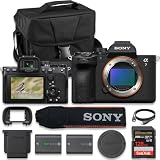
This is the body-only listing for the Alpha 7 V, and it is the pick for shooters who need speed above all else. The listing states 30fps blackout-free shooting, AI autofocus and 5-axis in-body stabilisation — a combination aimed squarely at people photographing fast subjects while also delivering video. It suits sports and action photographers, event shooters covering unpredictable movement, and hybrid creators who film and photograph the same fast-moving scene within minutes of each other.
Key specifications
- Sensor: full-frame 36 × 24mm class
- Burst: 30fps blackout-free electronic shooting, as stated in the listing
- Autofocus: AI-driven subject recognition and tracking across stills and video
- Stabilisation: 5-axis in-body image stabilisation
- Mount: Sony E, 18mm flange distance
- Video: full-width 4K with log profiles and 10-bit recording in this generation
- Weight: approximately 700g class body
Strengths
Blackout-free shooting is the headline, and it deserves the attention. On a conventional mirrorless camera, the viewfinder goes dark for a fraction of a second with each frame, which makes it very difficult to keep a fast-moving subject under your autofocus point. A blackout-free finder shows a continuous image, so you can track a sprinter, a bird or a dancer through a burst and keep the focus point where you want it. For hybrid shooters this also means switching to video mid-action feels natural, because the framing behaviour in the finder is consistent between modes.
AI subject recognition is the second pillar. Rather than relying on you to place a point on a face or an eye, the camera identifies the subject type and holds onto it, reacquiring it after it passes behind an obstacle. In practice this reduces the number of near-miss frames and makes continuous video autofocus far more usable for solo shooters working without a focus puller.
Five-axis in-body stabilisation adds another layer. It steadies handheld stills at slower shutter speeds and smooths handheld video, and because it is sensor-based it works with any lens you mount, including third-party glass and adapted manual lenses. Combined with the E-mount’s enormous lens catalogue, that flexibility is what makes this body a genuine long-term hybrid platform rather than a one-trick action camera.
Pros
- 30fps blackout-free shooting keeps fast subjects continuously visible
- AI subject recognition improves both stills and video hit rates
- 5-axis in-body stabilisation works with every lens mounted
- Full-frame sensor for low light and depth-of-field control
- Widest third-party lens ecosystem of any mirrorless mount
- Consistent finder behaviour when switching between photo and video
Cons
- Mid-range price tier with no lens included
- High-speed bursts fill buffers and cards quickly
- Full-frame lenses add bulk and cost to the overall kit
- Battery drain is higher when using the fastest burst modes
- No bundled accessories, unlike the a7 V bundle listing
How it compares
Against the a7 V bundle, this is the same camera without the spare battery and bag — buy the bundle if you need those, buy this if you already have them. Against the Nikon Z 8, the Alpha 7 V gives up resolution and internal RAW video but weighs around 200g less and costs a tier less, while matching or exceeding it for burst speed and subject tracking. Against the Canon EOS R6 Mark III, the Sony wins on blackout-free speed and lens ecosystem breadth; the Canon wins on bundled lens value and in-body stabilisation when paired with a stabilised zoom.
6. Canon EOS R6 Mark III Mirrorless Camera with 24-105mm Lens Bundle – Best Premium All-Rounder
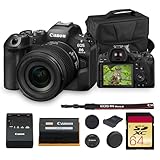
The R6 Mark III with a 24-105mm zoom is the premium kit for shooters who want one body and one lens that cover almost everything. It suits working wedding and event photographers, portrait studios adding video, and serious enthusiasts who want full-frame quality without juggling lenses on a job. The 24-105mm range is the classic working zoom: wide enough for interiors and group shots, long enough for head-and-shoulders portraits and event candids.
Key specifications
- Sensor: full-frame 36 × 24mm, 30MP class
- Mount: Canon RF, 20mm flange distance, 54mm throat
- Autofocus: Dual Pixel phase-detection with deep-learning subject detection for people, animals and vehicles
- Stabilisation: in-body image stabilisation coordinated with lens optical stabilisation
- Video: oversampled 4K, high-frame-rate modes, 10-bit log recording
- Cards: dual slots
- Lens included: 24-105mm standard zoom
- Weight: approximately 700g class body
Strengths
The R6 Mark III’s defining strength is that it is equally comfortable in both modes. Dual Pixel autofocus has been the benchmark for continuous video autofocus for years, and the subject-detection layer means the camera finds and holds a face even when the subject turns away or moves behind another person. For a hybrid shooter working solo, that reliability is worth more than any specification on a sheet.
Coordinated stabilisation is the second advantage. When a Canon stabilised lens is mounted, the body and lens systems work together rather than independently, which produces noticeably smoother handheld footage and steadier slow-shutter stills. Combined with the 24-105mm zoom’s focal range, this makes the kit genuinely usable for handheld documentary and event coverage without a gimbal or monopod.
The 30MP class sensor is a deliberate middle ground: enough resolution to crop and still deliver, not so much that files become unwieldy or high-ISO performance suffers. Dual card slots give you backup on paid work, and Canon’s log profile and colour science are well understood by editors and colourists, which shortens post-production. The RF mount’s wide throat and short flange distance allow Canon to design very fast and very compact lenses, and the system has filled out considerably since launch.
Pros
- Standard 24-105mm zoom included — a complete working kit out of the box
- Dual Pixel subject-detection autofocus is excellent for continuous video
- In-body stabilisation coordinates with lens stabilisation
- 30MP class sensor balances detail, file size and high-ISO performance
- Dual card slots for paid work redundancy
- 10-bit log video and high-frame-rate modes for grading flexibility
Cons
- Premium price tier
- RF lens prices are generally higher than third-party E-mount equivalents
- Fewer affordable third-party autofocus lenses than the Sony system
- Body plus 24-105mm zoom is a substantial carry weight for a full day
- Bundle lens specification varies, so confirm exactly which 24-105mm is included
How it compares
Against the Sony Alpha 7 V, the R6 Mark III trades blackout-free burst speed for a bundled zoom and stabilisation that works in tandem with the lens. For a buyer who needs a lens in the box, the Canon kit is the more complete purchase; for a buyer who already owns E-mount glass, the Sony body is the more flexible upgrade. Against the Nikon Z 8, the R6 Mark III is lighter, cheaper and comes with a lens, while giving up resolution, internal RAW video and 8K-class capture. Against the Canon EOS RP, it is a different class of camera entirely — worth the step up if your work is paid.
7. Sony Alpha a6400 – Best Compact Budget Hybrid

The a6400 remains the benchmark budget hybrid because its autofocus is genuinely better than bodies costing considerably more. It suits first-time mirrorless buyers, vloggers, students