Key takeaways
- Stainless Steel Lined: The standard for quality. Look for shakers described as “copper-plated stainless steel” or “solid copper with stainless lining.” The lining should be visible at the rim. It is non-reactive, dishwasher-tolerant (though hand washing preserves the copper exterior), and does not affect chilling performance in a meaningful way for home use.
- Nickel Lined: Found on some traditional solid copper shakers, including those from makers like Sertodo Copper. Food-safe and non-reactive, but nickel can develop a cloudy patina and is slightly more delicate than stainless. Requires gentle hand washing.
- Unlined: Only appropriate for serving, not shaking. Avoid for any recipe containing lemon, lime, or pineapple juice.
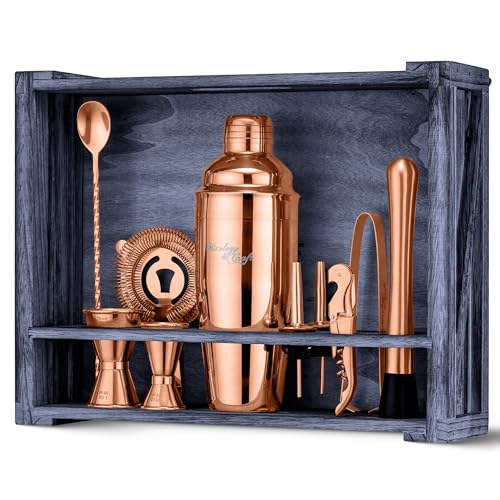
The best copper cocktail shakers for home bars in 2026 are copper-plated stainless steel shakers with a stainless steel interior lining and a cobbler or Parisian seal for most home users, while solid copper shakers are worth the extra cost and care only if you prioritize maximum chill and classic aesthetics for frequent entertaining.
Our top picks


As an Amazon Associate we earn from qualifying purchases at no extra cost to you. Ratings are shown as listed on Amazon.
Solid Copper vs. Copper-Plated Steel: The Core Decision
This is the single most important choice and it affects weight, performance, price, and maintenance more than any other feature.
Solid Copper
Made from a single sheet of pure copper, typically 18-gauge (1.0mm to 1.2mm thick). Copper conducts cold about 20 times faster than stainless steel, so the shaker frosts over almost instantly and chills drinks seconds faster. The trade-off is significant: solid copper is heavy, soft, and dents easily. It also reacts with citrus and other acidic ingredients, which can cause a metallic taste and discoloration if the interior is not lined. Unlined solid copper also requires hand polishing to prevent tarnish and should never go in a dishwasher. Expect a general market range of $70 to $180 for a two-piece Boston set.
Copper-Plated Stainless Steel
This is a stainless steel shaker with a thin copper coating on the exterior applied by electroplating. You get the copper look with the durability, light weight, and non-reactive properties of stainless steel. The interior is always stainless steel, so there is no metallic taste and cleanup is easy. The plating will wear over time, especially with abrasive scrubbing or dishwasher use, revealing the silver steel underneath. This is cosmetic, not functional. For 90% of home bars, this is the most practical choice. Market range is typically $25 to $60.
Lining: Why It Determines Taste and Safety
Never buy an unlined solid copper shaker for cocktails. Citrus juice, vermouth, and other acidic mixers will react with bare copper, leaching copper into the drink and creating a sharp, unpleasant flavor.
- Stainless Steel Lined: The standard for quality. Look for shakers described as “copper-plated stainless steel” or “solid copper with stainless lining.” The lining should be visible at the rim. It is non-reactive, dishwasher-tolerant (though hand washing preserves the copper exterior), and does not affect chilling performance in a meaningful way for home use.
- Nickel Lined: Found on some traditional solid copper shakers, including those from makers like Sertodo Copper. Food-safe and non-reactive, but nickel can develop a cloudy patina and is slightly more delicate than stainless. Requires gentle hand washing.
- Unlined: Only appropriate for serving, not shaking. Avoid for any recipe containing lemon, lime, or pineapple juice.
Seal Type and Weight: What Makes a Shaker Leak-Proof
A beautiful copper finish means nothing if the shaker leaks or is too heavy to use comfortably.
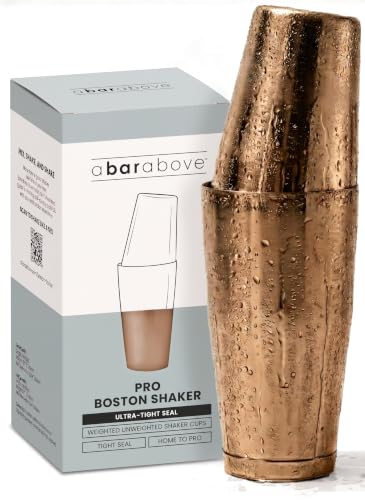
1. Boston Shaker (Two-Piece)
Consists of a large shaker tin and a smaller mixing glass or tin. Creates a seal by flexing the metal when you give it a firm tap. Pros: Largest capacity, fastest to open and close, preferred by professionals for speed. Cons: Requires technique to seal correctly; beginners often get leaks. Needs a separate strainer (Hawthorne or Julep).
2. Cobbler Shaker (Three-Piece)
Includes a tin, a built-in strainer, and a cap that doubles as a jigger. Pros: Easiest for beginners, no extra tools needed, very leak-resistant when the cap is seated properly. Cons: The built-in strainer can clog with muddled fruit, and the cap can freeze shut if you over-shake. The seal relies on a threaded or friction fit, which can wear.
3. Parisian / French Shaker (Two-Piece)
A hybrid: two tins like a Boston but with a more elegant, rounded shape and often a tighter friction seal. Pros: Better leak resistance than a classic Boston with a more stylish profile than a Cobbler. Cons: Still requires a separate strainer and some technique.
Weight matters: An ideal shaker for home use weighs between 280g and 450g empty. Under 280g feels flimsy and may not seal well. Over 600g (common with solid copper) causes hand fatigue during a 12-15 second hard shake and makes one-handed pouring difficult. If you make 3-4 drinks in a row, a lighter copper-plated model is far more comfortable.
Spec Comparison: Common Copper Shakers for Home Bars
This table compares the types you will actually find in 2026, with concrete specs that affect daily use. Capacities are listed as usable capacity, which is slightly less than total volume.
| Type and Example Brand | Exterior Material | Interior Lining | Usable Capacity | Empty Weight | Seal Type |
|---|---|---|---|---|---|
| Sertodo Copper Boston Shaker Set | Solid Copper, 18-gauge | Stainless Steel | 28 oz / 828 ml (large tin) | 620g / 21.9 oz (set) | Boston Friction |
| Viski Copper-Plated Cobbler Shaker | Copper-Plated Stainless Steel | Stainless Steel | 16 oz / 473 ml | 320g / 11.3 oz | Cobbler with Cap & Strainer |
| Barfly by Mercer Copper-Plated Cobbler | Copper-Plated Stainless Steel | Stainless Steel | 17 oz / 503 ml | 345g / 12.2 oz | Cobbler with Cap & Strainer |
| Cocktail Kingdom Leopold Copper-Plated Parisian | Copper-Plated Stainless Steel | Stainless Steel | 19 oz / 562 ml | 298g / 10.5 oz | Parisian Friction |
| Old Dutch Solid Copper Cobbler | Solid Copper, 20-gauge | Nickel Lined | 16 oz / 473 ml | 540g / 19.0 oz | Cobbler with Cap & Strainer |
Takeaway: Solid copper adds 200g to 300g of weight and requires nearly double the price for only a marginal improvement in chill time. For most home shaking, the difference is under 5 seconds of shaking time.
Which Copper Shaker Should You Choose?
Match your situation to the right format instead of choosing by looks alone.
| Your Situation | Best Choice | Why |
|---|---|---|
| Beginner, 1-4 drinks per week, wants easy cleanup | Copper-Plated Cobbler, 16-17 oz | Built-in strainer, leak-proof cap, lightweight, stainless lining prevents flavor issues |
| Intermediate, wants to learn pro technique, hosts often | Copper-Plated Parisian or Boston, 19-28 oz | Larger capacity for two drinks at once, faster workflow, still easy to maintain |
| Design-focused home bar, infrequent use, displays shaker on shelf | Solid Copper Boston or Cobbler, Nickel or Stainless Lined | Heavier, more luxurious feel and the deepest copper color, patina develops naturally |
| Small kitchen / limited storage, makes stirred and shaken drinks | Copper-Plated Parisian, under 300g | Slim profile stores easily, works with a single Hawthorne strainer for all drinks |
| Budget under $40 | Copper-Plated Stainless, any Cobbler from Viski or OXO Steel style lines | Avoids peeling and taste problems of ultra-cheap unlined copper |
Durability and Ownership: What Wears First and How to Prevent It
Copper is a soft, living finish. Understanding wear helps you keep the shaker looking and functioning well.
- The first thing to wear is the exterior plating or shine. On plated shakers, abrasive sponges, citrus residue left overnight, and dishwashers will dull and thin the copper layer, especially on the rim and cap. On solid copper, the high polish will naturally darken into a brown patina within 2-3 months and may develop green verdigris spots if left wet. This is normal oxidation.
- The second failure point is the seal. Cobbler caps warp slightly if forced when frozen. Boston tins dent if dropped, preventing a tight seal and causing leaks. Store tins nested but not jammed together, and never pry a stuck cap with a knife.
- Common mistakes to avoid: Soaking a copper shaker overnight, using steel wool, storing juice or finished cocktails in the shaker for more than an hour, and polishing the interior lining. The interior should never be polished.
Step-by-Step Care for Long Life
Proper care takes 30 seconds and prevents 90% of damage.
- 1. Rinse immediately after shaking with warm water. Acidic residue is the main cause of tarnish.
- 2. Hand wash with mild dish soap and a soft sponge. Wash the interior and exterior separately.
- 3. Dry immediately and completely with a soft towel. Do not air dry, as water spots will etch the copper.
- 4. For solid copper, restore shine monthly if desired: apply a paste of equal parts white vinegar, flour, and salt, rub gently with a soft cloth, rinse thoroughly, and dry. For plated copper, skip this step and simply buff with a dry microfiber cloth. Do not use copper polish on plated shakers.
- 5. Store dry with the lid off to allow airflow and prevent trapped moisture.
Cost per use calculation: A $35 copper-plated shaker used twice a week for three years costs about $0.11 per use ($35 / 312 uses). A $140 solid copper set used at the same frequency costs $0.45 per use, plus $8-$12 per year in polish and cloths. If you shake less than weekly, the plated option is far more economical.
Final Buying Checklist
Before you buy, confirm these four details in the product description:
- Interior is explicitly listed as stainless steel or nickel lined.
- Capacity is 16 oz or larger for a Cobbler, 18 oz or larger for a Boston/Parisian tin, to allow proper ice movement.
- Weight is listed and falls between 280g and 450g if you want comfortable daily use.
- Replacement lids or caps are available. A lost Cobbler cap renders the shaker unusable.
Frequently Asked Questions
Does copper keep cocktails colder than stainless steel?
Yes, but only slightly in practice. Solid copper chills faster to the touch and may reduce shaking time by 2-4 seconds. Once strained into a glass, the final drink temperature is nearly identical. Glass chilling and ice quality have a larger impact than shaker material.
Is it safe to shake citrus in a copper shaker?
It is safe only if the shaker has a full stainless steel or nickel lining. Do not shake lemon, lime, or other acidic ingredients in an unlined copper shaker. The lining prevents copper from reacting with acid.
Why is my copper shaker turning dark or green?
Darkening is natural copper oxidation forming a patina. Green spots (verdigris) form when copper is left wet or acidic. Both are prevented by immediate washing and thorough drying. The patina can be removed with a vinegar-based polish if you prefer a bright finish.