Key takeaways
- 70 watts ÷ 1,000 = 0.07 kilowatt-hours per hour.
- 0.07 × 8 hours = 0.56 kilowatt-hours per night.
- At an electricity rate of $0.20 per kilowatt-hour, the cost is about $0.11 per night.
- Used 120 nights, that is approximately $13.44 for that side.
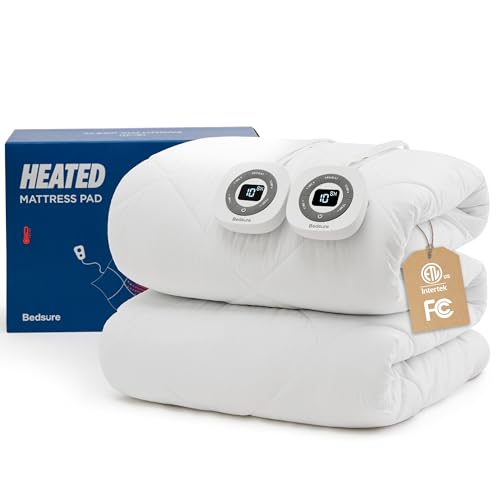
The best electric heated mattress pads for 2026 are those that combine independently controlled heat zones, soft washable fabric, a reliable automatic shut-off and a close fit for your mattress—not simply the highest temperature setting.
Our top picks


As an Amazon Associate we earn from qualifying purchases at no extra cost to you. Ratings are shown as listed on Amazon.
Quick picks by sleeping situation
| Best for | Look for | Recommended pad type | Typical price range |
|---|---|---|---|
| One person sharing a bed | Dual controllers and separate body zones | Queen or king dual-zone heated mattress pad | $80–$180 |
| Lowest upfront cost | Single controller, 5–10 heat settings | Polyester quilted pad in the correct mattress size | $35–$80 |
| Softest feel | Plush polyester, fleece or cotton-blend top; thin wiring | Quilted or plush-top heated pad | $70–$160 |
| Deep or pillow-top mattress | Fitted skirt or elastic pocket depth of at least 18 inches | Deep-pocket heated mattress pad | $70–$170 |
| Frequent washing | Removable controllers, machine-washable construction and low-heat drying instructions | Washable quilted pad with detachable cords | $60–$150 |
What separates the best electric heated mattress pads
Heating zones and controller design
A single-zone pad heats the whole sleeping surface together. It is usually cheaper and simpler, but it wastes energy if only one sleeper wants warmth. Queen- and king-size pads commonly offer two independently controlled zones, allowing each side to use a different setting or remain switched off.
Check what “dual control” actually means. On some pads, each controller operates one half of the mattress. On others, the controls adjust broad sections but do not provide precise head-to-foot zoning. More heating zones are not automatically better: additional wiring and connection points can add complexity, while a well-designed two-zone pad is sufficient for most shared beds.
Look for at least five heat levels. Ten settings provide finer adjustment, but the useful difference between settings depends on the thermostat and sensor placement. A preheat function is convenient for warming the bed before getting in; it should not be treated as a reason to leave the pad running unattended for long periods.
Fabric softness and wire feel
The pad sits between you and the mattress, so its cover affects comfort more than the controller does. Quilted polyester is common because it dries relatively quickly and resists wrinkling. Fleece or plush polyester feels warmer and softer, but can retain more heat and may pill sooner with rough washing. Cotton-blend covers can feel less slippery and breathe better, although they may cost more and take longer to dry.
Thin, flexible heating wires should be difficult to identify through normal bedding. If you can clearly feel ridges when lying still, a mattress topper placed above the heated pad may improve comfort, but only if the manufacturer permits it and the topper does not trap excessive heat. Never fold, bunch or sharply crease a powered pad.
Safety shut-off and electrical protection
An automatic shut-off is essential. Common shut-off periods range from 2 to 12 hours, with 10 hours being useful for overnight use. A shorter timer is preferable if you only want preheating. Also check for overheating protection, a controller that displays the selected setting clearly and a detachable connection that can be removed before washing.
Use the pad exactly as directed: keep it flat, do not use it on an adjustable bed unless specifically approved, and do not place heavy objects over it. Inspect the controller, plug and cord for damage each season. People who are unable to reliably sense heat or respond to overheating should ask a healthcare professional whether using an electric heated pad is appropriate.
Head-to-head: the main pad types
| Pad type | Strengths | Trade-offs | Best match |
|---|---|---|---|
| Basic single-zone polyester | Lowest price, simple controls, usually light | Both sleepers share one temperature; thinner fabric may feel less luxurious | Solo sleepers and occasional use |
| Dual-zone quilted | Separate settings, better energy control, comfortable everyday design | More expensive and includes two controllers | Couples with different temperature preferences |
| Plush or fleece-top | Soft surface, warm feel even at lower settings | Can retain more heat and require careful low-temperature drying | Cold bedrooms and comfort-focused buyers |
| Water-resistant or mattress-protective | Helps protect the mattress from everyday spills | May feel less breathable or less soft than a conventional quilted cover | Homes needing easier surface protection |
| Deep-pocket fitted | Stays in place on thicker mattresses and some toppers | Extra fabric can fit poorly on a shallow mattress | Pillow-top and hybrid mattresses |
Size and fit: measure before buying
Buy the pad for the mattress size, not the sheet size. Typical mattress dimensions are about 38 by 75 inches for twin, 54 by 75 inches for full, 60 by 80 inches for queen, 76 by 80 inches for king and 72 by 84 inches for California king. Check the product’s actual dimensions because some pads leave a small unheated border.
Measure the mattress thickness, including any permanently fitted topper. A standard pocket may accommodate roughly 12 to 15 inches, while deep-pocket models often reach 17 to 21 inches. Do not force a shallow fitted skirt over a thick mattress: tension can pull the pad out of position and stress its seams or wiring.
The controller outlet is another practical fit issue. If the bed is against a wall or has a low platform, confirm that the cord can reach a nearby outlet without running beneath the mattress, across a walkway or under a rug.
Energy use: a realistic cost calculation
Most heated mattress pads draw far less electricity than a portable room heater. A typical pad may be rated around 60–120 watts per side, depending on size and heat setting. Actual consumption cycles on and off as the thermostat maintains temperature.
For example, assume one side averages 70 watts while warming and runs for 8 hours:
- 70 watts ÷ 1,000 = 0.07 kilowatt-hours per hour.
- 0.07 × 8 hours = 0.56 kilowatt-hours per night.
- At an electricity rate of $0.20 per kilowatt-hour, the cost is about $0.11 per night.
- Used 120 nights, that is approximately $13.44 for that side.
This is an estimate, not a guarantee. A larger dual-zone pad, a high setting or a cold room can increase consumption. Turning off the unused side can make a meaningful difference over a season.
Washability and long-term ownership
Choose a pad with fully detachable controllers and follow the care label rather than assuming every “machine-washable” model can be treated like ordinary bedding. A common maintenance routine is:
- Unplug the pad and detach every controller and power connector.
- Check the fabric and cable entry points for fraying, discoloration or exposed wiring.
- Wash on the specified gentle cycle with mild detergent; avoid bleach and fabric softener unless the instructions allow them.
- Dry only as directed. Low heat or air drying is generally safer than high heat, but the manufacturer’s instructions take priority.
- Do not reconnect or store the pad until it is completely dry.
- Store it loosely rolled or folded without placing heavy items on top.
The areas most likely to wear first are the controller cable, the connector near the edge of the mattress and the fitted skirt’s elastic. Repeated high-heat drying, folding along the same line and pulling the pad sideways while making the bed can shorten its useful life. A mattress pad that develops hot spots, smells of overheated plastic, has damaged wiring or behaves erratically should be unplugged and replaced rather than repaired at home.
Which one should you choose?
- Choose a basic single-zone pad if one person uses the bed or you need occasional preheating at the lowest price.
- Choose a dual-zone queen or king if two sleepers have different preferences. It usually offers the best balance of comfort and energy control.
- Choose a plush-top pad if surface softness matters most, but confirm that you will be comfortable with its warmer, less breathable feel.
- Choose a deep-pocket model for a thick mattress or topper, and verify the pocket measurement rather than relying on the word “deep.”
- Choose a strongly washable design for frequent use, especially if the pad will be laundered several times each season.
The best electric heated mattress pads are therefore situation-dependent: prioritize dual controls for shared beds, pocket depth for mattress fit, a soft but durable cover for nightly use, and a clear automatic shut-off for safer operation. Energy demand is usually modest, but correct washing and careful cable handling will matter more to ownership value than a long list of heat settings.