Key takeaways
- Weekend (1-3 days, 28-35L): Top or panel loading is fine. You need one main compartment, a laptop sleeve, and a water bottle pocket. Hip belts can be stowable.
- Week-long (4-7 days, 40-45L): Full clamshell opening, internal compression straps, and a padded hip belt become essential for weight distribution. Look for 500D+ fabrics in high-wear zones.
- Extended (8+ days or gear-heavy, 45-65L): Prioritize adjustable torso length, load lifters, and a frame sheet or perimeter frame. Detachable daypacks or expandable sections help when you need to separate day-use gear.
The best travel backpack recommendations depend on trip length and budget: for 1-3 day trips choose a 28-35L carry-on pack under $150, for 4-7 day trips choose a 40-45L carry-on with laptop protection and lockable zippers in the $150-$250 range, and for 2+ week or multi-climate travel choose a 45-65L expandable or hybrid pack over $250 with durable fabrics and a load-bearing harness.
Our top picks



As an Amazon Associate we earn from qualifying purchases at no extra cost to you. Ratings are shown as listed on Amazon.
How to Choose by Trip Length, Not Just Volume
Capacity is misleading if you ignore how you pack and where you carry. A 40L pack that is 22 x 14 x 9 inches will pass most airline carry-on sizers, while a 45L pack of the same volume but with a taller profile often will not. If you fly budget airlines or pack for one-bag travel, prioritize dimensions and clamshell opening over raw liters. If you check bags or travel by train and car, prioritize suspension and expandability.
- Weekend (1-3 days, 28-35L): Top or panel loading is fine. You need one main compartment, a laptop sleeve, and a water bottle pocket. Hip belts can be stowable.
- Week-long (4-7 days, 40-45L): Full clamshell opening, internal compression straps, and a padded hip belt become essential for weight distribution. Look for 500D+ fabrics in high-wear zones.
- Extended (8+ days or gear-heavy, 45-65L): Prioritize adjustable torso length, load lifters, and a frame sheet or perimeter frame. Detachable daypacks or expandable sections help when you need to separate day-use gear.
Travel Backpack Comparison: Specs That Affect Fit and Durability
Marketing liters do not tell you how a pack carries. Weight, fabric denier, and harness design determine comfort when the bag is fully loaded for 8 hours of transit.
| Pack Model (Type) | Capacity | Weight | Dimensions (Approx.) | Main Fabric | Carry System |
|---|---|---|---|---|---|
| Osprey Farpoint 40 (Carry-On Travel) | 40L | 3.5 lbs / 1.59 kg | 22 x 14 x 9 in / 56 x 36 x 23 cm | 210D ripstop nylon / 600D packcloth | LightWire frame, stowable harness + hip belt |
| Peak Design Travel Backpack 45L (Expandable Photo/Travel) | 35L / 45L expanded | 4.58 lbs / 2.08 kg | 22 x 13 x 10 in / 56 x 33 x 25 cm | 400D nylon canvas, DWR finish | Padded shoulder straps, removable waist strap |
| Tortuga Outbreaker 45L (Max Carry-On) | 45L | 4.6 lbs / 2.09 kg | 22 x 14 x 9 in / 56 x 36 x 23 cm | 840D ballistic nylon (X-Pac sailcloth option) | Adjustable torso, load lifters, hip belt |
| Cotopaxi Allpa 35L (Budget-Friendly Carry-On) | 35L | 3.0 lbs / 1.36 kg | 20 x 12 x 9 in / 51 x 30 x 23 cm | 1000D polyester TPU-coated | Removable harness, low-profile hip belt |
| Patagonia Black Hole MLC 45L (Hybrid Duffel/Backpack) | 45L | 3.4 lbs / 1.54 kg | 22 x 14 x 10 in / 56 x 36 x 25 cm | 450D ripstop recycled polyester, TPU laminate | Stowable backpack straps + duffel handles |
Takeaway: Under 3.5 lbs feels significantly lighter for city hopping, but sub-3.5 lb packs often use lighter 210D-450D fabrics that sacrifice abrasion resistance. Packs over 4.5 lbs with 840D-1000D fabrics handle checked-bag abuse and overpacking better but add fatigue on long walking days.
Recommendations by Budget
Budget Range: Under $150
Best for occasional travelers and students who need a functional carry-on without suspension refinements.
- Cotopaxi Allpa 35L or REI Ruckpack 40: Both offer clamshell zippers, internal mesh dividers, and TPU or polyester shells that resist light rain. You get basic shoulder straps and a minimal hip belt. Expect fewer adjustment points and lighter padding.
- What you trade off: Heavier feel when loaded above 20 lbs, no adjustable torso length, and zippers that are typically YKK but not lockable without aftermarket locks.
- Best trip match: Weekend to 5-day travel where you pack light and walk less than 2-3 miles per transit day.
Mid-Range: $150-$280
This is the sweet spot for most one-bag travelers. You get real load management without premium pricing.
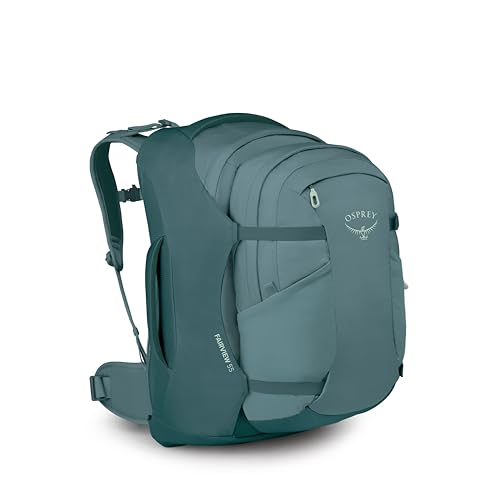
- Osprey Farpoint/Fairview 40 and Patagonia Black Hole MLC 45L: Both meet carry-on dimensions for major US and EU airlines, include stowable harnesses so straps stay protected when checked, and use more water-resistant coatings.
- Why this tier wins for a week: Compression straps keep a half-full 40L pack stable, dedicated 15-16 inch laptop sleeves are suspended off the bottom, and fabrics in the 400D-600D range balance weight and tear strength.
- Best trip match: 4-10 day trips, digital nomad stays, or mixed city and transit itineraries where you live out of the bag.
Premium: $280 and Up
Pay for fit system, materials, and modularity if you travel monthly or carry camera and tech gear.
- Peak Design Travel Backpack 45L and Tortuga Outbreaker 45L: Peak Design offers side access, expandability from 35L to 45L, and weatherproof 400D canvas that holds shape. Tortuga uses 840D ballistic nylon and a fully adjustable torso with load lifters that transfer weight to hips, critical above 25 lbs.
- Justification: Premium zippers (YKK RC or equivalent), reinforced bartacking at stress points, and replaceable sternum straps extend life beyond 5 years of heavy use.
- Best trip match: 2+ week trips, cold-weather layering, or carry that doubles as a camera bag.
Decision Matrix: Match Your Situation to a Pack
Use this to avoid overbuying volume or underbuying suspension.
| Your Situation | Recommended Profile | Why |
|---|---|---|
| Fly budget airlines, weekend trips, on a budget | 28-35L, under $150, under 3.5 lbs | Guaranteed carry-on compliance, lighter to run through terminals |
| One-bag for 5-7 days, mixed walking + flights | 40-45L carry-on, $150-$280, clamshell + hip belt | Balance of packing volume and weight transfer for all-day comfort |
| Long trips, heavy packing, or tall/short torso | 45L with adjustable torso, premium fabrics | Prevents shoulder fatigue; adjustability avoids fit-related back strain |
| Carry camera, drone, or two laptops | 45L expandable with padded dividers | Side access and cube compatibility replaces a separate camera bag |
| Check bag often, rough handling expected | 450D-1000D TPU laminate or ballistic nylon, stowable straps | Abrasion and snag resistance protects zippers and straps on belts |
Cost Per Use: A Quick Calculation Before You Buy
A durable backpack is long-term gear. Calculate cost per travel day to compare tiers objectively.
Formula: Cost Per Day = Purchase Price / Total Days Carried
Example: A $95 budget 35L pack used for four 3-day trips per year for 3 years = 36 total days. $95 / 36 = $2.64 per day. A $320 premium 45L pack used for six 7-day trips per year for 5 years = 210 total days. $320 / 210 = $1.52 per day. If you travel more than 15 days per year, the mid-range or premium pack often costs less over time despite the higher upfront price, because you avoid replacing a worn-out budget bag after 2-3 years.
To estimate durability, assume budget polyester packs last 150-250 travel days before zipper or coating failure, mid-range nylon packs last 300-500 days, and premium ballistic nylon packs last 500+ days with care.
Durability and Ownership Realities
What wears first is predictable and preventable.
- Zippers fail first: The main clamshell zipper and laptop compartment take the most stress. Avoid overstuffing beyond the zipper line and use two-way sliders to reduce corner strain. Lockable YKK zippers with larger coil size (#8 or #10) snag less than smaller fashion zippers.
- DWR coating fades: Water-repellent finishes on 210D-400D nylons wear off in 12-18 months of frequent use. Reapply a DWR spray after washing. TPU-laminated fabrics like Patagonia Black Hole resist water longer but can delaminate if stored compressed while damp.
- Strap foam compresses: Thin shoulder straps pack flat for checking but compress permanently under 25+ lb loads. If you routinely carry 20 lbs or more, choose 15mm+ foam with load lifters.
- Common mistakes: Dragging a backpack on wheels or ground abrades the bottom panel, machine washing with detergent strips coatings, and storing with food residue invites zipper corrosion.
Cleaning and Maintenance Steps
Reason for each step included. This extends zipper and fabric life by years.
- Empty all pockets and shake out debris first so grit does not grind into zipper teeth during washing.
- Hand wash with lukewarm water and a technical gear wash, not standard detergent, because detergent leaves residue that degrades DWR.
- Use a soft brush on the harness and hip belt where sweat and oils accumulate; air dry fully open and out of direct sun to prevent UV fading and foam breakdown.
- Lubricate zippers with a dry wax or zipper lubricant twice a year, then run the slider back and forth to distribute.
- Store uncompressed with zippers closed in a dry place; stow the harness to avoid permanent creasing.
Organization Compared: Which Layout Saves Time?
Organization determines whether you unpack everything to find one item.
- Clamshell (Osprey Farpoint 40, Cotopaxi Allpa 35L): Opens like a suitcase, best for folded clothes and packing cubes. Fastest for TSA checks and hotel living.
- Top + Front Hybrid (REI Ruckpack 40, North Face Base Camp Duffel-style packs): Good for stuffing layers on top, slower to access bottom items. Better for outdoor segments where duffel access is acceptable.
- Expandable Side Access (Peak Design 45L): Lets you pull a camera cube or laptop without opening the whole bag. Ideal if you work during transit or shoot photos.
If you pack with cubes, any clamshell 40L holds 4-5 days of warm-weather clothing or 3-4 days with a jacket. Without cubes, the same bag holds 20-30% less due to dead space.
Final Picks by Trip Type
Weekend city break on a budget: Cotopaxi Allpa 35L – light, compact, and fits under-seat on some airlines when not fully packed.
Week-long one-bag travel (most travelers): Osprey Farpoint 40 – the reference carry-on size with a real frame and stowable straps for checking.
Heavy or long-haul travel where comfort matters: Tortuga Outbreaker 45L – adjustable torso and high-denier shell justify the weight.
Gear-heavy or photo travel: Peak Design Travel Backpack 45L – expandability and modular access replace a second bag.
FAQ
Is a 40L backpack actually carry-on size?
Often yes if it measures 22 x 14 x 9 inches or smaller. Many 40L packs are designed to that limit, but 45L packs may exceed depth when fully packed. Measure when packed, not empty, and confirm your airline’s sizer.
Do I need a hip belt for travel?
For loads under 15 lbs and short walks, a stowable or removable belt is fine. For 20 lbs and above or multi-mile walks, a padded hip belt with load lifters reduces shoulder pressure significantly.
How do I know my torso size?
Measure from the C7 vertebra (bony bump at base of neck) to the iliac crest (top of hip bone). Most travel packs fit 16-20 inch torsos; only Tortuga and some Osprey models offer true adjustable torso ranges. If you are under 5’4″ or over 6’1″, prioritize adjustability.