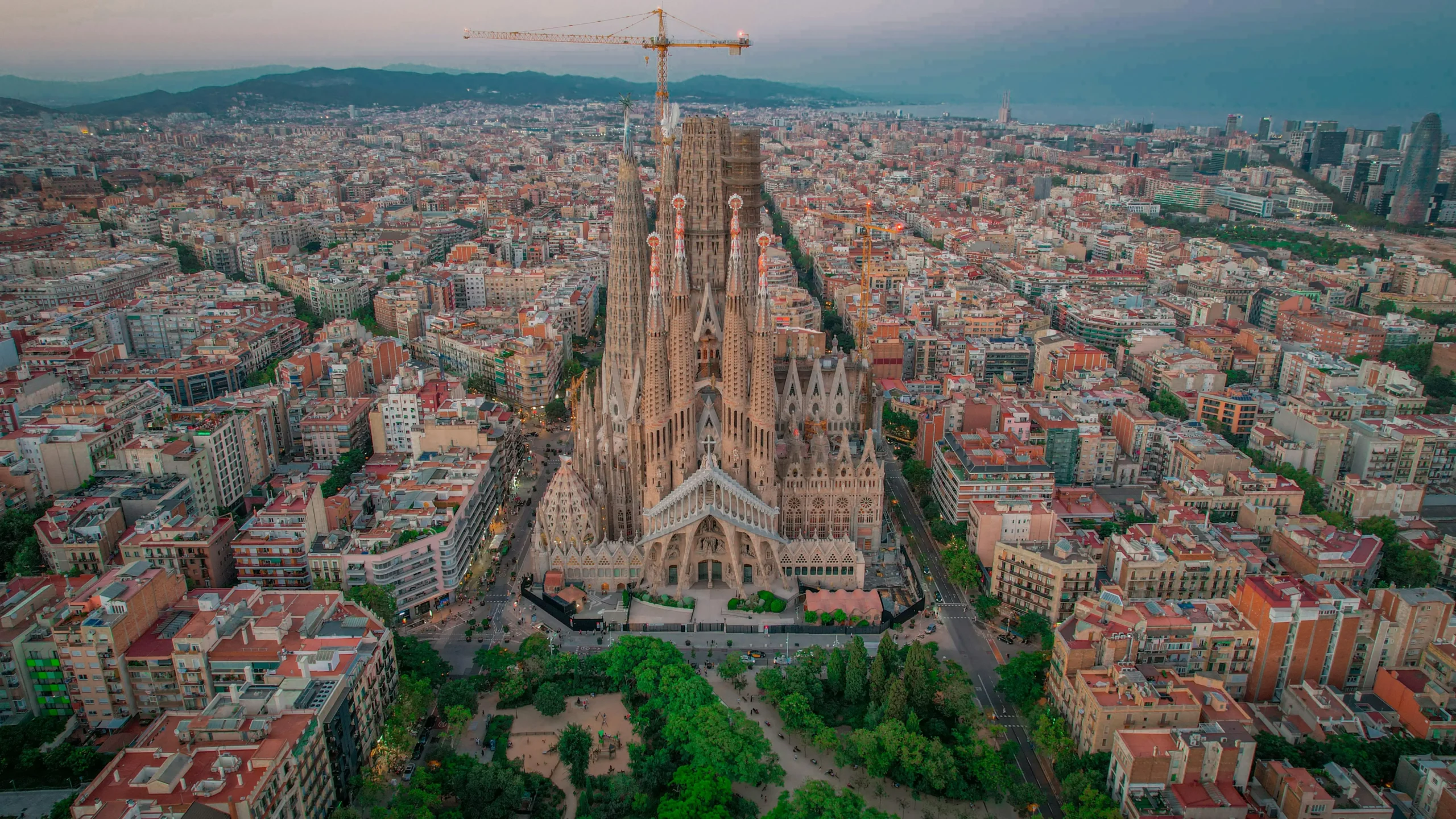
La Sagrada Familia Inside: 7 Secrets You Didn’t Know About It
Table of Contents
Picture this: You’re standing beneath a canopy of stone branches, sunlight pouring through windows that turn the air itself into liquid color. Your breath catches. Your camera falls to your side, forgotten. Because no photograph—not the thousands you’ve scrolled through on Instagram—could have prepared you for this moment.
That’s the power waiting for you when you explore La Sagrada Familia inside.
Most visitors arrive with eyes fixed on those famous melting spires, phones already positioned for the perfect exterior shot. But here’s what nobody tells you: the real magic happens when you step through those doors. La Sagrada Familia inside holds secrets that even Barcelona locals don’t know about, details that transform a tourist stop into an experience that’ll reshape how you think about architecture, faith, and human possibility.

Ready to discover what you’ve been missing? Let’s unlock seven secrets that will completely change your visit to La Sagrada Familia inside.
Secret #1: La Sagrada Familia Inside Reveals a Stained Glass Emotional Journey
Walk into La Sagrada Familia in the morning, and you’ll be bathed in cool blues and greens filtering through the eastern windows. These aren’t random color choices—they represent dawn, birth, and baptism. Gaudí designed this chromatic progression to mirror your spiritual journey through life itself.
Now here’s where it gets fascinating: those same columns will be painted in warm reds, oranges, and golds when you return at sunset. The western windows tell the story of passion, sacrifice, and death through their fiery palette. You’re literally walking through the lifecycle of faith, guided by nothing but colored light.
Joan Vila-Grau spent years implementing this vision, creating what amounts to a symphony in glass. The transformation happens gradually as the sun moves across the Barcelona sky, meaning your experience of La Sagrada Familia inside will be completely different depending on when you arrive.
Pro tip: Visit twice if you can—once at 9 AM for that transcendent blue glow, and again around 5 PM to witness the space completely reimagined in warm tones. Your eyes won’t believe it’s the same building.
Secret #2: Hidden Numbers Inside La Sagrada Familia Tell Biblical Stories in Code
Look carefully at the Passion Façade visible from inside, and you’ll spot something extraordinary: a magic square where every row, column, and diagonal adds up to 33—the age when Jesus was crucified. Sculptor Josep Subirachs embedded this mathematical puzzle as a tribute to sacred numerology.
But that’s just scratching the surface. Gaudí wove numbers throughout every dimension of La Sagrada Familia inside. The floor plan follows golden ratio proportions, the same mathematical principle found in nautilus shells and spiral galaxies. Twelve towers represent the apostles. Four evangelists. Three facades for the Holy Trinity.
You’re standing inside a three-dimensional biblical equation, where mathematics becomes prayer and geometry speaks theology. Most visitors walk right past these coded messages without ever realizing they’re literally surrounded by stories written in the language of numbers.
Secret #3: The Ceiling Design Inside La Sagrada Familia Defies Traditional Cathedral Construction
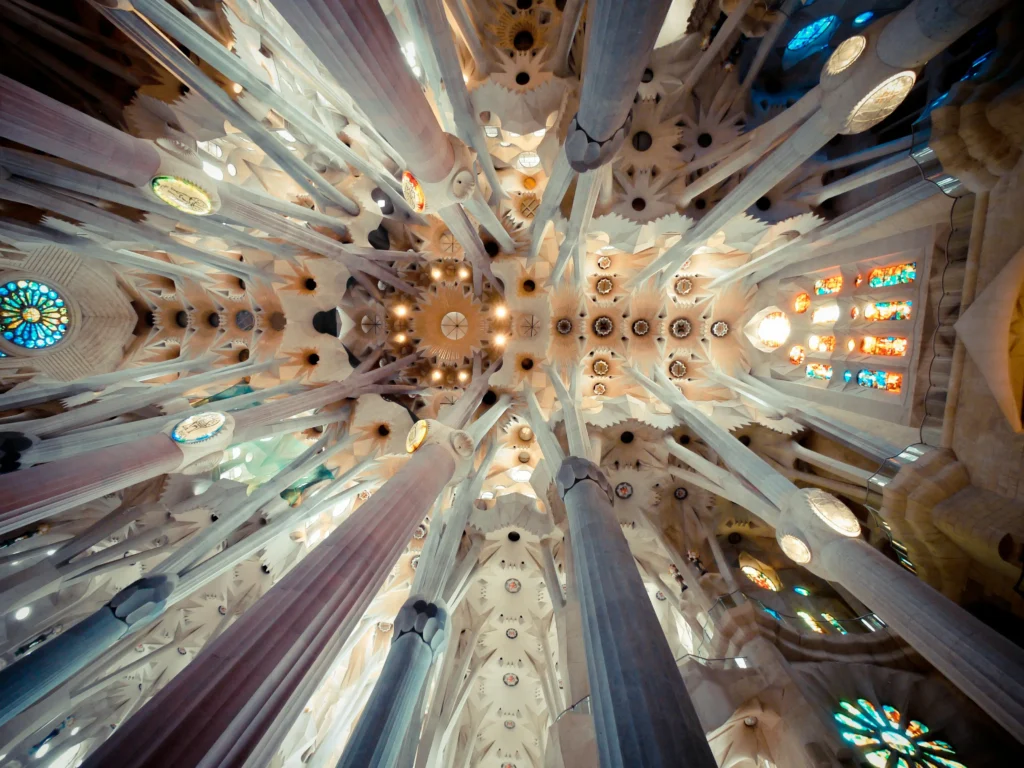
Crane your neck upward inside La Sagrada Familia, and you’ll see something that shouldn’t be structurally possible: a ceiling made of hyperbolic paraboloids—nature’s own load-bearing shape—that needs zero flying buttresses. Traditional Gothic cathedrals require those external supports to prevent walls from collapsing outward. Gaudí eliminated them entirely.
How? By designing columns that lean inward at precisely calculated angles, mimicking how trees in a forest distribute weight through their branches. He spent years hanging weighted chains from the ceiling of his workshop, photographing them, then flipping those images upside down to create the perfect structural curves.
This isn’t just innovative architecture—it’s biomimicry at its finest. You’re standing inside a stone forest where every column grows organically from the floor, branches into smaller supports, and holds up a ceiling that seems to float despite weighing thousands of tons. The engineering is so advanced that modern computer modeling confirmed Gaudí got the math right using nothing but chains, weights, and genius.
The acoustics created by these curves? Absolutely perfect for choral music. Which brings us to our next secret…
Secret #4: There’s a Massive Organ You Probably Didn’t Notice
Hidden within the nave sits an instrument with 1,492 pipes—a number chosen to commemorate Columbus’s 1492 voyage to the Americas. This isn’t decorative. When played during special masses, the organ fills La Sagrada Familia inside with sound that seems to emanate from the stones themselves.
The Blancafort Orgueners de Montserrat crafted this masterpiece to work in harmony with Gaudí’s acoustic design. Those hyperbolic curves don’t just hold up the ceiling—they distribute sound waves evenly throughout the space, eliminating the echo problems that plague most cathedral organs.
Here’s your opportunity: Check the basilica’s schedule before your visit. Attending a mass with organ music transforms the experience from visual to multisensory. You haven’t truly experienced La Sagrada Familia inside until you’ve felt those vibrations moving through your chest.
Secret #5: The Underground Museum Reveals Gaudí’s Creative Process
Most visitors never make it to the crypt museum, which is tragic because this is where you’ll find Gaudí’s actual workshop tools, original sketches, and those famous hanging chain models we mentioned earlier. These aren’t replicas—they’re the real instruments of genius.
You’ll see photographs documenting construction from the 1880s, compare them to current progress, and suddenly understand the staggering timeline we’re talking about. Over 140 years and counting. You’ll discover that Gaudí knew he’d never see completion, which is why he focused on finishing the Nativity Façade first—to show future architects exactly what he envisioned.
The museum includes interactive displays explaining how modern craftspeople use 3D printing and laser cutting to interpret Gaudí’s designs. You’re witnessing the collision of 19th-century vision with 21st-century technology, all in service of a medieval building tradition.
Bonus secret: Gaudí himself is buried in the crypt below. Few visitors realize they’re standing above the tomb of the man whose dream surrounds them.
Secret #6: The Nativity Façade Was Cast from Real People and Plants
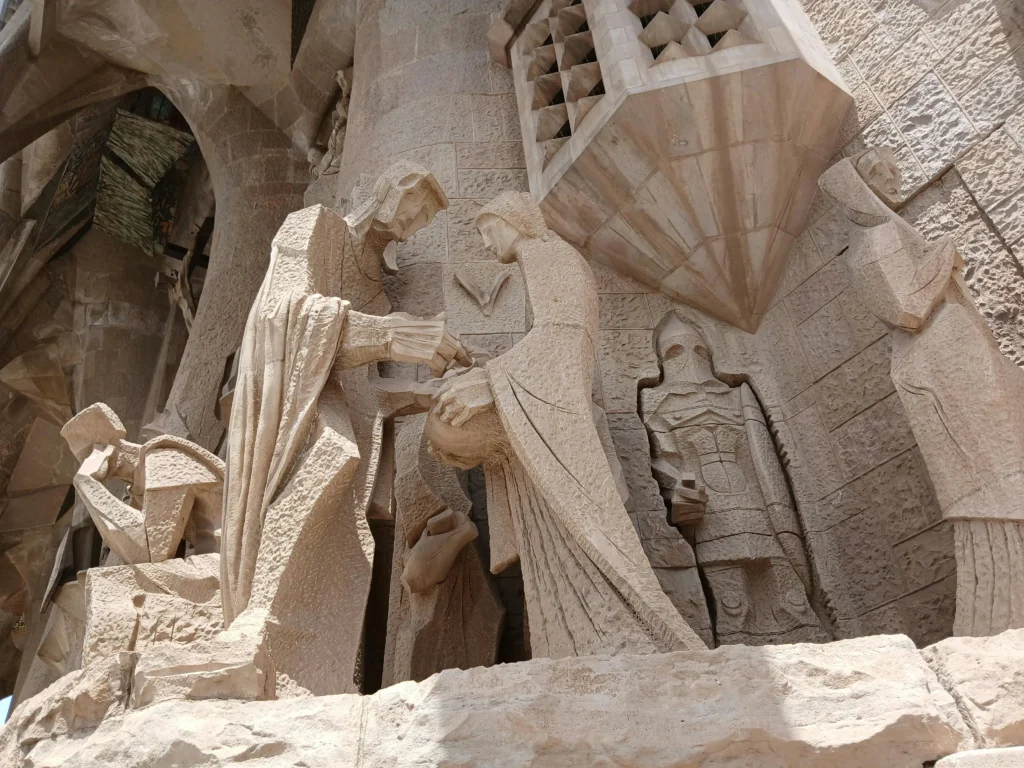
From inside La Sagrada Familia, position yourself to view the Nativity Façade, and look closely at those incredibly lifelike sculptures. There’s a reason they look so realistic: Gaudí made plaster casts of actual Barcelona residents, including children, to capture authentic human expressions.
But he didn’t stop there. Those botanical details? Cast from real plants. Every leaf, every branch, every flower is a reproduction of actual specimens Gaudí collected. At the base of columns, you’ll spot turtles and tortoises—representing land and sea—along with a chameleon symbolizing change itself.
This façade is essentially a stone photograph of early 20th-century Barcelona, frozen in time yet telling an eternal story. It’s the most “authentically Gaudí” section because he personally supervised every detail before his death in 1926. Everything built afterward follows his notes and models, but this—this is from his own hands.
Secret #7: The Unfinished Sections Are Part of the Experience
Here’s something most guidebooks won’t tell you: the fact that La Sagrada Familia inside still has active construction areas isn’t a flaw—it’s a feature. You’re witnessing the only major cathedral still being built on Earth, and that temporal collision is profound.
Peer into the workshop areas visible from certain vantage points. You might spot stonemasons using techniques passed down through generations, working alongside engineers with tablets and 3D models. Medieval craftsmanship meeting modern technology. Past shaking hands with future.
The Glory Façade—which will eventually become the main entrance—remains incomplete. Towers continue rising. Computer simulations suggest completion somewhere between 2026 and 2030, nearly 150 years after Gaudí laid the first stone. You’re not just visiting history. You’re participating in its creation.
Planning Your Visit: Making Every Moment Count
Now that you know what to look for inside La Sagrada Familia, let’s talk strategy. Skip the midday cruise-ship crowds by arriving right at 9 AM opening or after 4 PM. Purchase tickets online weeks in advance—they sell out.
Spring for the tower access if heights don’t bother you. The views back down into the interior provide perspective impossible to gain from ground level. You’ll see how those tree-columns really do look like a forest canopy from above.
Bring a wide-angle lens if you’re serious about photography, but more importantly, bring your presence. Spend at least 45 minutes just sitting in a pew, watching the light change, letting the space work its magic on you. This isn’t a place to rush through while checking boxes on an itinerary.
Your Turn to Discover the Magic
Everything you’ve just read—the color symphonies, hidden mathematics, impossible engineering, secret organs, underground workshops, living sculptures, and ongoing construction—barely scratches the surface of what makes La Sagrada Familia inside one of humanity’s greatest achievements.
Gaudí once said, “The straight line belongs to man, the curved line to God.” Standing inside his masterpiece, surrounded by curves that seem to breathe, you’ll understand exactly what he meant.
So here’s your mission: When you visit, look up. Look closely. Look beyond the obvious. Find one detail nobody else seems to notice and let it speak to you. Because that’s the final secret of La Sagrada Familia inside—it reveals something different to everyone, something personal, something that stays with you long after you’ve left Barcelona behind.
What will it reveal to you?
Book your tickets now, and prepare for an experience that will change how you see the world. The forest of stone awaits.
ChatGPT said:
Download our complete guide to Spain’s hidden gems, rich culture, delicious food, and essential travel tips.