Key takeaways
- Double-zipper compression: You pack normally, close the main compartment, then zip a second compression zipper around the outside that cinches the bag flat. This is the most common and effective for clothes. Example: Peak Design, Bagail, Monos.
- Roll-top or buckle strap compression: You roll or strap the cube down. Better for bulky items like jackets but tends to create hard creases.
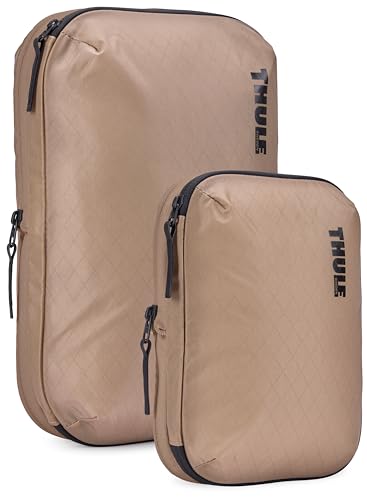
The best compression packing cubes for most travelers are the Peak Design Packing Cube (Medium) for maximum compression with wrinkle control and the Bagail 6-Set Compression Cubes for budget-friendly volume reduction, with Monos Compressible Packing Cubes and Osprey Daylite Compression Packing Cube Set as strong mid-range alternatives depending on luggage type.
Compression cubes work differently than standard packing cubes: a second perimeter zipper squeezes air out and compacts soft items like sweaters, hoodies, and trousers after you pack. The best ones reduce volume by 30-50% without over-stressing seams, while the worst add weight and wrinkles because their fabric stretches or the zipper warps under load.
Our top picks


As an Amazon Associate we earn from qualifying purchases at no extra cost to you. Ratings are shown as listed on Amazon.
How Compression Actually Works and What to Measure
Not all “compression” is equal. There are two systems, and they produce very different results for wrinkle protection:
- Double-zipper compression: You pack normally, close the main compartment, then zip a second compression zipper around the outside that cinches the bag flat. This is the most common and effective for clothes. Example: Peak Design, Bagail, Monos.
- Roll-top or buckle strap compression: You roll or strap the cube down. Better for bulky items like jackets but tends to create hard creases.
Three specs determine real-world performance, not marketing claims:
- Fabric denier and construction: Look for 70D to 300D ripstop nylon or polyester with a DWR coating. Under 40D will balloon and stretch instead of compressing.
- Zipper size and type: YKK #5 or #8 zippers handle compression stress far better than generic #3 coils. A failed compression zipper is the most common failure point.
- Expansion depth: A cube that is 4 inches deep uncompressed and 1.5 inches compressed gives more usable reduction than one that is 3 inches to 2 inches, even if both claim “50% compression.”
Best Compression Packing Cubes Compared
This comparison focuses on the specs that affect volume reduction and durability, not just listed capacity.
| Model | Uncompressed Size (L x W x H) | Compressed Depth | Weight (per M cube) | Fabric | Zipper Type | Claimed Volume Reduction |
|---|---|---|---|---|---|---|
| Peak Design Packing Cube Medium | 14 x 10 x 4 in (35 x 25 x 10 cm) | 1.75 in (4.4 cm) | 4.2 oz (119g) | 70D bluesign recycled nylon, weather-resistant | YKK #8 reverse coil | Up to 45% |
| Monos Compressible Packing Cubes (Medium) | 13.5 x 9.75 x 4.5 in (34 x 25 x 11 cm) | 2.0 in (5 cm) | 3.8 oz (108g) | 300D polyester with ripstop | YKK #5 coil | Up to 40% |
| Osprey Daylite Compression Cube Set (M/L) | 14 x 10 x 4 in (Medium) | 2.25 in (5.7 cm) | 3.5 oz (99g) | 100D nylon ripstop, DWR | YKK #5 coil | 30-35% |
| Bagail Compression Packing Cubes (Medium) | 13.7 x 9.7 x 3.9 in (35 x 25 x 10 cm) | 1.5 in (3.8 cm) | 3.2 oz (91g) | 40D nylon, water-resistant | Generic #5 coil | Up to 50% |
| REI Co-op Expandable Packing Cube Set (Medium) | 14 x 10 x 4 in | 2.0 in (5 cm) | 3.9 oz (111g) | 210D recycled ripstop nylon | YKK #5 coil | 35-40% |
What the numbers mean: Peak Design achieves the flattest compressed profile because its 70D fabric has almost no stretch and the #8 zipper does not bow under pressure, which also protects against wrinkles. Bagail shows the largest depth change on paper (3.9 to 1.5 inches) but its 40D fabric stretches more, so you must avoid overpacking or the compression zipper will pull unevenly. Osprey and REI Co-op prioritize light weight and durability over extreme flatness, making them better if you compress less but use the cubes repeatedly.
Which Compression Cube Should You Buy? By Travel Situation
1. For carry-on only and maximizing space: Peak Design Packing Cube
Best if you pack 5-7 days in a 35-45L carry-on. The structured fabric keeps folded shirts from shifting while the compression zipper pulls straight down instead of wrinkling from the sides. It is heavier and priced in the premium range (typically $40 to $55 per cube), but you only need one medium and one small for most trips. Ideal for business travel where wrinkle protection matters.
2. For budget and family packing: Bagail 6-Set Compression Cubes
Best if you need multiple sizes for checked luggage or family trips without spending over $30-$45 for a full set. You get the highest volume reduction for bulky knits, fleece, and kids’ clothes. The trade-off is thinner fabric and non-YKK zippers that require careful packing – do not overfill past the seam line and avoid forcing the compression zipper if it snags.
3. For balanced compression and light weight: Monos Compressible Packing Cubes
A good middle ground in the $35 to $50 per set range. The 300D polyester is highly abrasion-resistant for frequent flyers, and the compression is moderate enough that it does not create sharp creases in chinos or button-downs. Available in color-coded sets that make it easier to organize by outfit or family member.
4. For durable, low-profile organization: Osprey Daylite or REI Co-op Expandable
Choose these if you backpack or use soft duffels where cubes get crushed. They compress 30-40%, enough to save space but not so much that fabrics are stressed. Both use bluesign or recycled materials and are typically priced between $30 and $45 per set, with strong warranty coverage in 2026.
Decision Matrix: Match Your Priority to the Right Type
| Your Situation | Priority | Best Choice Type | Why |
|---|---|---|---|
| Business carry-on, wrinkle-free shirts needed | Wrinkle protection | Structured cube (Peak Design) | Rigid fabric + large zipper prevents shifting and creasing |
| One-week vacation in a checked bag | Maximum volume savings | High-compression thin fabric (Bagail style) | Greatest depth reduction for casual clothes and sweaters |
| Frequent flyer, 2-3 trips per month | Durability | 300D polyester or 210D ripstop (Monos / REI Co-op) | Higher denier resists abrasion and zipper blowout |
| Backpack or 40L travel pack | Light weight + flexibility | Osprey Daylite style | Lighter, softer cubes that fit curved compartments |
| Packing for two kids + adults | Value / quantity | Multi-set (4-6 cubes) | Lower cost per cube, you can compress by person |
Worked Calculation: How Much Space Do You Actually Save?
Compression is not magic. A realistic expectation helps you choose luggage size.
Example: You pack 5 crewneck sweaters and 3 pairs of jeans in a medium cube.
- Uncompressed volume: 14 x 10 x 4 in = 560 cubic inches (about 9.2 liters)
- With 40% compression (Monos / Peak Design average): 560 x 0.60 = 336 cubic inches (5.5 liters)
- Space saved: 224 cubic inches (3.7 liters) – roughly equivalent to a pair of sneakers or two extra shirts in your suitcase
If you use two medium cubes at 40% reduction, you save about 7-8 liters total. That is often the difference between needing a 45L carry-on and fitting into a 40L. For wrinkle-prone items like linen or dress shirts, expect only 20-30% usable compression if you want to avoid hard folds – pack those items folded flat and compress gently to the first stop, not fully flat.
Durability and Ownership Realities
Compression cubes fail in predictable places. Knowing what wears first saves you from a burst zipper mid-trip.
- Compression zipper is the weak point: Forcing it when overpacked bends the slider. Always close the main zipper first, distribute clothes evenly to the corners, then run the compression zipper slowly with two hands. If it requires excessive force, remove one item.
- Fabric stretch causes wrinkles: Thin 40D nylon stretches under load and creates uneven pressure, which presses wrinkles into clothes. Higher denier (70D and up) stays flat and protects better, but adds 0.5 to 1.0 oz per cube.
- Mesh top vs. solid fabric: Mesh lets you see contents and vents air faster, but solid nylon compresses more evenly. For wrinkle protection, choose a solid or hybrid top.
- Cleaning and care: Machine wash cold on gentle and air dry. DWR coatings wear off after 10-15 washes. High heat in dryers warps zippers. Wipe interior with a damp cloth between trips to prevent odor from trapped moisture.
- Common mistake: using compression for everything: Do not compress dress shirts, blazers, or silk. The pressure sets creases that are harder to remove than the space saved is worth. Use compression for knits, fleece, t-shirts, socks, and casual pants; use standard non-compression cubes or a garment folder for structured clothing.
In general, expect budget sets to last 1-2 years of heavy use before zippers loosen, while premium YKK-equipped cubes typically last 3-5 years. This is general market pricing in 2026: budget sets $25-$45 for 4-6 pieces, mid-range sets $35-$55, and premium single cubes $35-$55 each.
How to Pack for No Wrinkles With Compression
- Fold, don’t roll, for wrinkle-prone items. Rolling is good for space but bad for creases in woven fabrics.
- Place heaviest items at the bottom of the cube, smooth each layer flat, and fill gaps with socks to prevent shifting.
- Close the main compartment 90%, press gently to expel air, then finish zipping.
- Run the compression zipper only until you feel firm resistance. The last inch of compression creates most wrinkles.
- Unpack as soon as you arrive and hang items. Even the best cube will leave light compression marks after 8+ hours if over-cinched.
FAQ
Do compression packing cubes really let you pack twice as much?
No. Real-world reduction is 30-50% per cube, and only for soft, bulky items. For a mixed wardrobe, expect 20-30% overall suitcase savings. The benefit is better organization and fitting a few extra layers, not doubling capacity.
Will compression cubes make clothes more wrinkled?
They can if you over-compress or use thin, stretchy fabric. Structured cubes with firm fabric and a smooth zipper pull reduce wrinkles compared to stuffing clothes loose. For wrinkle-free business clothes, compress lightly and use a garment folder instead.
Are compression cubes allowed in carry-on luggage?
Yes. Security may ask you to open them, so choose cubes with a two-way zipper for quick inspection. Compression cubes do not affect liquid or weight restrictions – your bag still must meet airline size and weight limits.