Key takeaways
- The bow’s sight mounting-hole pattern and available clearance around the riser.
- Whether the package includes a standard plate, dovetail block or separate bracket.
- Left-hand or right-hand configuration, particularly on fixed housings and bubble levels.
- Enough bar travel to reach your longest practiced distance without contacting the bow or quiver.
- Clearance between the sight, arrow, rest, cable guard and broadhead-equipped arrow.
The best compound bow sight for most hunting setups is a bright, compact fixed-pin sight, while a single-pin slider is the better choice when you regularly shoot changing distances and want a clean sight picture for target practice.
Our top picks

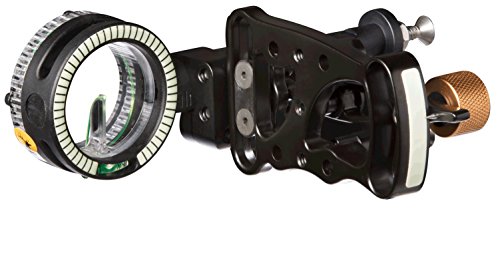
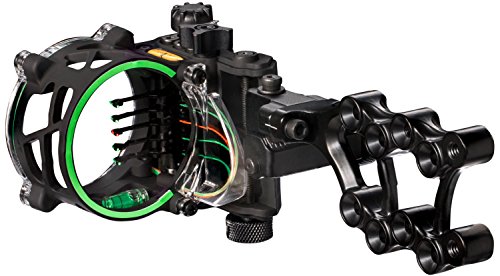

As an Amazon Associate we earn from qualifying purchases at no extra cost to you. Ratings are shown as listed on Amazon.
Fixed-pin vs. single-pin slider: the short answer
A fixed-pin sight gives you several pre-set aiming references—commonly 20, 30, 40, 50 and 60 yards—so you can draw and aim quickly without moving the sight housing. It is usually lighter, mechanically simpler and less vulnerable to a slider-lock problem at the worst moment. The trade-off is a busier housing and the need to judge which pin to use.
A single-pin slider uses one aiming dot and a movable sight bar. You dial the indicator to the intended distance, which produces a less cluttered view and more precise aiming reference. It is especially useful for target shooting, western hunting in open country and archery programs where you shoot known distances. It demands more discipline, however: the sight must be set correctly before the shot, and the locking mechanism must be secure.
| Decision factor | Fixed-pin sight | Single-pin slider |
|---|---|---|
| Typical pin layout | 3–5 pins, often 0.010–0.019 inch fiber | One 0.010–0.019 inch fiber pin or illuminated dot |
| Common housing sizes | 1.5–2.0 inches | 1.5–2.0 inches |
| Typical sight weight | 5–10 ounces | 7–12 ounces, including slider hardware |
| Adjustment style | Micro-adjust windage and elevation on better models | Micro-adjust windage plus a movable yardage bar |
| Best use | Fast hunting shots and thick cover | Known-distance target shooting and open-country hunting |
| Main risk | Pin clutter or choosing the wrong pin | Forgetting to move or lock the sight |
Best choices by shooting situation
Best for fast whitetail hunting: a three-pin fixed sight
A three-pin sight is a practical starting point for tree-stand and ground-blind hunting. A 20/30/40-yard arrangement covers the distances at which many hunters practice and hunt, without filling the housing with five bright dots. If your normal shots extend farther, a 20/30/40/50/60-yard five-pin model offers more reference points but takes longer to organize visually.
Look for tool-less or micro-adjust windage and elevation, a second-axis adjustment, and protected fiber-optic strands. The fibers should be bright enough for the last legal minutes of light but not so bright that the pins bloom into large blurry circles. A removable or adjustable rheostat is valuable because it lets you reduce brightness in full sun and prevent glare in dim timber.
Real product families in this category include the Spot-Hogg Hogg-It, Axcel AccuView and Black Gold’s multi-pin hunting sights. Exact configurations vary by housing size, pin diameter and mounting arm, so check the current model specification rather than assuming every version has the same adjustment range.
Best for open-country hunting: a single-pin slider
For elk, mule deer or other hunting where you may range an animal at 27, 34 or 46 yards, a single-pin slider can be easier to aim with than a stack of pins. The sight tape converts your bow’s speed and arrow trajectory into a yardage scale. You set the pointer during sight-in, then verify several distances rather than trusting the bow’s advertised speed.
A good slider needs a rigid bar, a positive lock and enough travel for your intended maximum distance. A short bar may save weight but can limit adjustment. A long bar provides more yardage separation and finer aiming control, but it can increase leverage and make the sight more vulnerable to a hard impact.
Common examples include the HHA Optimizer and Tetra series, Spot-Hogg Fast Eddie and Tommy Hogg models, and Axcel AccuHunter or Landslyde configurations. These product lines are offered in different housing and pin arrangements, so compare the exact version before buying.
Best for target shooting: a target-style single-pin sight
Target rigs benefit from a large, rigid housing, repeatable micro-adjustments and a precise aiming reference. A single pin or dot reduces visual clutter, while a longer sight bar can give you more adjustment resolution. Target shooters may also prefer a 0.010-inch fiber or a crisp metal scope-dot system, depending on the rules and lighting.
For indoor target work, extreme fiber brightness is less important than a clean, glare-resistant aperture. For outdoor target rounds, a removable sunshade, scope-level adjustment and a stable dovetail mount can matter more than saving a few ounces.
What to compare before buying
Fiber-optic brightness
Fiber diameter is only part of the brightness equation. A 0.019-inch fiber generally produces a larger, brighter aiming point than a 0.010-inch fiber, while a smaller fiber can look more precise at longer range. Fiber length, exposure to ambient light, housing design and the sight’s rheostat also affect visibility.
For hunting, a useful compromise is often 0.019 inch for low-light visibility or 0.010 inch when precision is the priority. A fiber should be shielded where it enters the housing. Exposed fibers can snag, crack or lose light transmission when repeatedly bumped against branches and cases.
Micro-adjust windage and elevation
Micro-adjustment replaces repeated loosening, tapping and retightening with controlled movement. A threaded windage screw is particularly helpful during paper tuning because small horizontal changes can be made without shifting the entire sight by eye.
Elevation adjustment should move smoothly and hold its position under recoil. On a slider, distinguish between micro-adjust elevation for initial setup and the main yardage bar for shooting. A sight that has fine setup adjustment but a loose yardage bar is not truly precise.
Mounting compatibility
Most compound bows accept a standard front sight mounting pattern, but the mounting system still deserves attention. A direct-to-bow mount is compact and usually suits hunting. A dovetail mount lets you remove the sight quickly, position it at different distances from the riser and move one sight between bows that use compatible blocks.
Before ordering, confirm:
- The bow’s sight mounting-hole pattern and available clearance around the riser.
- Whether the package includes a standard plate, dovetail block or separate bracket.
- Left-hand or right-hand configuration, particularly on fixed housings and bubble levels.
- Enough bar travel to reach your longest practiced distance without contacting the bow or quiver.
- Clearance between the sight, arrow, rest, cable guard and broadhead-equipped arrow.
A practical buying matrix
| Your situation | Recommended type | Useful specification | Why |
|---|---|---|---|
| New archer with a limited budget | Three-pin fixed | 0.019-inch fibers, 1.5–2-inch housing | Simple setup and fewer moving parts |
| Frequent whitetail hunter | Three- or five-pin fixed | Protected fiber, rheostat, micro windage | Fast aiming in changing woodland light |
| Western hunter who practices varied distances | Single-pin slider | Positive lock and at least 4–6 inches of usable travel | One uncluttered aiming reference |
| Target shooter or 3D competitor | Target slider | Rigid bar, fine elevation, level and glare control | Repeatability matters more than minimum weight |
| Bow carried through thick brush | Compact fixed pin | Recessed fibers and short mounting arm | Less exposure to branch impacts |
Setup steps that prevent common misses
- Mount the sight squarely. Tighten the mounting screws evenly and use the manufacturer’s torque guidance. A crooked base can force excessive windage correction.
- Set center shot and paper tune first. Do not use the sight to compensate for a poorly aligned rest or inconsistent nocking point.
- Sight in at a short distance. Start at 10 or 20 yards, confirm safe arrow flight, then move to longer distances.
- For fixed pins, establish the longest pin first. Many archers set the top pin at 20 yards, but the order can vary. Avoid moving all pins unnecessarily; use the appropriate pin for each confirmed distance.
- For a slider, verify at least three distances. For example, shoot at 20, 40 and 60 yards, mark the sight tape, and confirm an intermediate distance. A chronograph speed alone cannot account for every arrow, draw-length and tune variable.
- Lock and recheck. After tightening, shoot another group. Repeat after transporting the bow or changing arrows.
As a simple example, if a slider is marked at 20, 40 and 60 yards and your actual arrows strike two inches high at 40 yards, do not simply move the 40-yard mark. Correct the sight’s baseline or setup, then revalidate the entire tape. Otherwise, the error can multiply at longer distances.
Durability, maintenance and ownership costs
The parts most likely to wear are fiber-optic strands, sight tapes, locking knobs, dovetail tolerances and bubble-level components. Fiber can be replaced on many sights, but replacement kits and labor add a modest cost. Sight tapes are consumables: rain, abrasion and repeated handling can make adhesive-backed tapes lift or become unreadable. A laminated or engraved scale lasts longer.
Expect general market pricing of roughly $80–$180 for basic to midrange fixed sights, $150–$350 for premium fixed or slider sights, and more for specialized target assemblies. A $250 sight used for five seasons of 20 practice sessions plus 10 hunting trips per season works out to about $0.50 per use before replacement parts: $250 divided by 150 uses. The calculation does not make a premium sight automatically better, but it shows why repeatable adjustment and durable mounting can matter more than the initial price.
Keep the housing and fiber free of mud using a soft brush or air blower rather than scraping with a knife. Check screws before each practice session, protect the sight during transport and avoid storing the bow where high heat can loosen adhesive sight tapes. If a slider develops play or will not hold its setting, stop relying on its yardage marks until the mechanism has been inspected or replaced.
Final recommendation
Choose a three-pin fixed sight for the quickest, least complicated hunting setup; choose a single-pin slider for a clean sight picture and frequent distance changes; and choose a rigid target slider when repeatable micro-adjustment is more important than compactness. Whichever style you select, prioritize protected fiber, a firm lock, usable adjustment range and mounting compatibility over a long list of extra features.