Key takeaways
- Match the bag to the trip: thin foam is fine for a walk to rehearsal, but airline cabins and subways need thicker padding and a sturdy neck cradle.
- Padding thickness on listings runs from about 5 mm (thin) to about 20 mm (thick); a 0.8-inch foam layer is roughly 20 mm.
- Backpack straps matter more than pockets once a bag is carried for more than ten minutes.
- For checked baggage, use a hardshell; a soft bag is not designed for baggage handling.
The best gig bags for acoustic guitars that travel are padded bags with real backpack straps and a firm base, such as the Gator Transit Series acoustic bag for commuting and the Gruv Gear GigBlade acoustic case for flying, with a molded hardshell such as the SKB acoustic case for checked baggage. A gig bag protects against scuffs, rain, and small knocks, but it is not a flight case, so the right pick depends on how you actually move: on foot and by train, by car, or by plane.
Our top picks



As an Amazon Associate we earn from qualifying purchases at no extra cost to you.
Key takeaways
- Match the bag to the trip: thin foam is fine for a walk to rehearsal, but airline cabins and subways need thicker padding and a sturdy neck cradle.
- Padding thickness on listings runs from about 5 mm (thin) to about 20 mm (thick); a 0.8-inch foam layer is roughly 20 mm.
- Backpack straps matter more than pockets once a bag is carried for more than ten minutes.
- For checked baggage, use a hardshell; a soft bag is not designed for baggage handling.
Quick Comparison: Best Gig Bags for Acoustic Guitars and Travel Cases
| Pick | Type | Carry options | Best trip | Price tier |
|---|---|---|---|---|
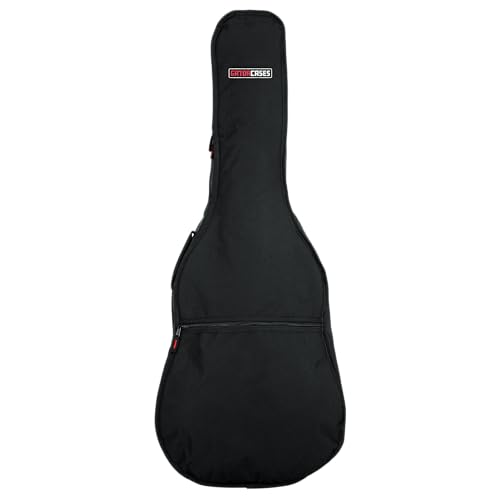
| Gator Transit Series Acoustic Gig Bag | Padded soft bag, rubberized base | Backpack straps | Daily commuting and rain | Mid to upper |
| Gruv Gear GigBlade Acoustic | Soft case, travel approved | Adjustable side carry strap | Flying with a carry-on guitar | Upper |
| MONO M80 Acoustic | Premium protective case | Multiple carry options | Frequent travellers who want more protection | Upper |
| Reunion Blues RB Expedition Acoustic | Premium touring case | Carry handles and straps | Touring musicians | Upper |
| Crossrock Dreadnought Gig Bag | 0.8 inch foam, 1680D nylon | Backpack straps | Mixed use, mid budget | Mid |
| SKB 000-Size Acoustic Hardshell | Molded hardshell, TSA latch | Over-molded handle | Checked baggage and car trunks | Upper |
| CAHAYA 41-inch Acoustic Bag | Padded soft bag, 0.35 inch | Dual adjustable shoulder straps | Short walks and storage | Low |
What Counts as a Good Guitar Bag When You Travel
A bag that protects a guitar at home can fail on a trip. Travel adds three stresses: pressure from other luggage, rain and spills, and a long carry that tires your shoulders. A good travel gig bag answers all three. It needs padding thick enough to spread a knock, a stiff neck area to stop the headstock from flexing, a weather-resistant outer shell, and straps comfortable enough to wear for a mile.
A gig bag also has limits. It will not stop a guitar being crushed under a heavy suitcase, and it cannot protect against the humidity swings of a cargo hold. Treat it as cabin or local-travel protection, and move to a hardshell when the guitar will leave your sight.
How We Chose These Bags
This is a research-based roundup. We did not carry or fly with any of these bags ourselves. Selections come from maker specification pages and retailer listings, and we quote only figures that the listings give, such as padding thickness and fabric denier. Listings change, so check the current page for your exact guitar size before you buy. We looked for:
- Backpack or comfortable carry straps, since commuting is a carrying problem.
- Listed padding thickness or a protective structure we could describe honestly.
- A range of price tiers and protection levels, from thin to rigid.
- Fit information for dreadnought and similar full-size acoustic guitars.
Padding Thickness and Fabric: What the Listings Say
Padding is the one spec you can compare directly. The table shows figures drawn from listings for bags in this guide and from related bags that illustrate the range. Thickness is not the whole story, because foam density and structure matter too, but a bag with 5 mm of padding is a dust cover while a bag with 20 mm is a travel bag.
| Bag | Padding on the listing | Outer fabric on the listing | What it suggests |
|---|---|---|---|
| Fender FE405 electric bag | 5 mm | 400 denier polyester | Light protection for short trips |
| CAHAYA 41-inch acoustic bag | 0.35 inch (about 9 mm) | Water-resistant oxford cloth | Everyday carry, light knocks |
| Crossrock CRSG107 series | 10 mm | Not stated in the short listing | Mid-level cushioning |
| Fender FE620 electric bag | 20 mm | 600 denier polyester | Thicker commuting protection |
| Crossrock Dreadnought bag | 0.8 inch (about 20 mm) high-density foam | 1680D double-ply nylon | Heavy-duty soft protection |
As a rule of thumb, 20 mm of high-density foam in a good shell is the most you will find in a soft bag that still fits the overhead bin of many aircraft. Beyond that you are looking at a hybrid or hard case.
1. Gator Transit Series Acoustic Gig Bag: Best for Daily Commuting in the Rain
- Lightweight acoustic gig bag with backpack straps
- Weather-resistant exterior and a rubberized base
- Designed for dreadnought-style acoustic guitars, per the maker’s range
- Available in a tan exterior
Best for: A bike, tram, or on-foot commuter who stands the guitar on wet pavement. The rubberized base keeps the bag from soaking up water and protects the bottom edge when you lean it against a wall.
Skip if: You fly often with the guitar as a carry-on. The bag is built for local carrying, not for the cabin crush of a full flight.
Pros:
- Backpack straps free both hands on stairs and platforms
- Rubberized base resists water and scuffs
- Weather-resistant outer layer
- Lightweight for a padded bag
Cons:
- Priced above basic bags
- Not a substitute for a hardshell in baggage handling
2. Gruv Gear GigBlade Acoustic: Best for Flying with the Guitar in the Cabin
- Soft acoustic case described as travel approved
- Adjustable side carry strap
- Patented design from a company known for travel-friendly cases
- Made for acoustic guitar bodies
Best for: Musicians who board with the guitar. A slimmer, structured soft case is easier to fit in an overhead bin or closet than a bulky hardshell, and the side carry strap lets you walk down an aisle without bumping seats.
Skip if: You mostly commute locally and want a cheap, simple bag. This is a specialist case.
Pros:
- Designed for travel use, per the listing
- Side carry strap helps in tight spaces
- Structured shape resists crushing
Cons:
- High price for a soft case
- Cabin space is never guaranteed on a full flight
3. MONO M80 Acoustic Guitar Case: Best Premium Upgrade for Frequent Travellers
- Premium protective case from MONO’s M80 line
- Made specifically for acoustic guitars
- Offered with multiple carry options
- Check the listing’s dimension chart to match your body shape
Best for: A player who travels often and treats the case as part of the gear. Premium cases are designed to protect the neck joint and body on repeated trips, and the M80 line is a common name in that conversation.
Skip if: You are on a tight budget or your guitar has an unusual body shape. Confirm the interior dimensions before you buy.
Pros:
- Designed for repeated travel
- Established brand with spare parts and support
- Fits as a long-term case rather than a replaceable bag
Cons:
- Considerable cost
- Heavier and bulkier than a basic gig bag
4. Reunion Blues RB Expedition Acoustic Guitar Case: Best for Touring and Rough Handling
- Touring-oriented acoustic guitar case
- From a maker known for high-end bags and cases
- Sold alongside matching electric and bass versions
- Premium tier
Best for: Touring players who load the case in and out of vans every night. It is the heavy-duty option on this list, aimed at players who want a bag with the protection of a case.
Skip if: You rarely leave the city. The extra protection and weight are not needed for a bus commute.
Pros:
- Built for frequent loading and unloading
- Strong brand reputation among working musicians
- Available across guitar types for matching sets
Cons:
- One of the pricier choices
- More structure than most commuters need
5. Crossrock Dreadnought Acoustic Gig Bag: Best Mid-Budget Heavy-Duty Soft Bag
- 0.8 inch (about 20 mm) high-density foam
- 1680D double-ply nylon exterior
- Lightweight padded protection, per the listing
- Dreadnought acoustic fit
Best for: Players who want the thickest padding on the list without paying for a premium case. The listed foam and nylon give it the most protective specs among the soft bags here.
Skip if: You need a very slim bag for a tight overhead bin. Thick padding makes the bag wider.
Pros:
- Thickest listed padding among the soft bags in this guide
- Tough double-ply nylon
- Mid price for its protection level
Cons:
- Bulkier than minimalist bags
- Less brand recognition than the premium names
6. SKB 000-Size Acoustic Hardshell: Best for Checked Baggage and Car Trips
- Molded hardshell for 000-size acoustic guitars
- TSA latch and over-molded handle
- Molded-in bumpers
- Plush-lined interior
Best for: Any trip where the guitar leaves your hands: checked baggage, a car trunk, or a ferry. A rigid shell protects against crushing in ways a soft bag cannot.
Skip if: You commute on foot or by bike. A hardshell has no backpack straps and is heavy to carry for long distances.
Pros:
- Rigid protection against crushing
- TSA-compatible latch
- Molded bumpers absorb corner hits
Cons:
- Heavy and awkward to carry far
- Size specific, so confirm your guitar’s body shape first
7. CAHAYA 41-Inch Acoustic Guitar Bag: Best Budget Bag for Short Walks
- 0.35 inch (about 9 mm) padding
- Water-resistant oxford cloth
- Dual adjustable shoulder straps
- Sized for 40- to 42-inch acoustic guitars
Best for: Short walks to lessons or rehearsal, car boot storage, and as a spare bag. It is the cheapest way to add a layer of protection and a carrying strap.
Skip if: You use public transport at rush hour or fly. The padding is thin and the neck support is basic.
Pros:
- Very low cost
- Several pockets for cables and picks (on larger versions)
- Water-resistant outer fabric
Cons:
- Thin padding
- Not suited to flights or crowded transit
Also Consider
- Fender FE620 Electric Guitar Gig Bag: For electric guitars; 600 denier polyester with 20 mm padding and a neck rest on the listing.
- Ibanez PowerPad IGB540 Electric Gig Bag: A padded electric guitar bag in a well-known series.
- Levy’s 200 Series Dreadnought Gig Bag: A lightweight padded option with storage for a full-size acoustic.
- Taylor GS Mini Gig Bag: Made for the compact GS Mini travel guitar.
Buying Guide: How to Choose a Gig Bag for Commuting or Flying
Start with your guitar’s measurements
Measure overall length, body width at the lower bout, and body depth. A full-size dreadnought is typically about 40 to 41 inches long, and the Gator foam bag, for example, lists a fit up to 41.9 inches. A bag that is too long lets the guitar slide; one that is too tight can stress the neck and headstock. A cutaway or jumbo body may need a larger size, and a parlour or travel guitar needs a smaller one.
Look at padding, neck support, and the headstock area
The headstock is the most breakable part of an acoustic on a trip. Look for a stiff, padded neck cradle and a compartment that holds the headstock still. Thin bags that are flexible at the neck allow the guitar to flex when the bag is dropped or leaned.
Choose straps for the way you carry
- Backpack straps: Best for walking, stairs, bikes, and crowded trains. They keep your hands free.
- Single shoulder strap: Quick to put on, but tiring over long distances.
- Side carry handle: Useful for narrow aisles, overhead bins, and car boots.
Think about weather
Water-resistant outer fabric and a rubberized base protect against rain and wet floors. A bag that soaks up water adds weight and can wet the guitar if the zip fails. Check for a storm flap over the main zip.
Consider the airline route
In the United States, federal rules require airlines to let a guitar into the cabin if it can be stowed safely in an overhead bin or closet with space available, but they do not guarantee that it will fit. Airline policies vary, and a full flight may force you to gate-check. If you must check the guitar, use a hardshell and loosen the strings slightly. Check your airline’s current instrument policy before you travel.
Budget by how much you move
- Light use (walking, car): a low-cost padded bag may be enough.
- Daily commuting: pick backpack straps, a firm base, and 10 to 20 mm padding.
- Regular flying: choose a structured cabin-friendly soft case or a hardshell for baggage.
- Touring: choose a premium case rated for repeated loading and unloading.
Fit Guide: Typical Guitar Sizes and Bag Choices
Sizes vary by maker and model, so treat the figures below as rough ranges and always check your own guitar against the bag’s listed interior dimensions.
| Guitar type | Approximate overall length | What to look for in a bag |
|---|---|---|
| Dreadnought | about 40 to 42 inches | Bag listed for dreadnoughts, such as Gator or Crossrock versions |
| 000 / OM size | about 39 to 40 inches | Shaped case such as the SKB 000-size, or a dreadnought bag with extra padding |
| Jumbo | about 42 inches or longer, with a deeper body | Bag listed as jumbo or with a roomy depth |
| Parlour or 3/4 size | about 36 to 38 inches | Smaller bags, such as those listed up to 38.5 inches |
| Travel guitar (GS Mini style) | under about 37 inches | Brand-specific gig bag, since the body is compact |
A cutaway does not usually change the overall length but can change the body width. If a bag lists a maximum length and you are close to the limit, move up one size. A bag that is slightly long can be packed with a soft cloth; a bag that is too short will squeeze the headstock.
What Wears First: Ownership Realities
Gig bags rarely fail all at once. Knowing which part goes first helps you decide when to repair, when to replace, and what to check before an important trip.
- Zips. Cheap zips split or jam first. Run the zip along its whole length before each trip and keep a small amount of zip lubricant in your repair kit.
- Shoulder straps. Thin straps stretch and their stitching can pull. Wide, padded backpack straps spread weight and last longer.
- Base fabric. The bottom wears from being stood on pavement. A rubberized base, as on the Gator Transit Series, resists this.
- Foam. Foam compresses over time. If the padding feels flat where the guitar rests, the bag protects less than it did.
- Neck cradle. A cradle that has lost its shape no longer holds the headstock still. Replace the bag, or add a soft cloth wedge.
Before a trip, empty the pockets, shake out any grit that could scratch the finish, and check that the neck area is still firm. A few minutes of inspection is cheaper than a repair to the headstock.
Finally, store the bag open or loosely zipped when the guitar is not in it, and keep it out of damp garages and hot car boots. Fabric that stays damp can smell and weaken, and heat can soften the glues that hold padding and cradles in place.
Pack-and-Go Checklist for Flying or Commuting with a Guitar
- Loosen the strings slightly if the guitar will be in a cold or high-altitude cargo hold, to reduce neck stress.
- Add a humidity pack in the case on dry or cold routes. Maker guidance suggests holding an acoustic guitar near 40 to 50 percent relative humidity.
- Support the headstock with a soft cloth or the bag’s own neck cradle so it cannot move.
- Remove loose accessories from the bag pockets that sit against the guitar’s back.
- Photograph the guitar before you go, in case you need to make a claim.
- Put your contact details on a tag inside and outside the bag.
- Let the guitar acclimatise for an hour or so after a big temperature change before opening the case and tuning.
Which Bag for Which Trip: A Quick Decision Matrix
| Trip | Carry style | Protection need | Best match |
|---|---|---|---|
| Daily walk or tram to rehearsal | Backpack | Rain, scuffs | Gator Transit Series |
| Weekend flight, carry-on | Side strap, backpack | Crush resistance, cabin fit | Gruv Gear GigBlade Acoustic |
| Checked baggage | Handle | Rigid shell | SKB 000-size hardshell |
| Touring van | Handles, straps | Heavy loading | Reunion Blues RB Expedition or MONO M80 |
| Short walks, storage | Shoulder straps | Light | CAHAYA 41-inch bag |
| Mid-budget everything bag | Backpack | Medium to high | Crossrock Dreadnought |
Frequently Asked Questions
Can I take a guitar in a gig bag on a plane?
Often yes. U.S. rules require airlines to allow it in the cabin if it can be stowed safely in an overhead bin or closet with space available, but there is no guarantee on a full flight. Board early and ask the crew politely. If it is gate-checked, a soft bag offers little protection.
Is a gig bag enough for checked baggage?
No. Soft bags are designed for carrying and light knocks, not baggage handling. For checked baggage, use a hardshell case with a TSA-compatible latch, such as the SKB, and pack the headstock area snugly.
How thick should the padding be?
For commuting, about 10 to 20 mm is a reasonable range. Thin bags with 5 mm of padding act mostly as dust covers. Foam density and a rigid neck area also matter.
Are guitar backpacks comfortable for long walks?
They can be if the straps are wide and padded, and if the bag fits the guitar closely so it does not swing. Adjust the straps so the guitar’s weight sits high on your back and the headstock does not stick up above your head in doorways.
Do the same bags fit electric guitars?
Often not. Electric guitars have different body shapes and thinner bodies, so a dedicated electric bag usually fits better. Fender, Ibanez, and others make electric versions of their bags.
How do I keep my guitar dry in a gig bag?
Choose a bag with a water-resistant exterior and a rubberized base, and add a rain cover if you commute in wet weather. Do not leave the guitar in a wet bag overnight; dry the outside before putting it away.
Will a gig bag protect from humidity swings?
Not by itself. Add a two-way humidity pack inside and let the guitar acclimatise after big temperature changes. Makers such as Martin, Taylor, and Gibson give care guidance around 40 to 50 percent relative humidity for acoustic guitars.
Which One Should You Buy?
- Everyday commuter, rain and stairs: Gator Transit Series acoustic gig bag.
- Flying with the guitar in the cabin: Gruv Gear GigBlade Acoustic.
- Checked baggage or car trips: SKB 000-size acoustic hardshell.
- Touring and repeated loading: Reunion Blues RB Expedition or MONO M80.
- Best protection per dollar in a soft bag: Crossrock Dreadnought gig bag.
- Tight budget, short walks: CAHAYA 41-inch acoustic bag.
If you only buy one bag, choose the one that matches your hardest regular trip. A bag that is slightly more protective than you need is easier to live with than one that fails on the one big journey a year.
Sources
Gator Cases product pages; Gruv Gear product pages; MONO and Reunion Blues product pages; Crossrock and SKB product specifications; Fender and Ibanez product listings; U.S. Department of Transportation guidance on carrying musical instruments; Martin, Taylor and Gibson guitar care guidance.
Last updated: October 2026