Key takeaways
- Best for: Ornamental beds, hostas, roses, tulips, vegetable gardens where deer browse foliage directly
- Coverage: 500 to 1,000 sq ft per 32 oz ready-to-use (RTU) bottle; 1 gallon concentrate typically covers 4,000-6,000 sq ft
- Pet-safe standouts: I Must Garden Deer Repellent, Bobbex, Deer Out – all use botanical oils and egg/garlic without synthetic toxins, safe for dogs and cats once dry
- Example products: Liquid Fence Deer & Rabbit Repellent, Bobbex Deer Repellent, Plantskydd Deer Repellent, I Must Garden Deer Repellent
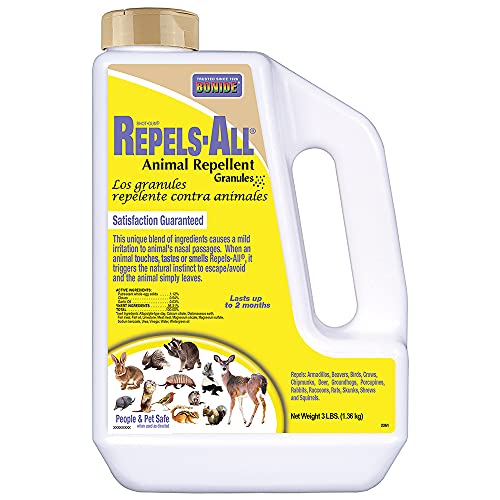
The best deer repellents for gardens are concentrated egg- and garlic-based sprays like Bobbex and Liquid Fence Deer & Rabbit Repellent for large beds that need rain-resistant coverage, granular formulas like I Must Garden Granular Repellent and Bonide Repels-All Granules for low-maintenance perimeter protection, and solar ultrasonic devices like Havahart and Hoont for gardeners who want scent-free, pet-safe deterrence.
Choosing between them comes down to coverage area, how often you want to reapply, tolerance for odor, and whether you need a pet- and pollinator-friendly option. Sprays protect foliage directly but need reapplication after heavy rain, granules last longer on the ground but don’t protect new growth, and ultrasonic repellers cover a fixed zone without chemicals but depend on placement, sun, and deer habituation.
Our top picks

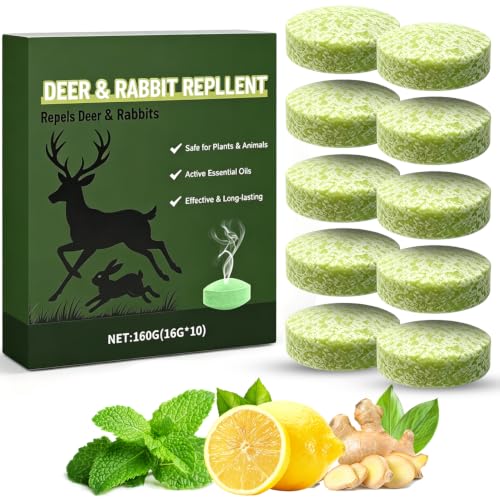
As an Amazon Associate we earn from qualifying purchases at no extra cost to you. Ratings are shown as listed on Amazon.
Spray vs. Granular vs. Ultrasonic: How They Work
1. Liquid Spray Repellents
Sprays coat leaves, stems, and flowers with taste and odor deterrents that make plants unpalatable. Most effective formulas use putrescent egg solids, garlic, cloves, mint oil, or dried blood as active ingredients. They work on contact – deer must browse or smell the treated plant to be deterred.
- Best for: Ornamental beds, hostas, roses, tulips, vegetable gardens where deer browse foliage directly
- Coverage: 500 to 1,000 sq ft per 32 oz ready-to-use (RTU) bottle; 1 gallon concentrate typically covers 4,000-6,000 sq ft
- Pet-safe standouts: I Must Garden Deer Repellent, Bobbex, Deer Out – all use botanical oils and egg/garlic without synthetic toxins, safe for dogs and cats once dry
- Example products: Liquid Fence Deer & Rabbit Repellent, Bobbex Deer Repellent, Plantskydd Deer Repellent, I Must Garden Deer Repellent
2. Granular Repellents
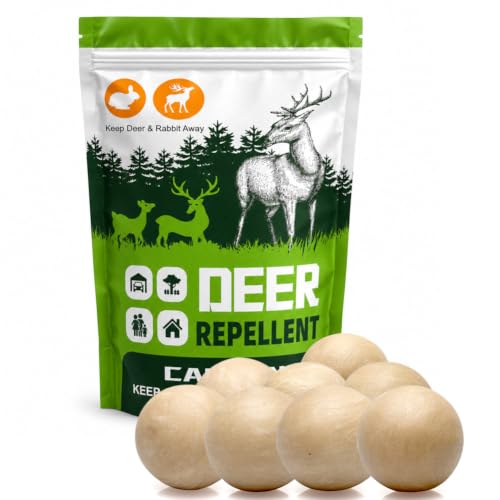
Granules create a scent barrier around the garden perimeter rather than coating each plant. You shake them on soil, mulch, or around raised beds. Active ingredients are similar – egg, garlic, clove, castor oil, cinnamon – but bound to clay or corn cob carriers that release scent slowly.
- Best for: Large property edges, garden borders, under hedges, around fruit trees and shrubs
- Coverage: 1 lb covers approximately 400-500 sq ft as a perimeter band; 5-6 lb shaker bag covers 2,000-3,000 sq ft
- Pet-safe standouts: Bonide Repels-All Granules (contains castor oil, clove, garlic), I Must Garden Granular – both OMRI-listed or EPA-exempt botanical formulas
- Limitation: Does not protect new growth above the granule line; rain can push granules into soil and reduce scent throw
3. Ultrasonic and Motion-Activated Repellers
These devices use passive infrared (PIR) to detect movement and trigger a combination of ultrasonic sound (typically 18-24 kHz), flashing LED strobe, and sometimes an audible alarm or water jet. Deer hear higher frequencies than humans, so the sound is irritating to them but largely inaudible to adults.
- Best for: Scent-sensitive households, gardens near patios or play areas, gardeners who want no reapplication
- Coverage: 30 to 40 feet detection range in a 110-120 degree arc, covering about 2,500-3,500 sq ft per unit
- Power: Solar panel with rechargeable 3.7V lithium battery; most run 5-7 days on full charge without sun
- Example products: Havahart Spray Away motion-activated sprinkler, Hoont Solar Ultrasonic Repeller, Orbit Yard Enforcer
Head-to-Head Comparison: Coverage, Weather Resistance, Scent, and Safety
| Feature | Liquid Spray (Concentrate) | Granular Shaker Bag | Solar Ultrasonic Repeller |
|---|---|---|---|
| Typical Product Example | Liquid Fence / Bobbex 32 oz Concentrate | I Must Garden / Bonide Repels-All 5 lb | Hoont / Havahart Solar Unit |
| Coverage Per Unit | 4,000-6,000 sq ft | 2,000-3,000 sq ft | 2,500-3,500 sq ft (single direction) |
| Active Deterrent | Putrescent egg, garlic, mint, clove oil | Egg, garlic, clove, castor oil on clay carrier | Ultrasonic sound 18-24 kHz + LED strobe |
| Rain Resistance | Needs reapplication after 0.5-1 inch rain or every 2-3 weeks; rain-resistant formulas bond better after 6 hours drying | Moderate; lasts 3-4 weeks, heavy rain reduces scent by 30-40% | High; IP44-IP65 water resistant, works in rain |
| Scent to Humans | Strong sulfur/garlic odor for 24-48 hours, then fades | Mild at ground level, much less noticeable than spray | None (ultrasonic) – limited low hum if set to audible mode |
| Pet & Pollinator Safety | Safe once dry; avoid spraying open blooms directly to protect pollinators | Safe once applied; keep pets from ingesting large amounts of granules | Completely chemical-free; may annoy dogs within 15 feet on high setting |
| Reapplication / Maintenance | Every 2-4 weeks and after heavy rain | Every 3-4 weeks | Recharge via solar; wipe solar panel monthly, bring indoors for freezing temperatures |
| Upfront Cost Range | $18-$35 for 32 oz concentrate | $22-$40 for 5-6 lb bag | $35-$65 per unit |
| Best Season | Growing season when foliage is actively browsed | Early spring and late fall perimeter defense | Year-round where deer pressure is constant |
Worked Calculation: What Will It Cost Per Season?
For a typical 1,500 sq ft ornamental garden bed with moderate deer pressure over a 6-month growing season (April-September):
Spray concentrate option: A 32 oz bottle of Bobbex or Liquid Fence concentrate makes about 2.5 gallons of RTU spray at the standard dilution and covers roughly 5,000 sq ft. Your 1,500 sq ft garden needs about 0.3 bottle per application. Applied every 3 weeks (8 applications) = 2.4 bottles per season. At $25-$30 per bottle, that is $60-$72 per season. If you stretch to monthly in drier weather, cost drops to $45-$55.
Granular option: A 5 lb bag covers about 2,500 sq ft as a perimeter application. You will use about 0.6 bag per application. Applied every 4 weeks (6 applications) = 3.6 bags per season. At $28-$35 per bag, that is $100-$126 per season. Granules are less economical for small beds but more efficient for long property lines where spraying every plant would take longer.
Ultrasonic option: One solar unit covers the 1,500 sq ft bed if placed at a corner aimed across the bed. Cost is $45-$60 once, with zero consumables. Two units ($90-$120) are needed if the garden is L-shaped or blocked by a shed or fence that breaks the PIR line of sight. Over two seasons, the ultrasonic option becomes the cheapest, but only if deer do not habituate.
Decision Matrix: Which Type Fits Your Situation?
| Your Situation | Best Choice | Why |
|---|---|---|
| Small urban garden (under 1,000 sq ft), you eat from it, have dogs/cats | Concentrate spray with botanical oils (I Must Garden, Deer Out) | Pet-safe once dry, targets only the plants you spray, no scent barrier across lawn where pets play |
| Large property edge or rural lot, deer enter from woods | Granular perimeter + spray for high-value plants | Granules create a low-maintenance border; spray protects roses/hostas that deer target first |
| You want zero odor and no reapplication after rain | Solar ultrasonic repeller (Hoont) + motion sprinkler (Havahart/Orbit) | No chemicals, weatherproof, immediate deterrence; sprinkler adds physical startle |
| Budget under $40 for one season, time-poor | 5 lb granular bag | One shake application lasts 3-4 weeks vs. mixing and spraying every 2-3 weeks |
| Tight HOA or patio garden where smell complaints matter | Plantskydd or I Must Garden (low-odor claim) or ultrasonic | Plantskydd uses dried blood and dries odorless in 24 hrs; ultrasonic is scent-free |
| Vegetable garden near harvest | Garlic/mint oil spray or ultrasonic only | Avoid dried-blood formulas close to harvest; wash all produce; follow label pre-harvest interval |
Durability and Ownership Realities
What Wears Out First
Sprays: Not the bottle, but the trigger sprayer. Cheap RTU sprayers clog with egg solids after 2-3 uses. Buying concentrate and using a dedicated 1-2 gallon pump sprayer with a brass nozzle lasts years and gives more even coverage. Always rinse the sprayer with water after each use.
Granules: The shaker bag seal. Once opened, humidity clumps clay-based carriers. Store in a sealed 5-gallon bucket with lid indoors. Clumped granules still work but distribute unevenly. Avoid applying before a forecast of more than 1 inch of rain – it washes scent compounds into the topsoil where deer cannot smell them.
Ultrasonic devices: The PIR sensor window and solar panel. Dust, pollen, and hard water spots cut charging efficiency by 20-30%. Wipe both monthly with a damp cloth. Stakes crack in freeze-thaw cycles – in USDA zones 5 and below, bring units inside from December to March or mount on a fence post instead of ground staking.
Common Mistakes That Make Any Repellent Fail
- Applying in direct midday sun: Spray droplets evaporate before bonding. Apply early morning or late evening when leaves are dry and temperature is 40-80°F for best adhesion.
- Only treating the garden interior: Deer decide to enter at the edge. For sprays, also treat the first 3 feet of plants at entry points and overhanging branches.
- Using one mode for 12 months: Deer habituate to sound and to the same scent. Rotate between an egg-based and a mint/clove-based formula every 2 months, or move an ultrasonic unit 10-15 feet every few weeks and alternate frequency settings.
- Ignoring new growth: A hosta can put out 6 inches of new, untreated foliage in a week. Re-spray after significant growth flushes even if the calendar says you have time left.
- Spraying blooms you want pollinated: Repellents can deter bees. Spray foliage and stems, avoid open flowers, and never spray when bees are actively foraging.
How to Apply for Maximum Effect
For sprays: Mix concentrate exactly to label rate – stronger is not more effective and wastes product. Spray until leaves glisten but not to runoff, covering both top and bottom of leaves. Let dry 6 hours before watering or expected rain. Reapply every 2-3 weeks in spring when growth is fast, every 3-4 weeks in summer.
For granules: Create a 6-12 inch wide band around the entire perimeter, not scattered piles. Apply at 1 lb per 400-500 sq ft of band. Reapply after heavy rain (over 0.75 inch) or monthly. For raised beds, sprinkle on the ground around the base, not in the bed itself if you grow root vegetables.
For ultrasonic units: Mount 12-18 inches high, angled slightly down, with a clear line of sight to the deer approach path. Do not face through glass or dense shrubs – PIR needs heat contrast. Place within 30 feet of the plants to protect. Test by walking through the zone – you should hear a click or see the LED flash on detection even if you cannot hear the ultrasonic tone.
Pet, Wildlife, and Environmental Notes
Most deer repellents sold for home gardens are EPA-exempt under FIFRA 25(b) as minimum-risk botanical products and are considered pet-safe when used as directed. That does not mean they should be ingested. Keep pets off treated areas until sprays dry (2-6 hours) and store granules where dogs cannot dig them up. If a dog or cat ingests a large amount, contact your veterinarian.
Ultrasonic repellers are chemical-free but can disturb dogs, especially on audible alarm settings. If your dog barks at or avoids the device, switch to ultrasonic-only mode and move it farther from the dog’s main area. Motion-activated sprinklers may startle cats – position them to cover garden beds, not pet doors.
For general gardening health questions or if you garden where chemical drift from neighbors is a concern, consult your local cooperative extension. They can identify deer-resistant plant alternatives that reduce the need for repellents entirely.
FAQ
Can I combine spray and ultrasonic for better results?
Yes, and this is often the most effective strategy for persistent deer. Use an ultrasonic unit as a first-line startle at the garden entrance and spray the most palatable plants inside the zone. The two modes target different senses, which slows habituation.
Do deer repellents work on rabbits and other animals?
Many formulas labeled for deer and rabbits (Liquid Fence, Bonide Repels-All, I Must Garden) also deter rabbits due to similar taste deterrents. Ultrasonic units set to higher frequencies may affect rabbits and raccoons but are less consistent. For rabbits alone, a low granular barrier around bed edges is usually enough.
Will rain wash away repellent immediately?
No repellent is fully wash-proof, but good spray formulas bond to foliage after drying and survive light rain. Expect to reapply after about 0.5-1 inch of rain or a heavy irrigation cycle. Granules lose scent faster in steady rain because the carrier dissolves.