Key takeaways
- Best balanced work-and-travel option: Aer City Pack Pro, 24L.
- Best for long walking commutes: Osprey Nebula 32, with a ventilated harness and hip-belt option.
- Best for a large office load: Timbuk2 Authority Deluxe, 28L.
- Best for photographers and modular carry: Peak Design Everyday Backpack 20L or 30L.
- Best for a simple outdoor-leaning commute: Patagonia Refugio 30L.
- Best for highly organized one-bag travel: Tom Bihn Synik 30, if its compartment-heavy layout suits your packing style.
The best laptop backpacks for work and travel are the ones that match your device dimensions, daily load, climate, and carry-on needs—not simply the bag with the most pockets.
For most commuters, the Aer City Pack Pro is a strong all-round choice: it combines a suspended laptop compartment, useful structure, luggage-pass-through, and a relatively compact 24-liter format. Choose the Osprey Nebula 32 if comfort and capacity matter more than a polished office appearance, the Timbuk2 Authority Deluxe for a larger work-and-commute load, or a lighter 20–22-liter workpack if you carry only a laptop, charger, notebook, and lunch.
Our top picks


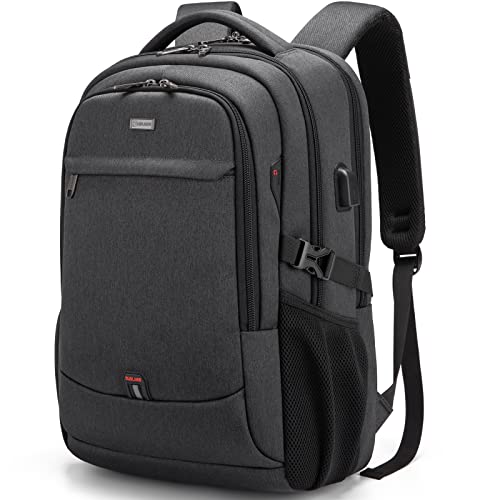

As an Amazon Associate we earn from qualifying purchases at no extra cost to you. Ratings are shown as listed on Amazon.
Quick picks by situation
- Best balanced work-and-travel option: Aer City Pack Pro, 24L.
- Best for long walking commutes: Osprey Nebula 32, with a ventilated harness and hip-belt option.
- Best for a large office load: Timbuk2 Authority Deluxe, 28L.
- Best for photographers and modular carry: Peak Design Everyday Backpack 20L or 30L.
- Best for a simple outdoor-leaning commute: Patagonia Refugio 30L.
- Best for highly organized one-bag travel: Tom Bihn Synik 30, if its compartment-heavy layout suits your packing style.
Comparison: laptop backpacks for work and travel
Dimensions and capacity can vary slightly by version and production year. Treat the table as a buying shortlist, then confirm the current device-compartment measurements before ordering.
| Backpack | Capacity | Approx. weight | Device fit | Travel and weather features | Typical market range |
|---|---|---|---|---|---|
| Aer City Pack Pro | 24L | About 1.3 kg | Up to a 16-inch laptop; tablet sleeve | Ballistic nylon, padded suspended compartment, luggage pass-through, water-resistant exterior | About $200–$275 |
| Osprey Nebula | 32L | About 1.0 kg | Up to a 16-inch laptop; separate tablet area on many versions | Recycled nylon, ventilated back panel, sternum strap, luggage pass-through on newer versions | About $120–$180 |
| Timbuk2 Authority Deluxe | 28L | About 1.1–1.3 kg | Up to a 17-inch laptop, depending on version | Recycled polyester, padded laptop storage, trolley sleeve, water-resistant finish | About $160–$220 |
| Peak Design Everyday Backpack | 20L or 30L | About 1.4–1.6 kg | Up to a 15-inch laptop in many versions; tablet sleeve | Weather-resistant shell, configurable dividers, luggage pass-through on current designs | About $200–$300 |
| Patagonia Refugio | 30L | About 0.8–0.9 kg | Fits many 15-inch laptops; check sleeve dimensions for larger devices | Recycled fabric, padded sleeve, breathable back panel, durable water-repellent treatment | About $100–$150 |
| Tom Bihn Synik 30 | 30L | About 1.3–1.5 kg | Removable laptop cache system; size depends on chosen sleeve | Multiple exterior pockets, padded frame sheet, water-resistant fabrics, luggage pass-through on applicable configuration | About $300–$400 |
How to choose the right laptop and tablet fit
Screen size is only a rough guide. A 16-inch laptop with thin bezels may fit where a thick 15-inch workstation does not. Measure the computer itself, including any protective shell, in three directions: width, height, and thickness. Compare those measurements with the manufacturer’s internal sleeve dimensions, leaving a little clearance rather than forcing the device into a tight compartment.
For example, if your laptop measures 35.8 × 24.8 × 2.0 cm and the backpack sleeve measures 37 × 26 × 2.5 cm, the nominal clearance is 1.2 cm in width, 1.2 cm in height, and 0.5 cm in thickness. That is generally more useful than seeing “fits 16-inch laptops” in a product description.
A tablet should ideally have a separate padded sleeve rather than sharing the laptop compartment. A 13-inch tablet with keyboard attached can be almost as thick as a small laptop, so check the sleeve depth. Also look for a raised bottom: it helps prevent the laptop from striking the ground when the backpack is set down.
Padding, structure, and commuter comfort
Padding protects devices, but excess padding adds weight and reduces usable space. Look for cushioning on the back, shoulder straps, laptop sleeve, and the base of the bag. A suspended sleeve is particularly valuable because it creates a buffer below the computer.
For a daily walk or public-transit commute, the harness matters more than the pocket count. Useful features include:
- Contoured shoulder straps at least about 6 cm wide.
- A sternum strap to stop the shoulder straps spreading outward.
- A breathable back panel with channels or mesh.
- A removable or stowable hip belt for heavier loads.
- A stable shape that does not collapse onto the laptop when partially full.
The Osprey Nebula is usually the comfort-first choice for a long commute because its harness resembles a hiking daypack. The Aer and Timbuk2 options look more office-appropriate and offer better compartment structure, but their denser padding and firmer panels can feel heavier after several miles.
Water resistance: useful protection, not waterproofing
Most work backpacks protect against light rain, splashes, and a wet platform. They are not reliably waterproof unless the manufacturer specifies sealed seams and a waterproof construction. Water-resistant coatings also wear down through abrasion, dirt, and repeated cleaning.
If you cycle in sustained rain, use a dedicated rain cover or place the laptop in a water-resistant sleeve inside the backpack. Keep the most vulnerable items—laptop, tablet, passport, and paper documents—in compartments whose zippers face upward or are shielded by a flap. A water-resistant base is especially useful when the bag is placed under a café table or on a damp floor.
Charging access and organization
A USB port on a backpack is usually only a pass-through: you still provide the power bank and cable. It adds convenience by allowing a cable to run from an internal battery to a phone in an exterior pocket, but it does not increase charging speed or battery life.
For air travel, prioritize organization that separates electronics from clothing. A useful arrangement is:
- A rear, padded laptop compartment for quick security access.
- A front admin section for chargers, pens, passport, and cables.
- A large central compartment for a change of clothes or lunch.
- A small quick-access pocket for keys and earbuds.
- A luggage sleeve that sits securely over a suitcase handle.
The Peak Design Everyday Backpack is particularly adaptable because its dividers can create separate zones for camera equipment, documents, and clothing. That flexibility is less valuable if you carry identical office items every day; in that case, fixed pockets such as those on the Aer or Timbuk2 can be faster to use.
Carry-on usability and real capacity
A 24–30-liter backpack is normally easier to use as a personal travel bag than a large hiking pack, but airline rules differ by carrier and fare. Measure the packed bag, not just its empty dimensions. Overstuffed bags become wider and may not fit beneath a seat even when their stated height is acceptable.
As a practical test, pack your laptop, charger, headphones, water bottle, a book, a light jacket, and one change of clothes. If the zipper closes without compressing the laptop sleeve or straining the seams, the capacity is probably appropriate for a short work trip. For a two- or three-day trip, a 28–32L bag is more realistic, especially if you need formal clothing or bulky shoes.
Decision matrix: which type fits your routine?
| Your situation | Recommended direction | Why | Trade-off |
|---|---|---|---|
| Budget under $150, short commute, 13–15-inch laptop | Patagonia Refugio or comparable 25–30L recycled-nylon pack | Low weight, adequate capacity, versatile design | Less refined admin organization and variable laptop protection |
| Daily train commute, frequent laptop access | Aer City Pack Pro or similar structured 20–25L pack | Separate device storage, quick-access pockets, luggage sleeve | Heavier than a simple daypack |
| Long walking commute or frequent load carrying | Osprey Nebula 32 | Better harness ventilation and load distribution | More outdoors-oriented appearance |
| Large laptop, lunch, gym clothes, and accessories | Timbuk2 Authority Deluxe or another 28L pack with a 17-inch sleeve | Extra width and organized work storage | Can feel bulky when nearly empty |
| Camera gear or changing equipment needs | Peak Design Everyday Backpack 20L or 30L | Movable dividers and multiple access points | Higher cost and more weight |
Durability and ownership details
The first parts to show wear are usually the zipper pulls, bottom corners, shoulder-strap stitching, and the coating on high-contact fabric—not the main panels. Do not overfill the bag to make a 20-liter pack behave like a 30-liter one; stressed zippers are expensive or impractical to replace.
Empty the backpack weekly, shake out grit, and clean marks with a damp cloth and mild soap. Avoid bleach, solvents, washing machines, and high-heat dryers unless the manufacturer specifically permits them. Let the bag dry completely with every compartment open. Reproofing sprays may restore some water repellency, but they cannot repair damaged seams or a delaminated coating.
When carrying a laptop, keep heavy objects such as metal bottles and power bricks away from the device sleeve. Place them low and close to your back, while lighter clothing fills the outer compartment. This improves balance and reduces the repeated impact that can wear both the bag and your shoulders.
Bottom line
Choose the Aer City Pack Pro for the most balanced office-and-travel setup, the Osprey Nebula for walking comfort, the Timbuk2 Authority Deluxe for a larger work load, and the Peak Design Everyday Backpack when modular organization is worth the extra cost. Before buying, verify the actual laptop sleeve dimensions, confirm the packed size against your airline’s limits, and treat water resistance as rain protection rather than waterproofing.